
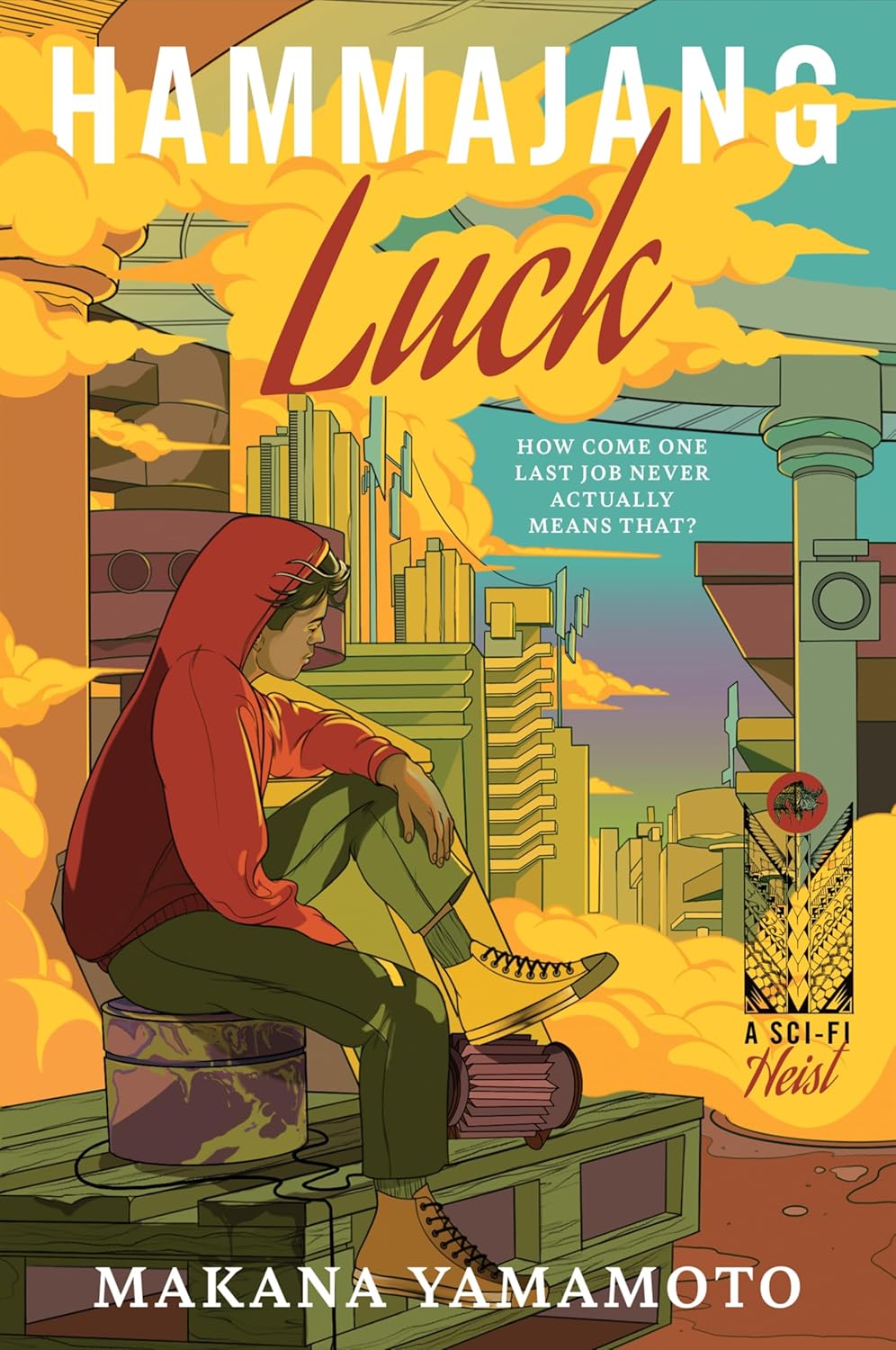
#REVIEW: Hammajang Luck, by Makana Yamamoto

This was a hell of a lot of fun.

My Illumicrate subscription has been kinda hit or miss, if I’m being honest, and I keep almost cancelling it. I think their version of this book is the best-looking of any of their books that I’ve yet received, but upon seeing what the cover of the paperback looks like, I may have to order that too. One way or another, though, the books are always pretty, but it’s only about 50/50 whether I’m going to like the book, and so far I think I’ve only gotten one book from them that I’d heard of prior to it showing up in my mailbox.

Hammajang appears to be Hawaiian Pidgin for cattywampus, and if you’re not white enough to know that word then we’ll go with “messy” or “chaotic.” The book is sort of an outer space Hawaiian diaspora Ocean’s 11 mixed with cyberpunk and lesbians(*) and a dash of The Fast and the Furious. That sentence has either sold you the book or caused you to keep scrolling, and I would encourage you to follow that impulse either way. It’s directly up my alley, though, and it gave me everything I might want from such a book– a great, character-centered heist story with a whole bunch of personal betrayal and criss-crossing loyalties and an ending that genuinely took me by surprise. Let me just say that I’ve read a whole lot of heist books and there is a certain way that they never, ever end, and if you’ve also read enough heist books that that counts as a spoiler, trust me, you’ll enjoy the hell out of this book. It’s on the short side; 340 pages in the Illumicrate edition with big print, and I think it took me maybe 3-4 hours in two sittings to get through, but I’m absolutely in for more of this world and more of these characters. (I haven’t mentioned Edie, the MC, by name yet; there is no reason this book has to have a sequel and it’s written as a one-shot, but I want more Edie, and I want it soon.).

(*) I have also seen this book compared by official publicity people to Gideon the Ninth, and the presence of lesbians is the only similarity to Gideon. Do not go into this book thinking you’re getting Gideon beyond the very, very loose plot descriptor of “lesbians in space.”(**)

(**) Actually, okay, this is another similarity, as there isn’t a lot of space in either book. Hammajang doesn’t take place on Earth, and to be quite honest I can’t quite describe how Kepler works. I think it’s a space station somewhere Out There but the book doesn’t dwell on it much other than one part involving a less-than-optimal oxygen supply. This is, effectively, urban sci-fi, which is not a bad thing.)
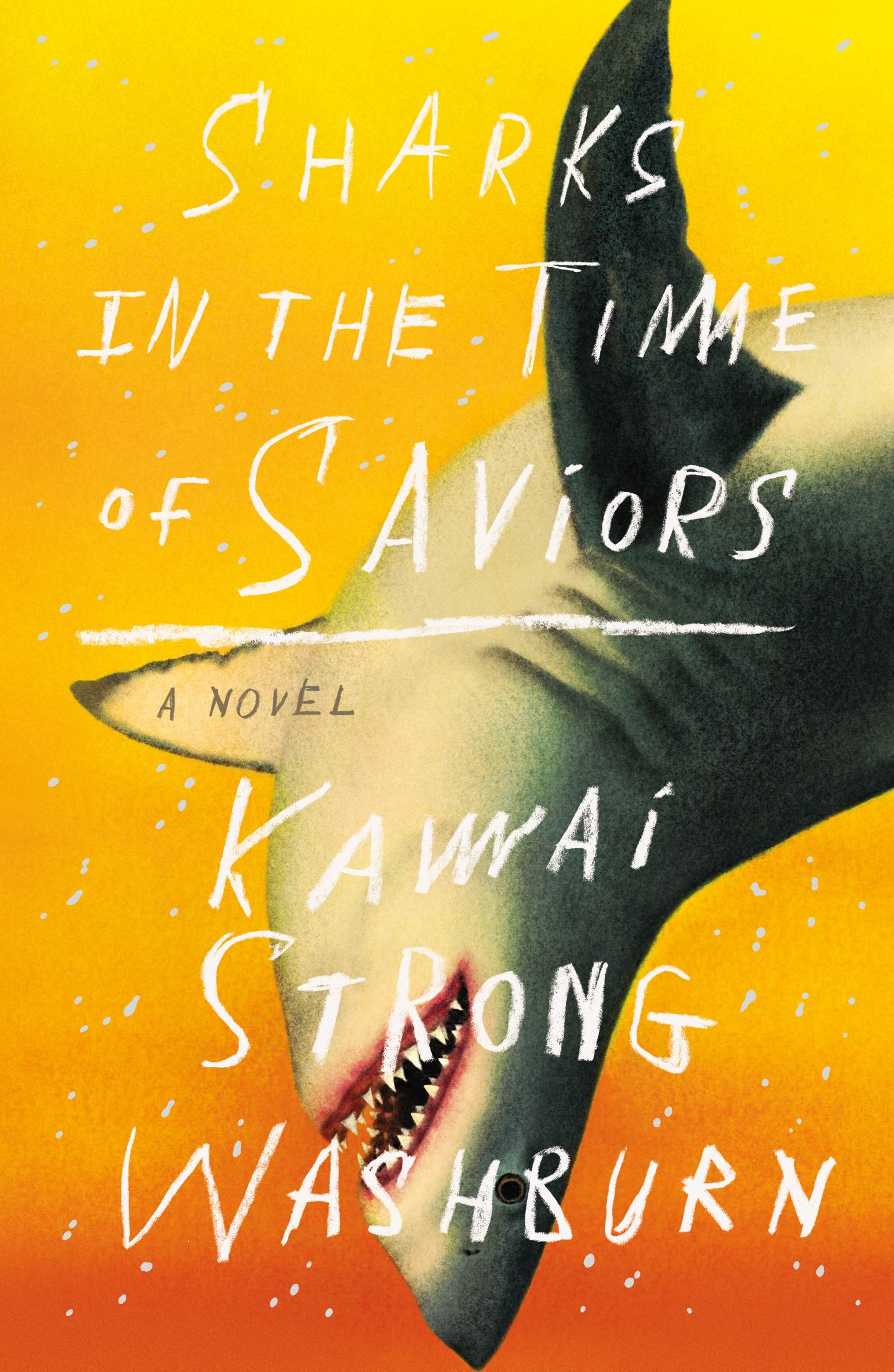
#Review: Sharks in the Time of Saviors, by Kawai Strong Washburn

This is one of those times where I admit that I’m never really sure what I consider an “official” book review; there have been times when I labeled something a reviewlet and then talked about it more than I did in full “reviews,” and I want y’all to know that I read this book and I like it and I recommend it but having finished it I’m not sure what to say about it.

In a way, this book is a triumph of the #readaroundtheworld project; I picked it up on the recommendation of a (white, or perhaps I should say haole) friend in Hawai’i because I needed a book written by a Hawaiian and I wanted one written by an Indigenous Hawaiian specifically. She tossed me a few titles and I grabbed this one because it seemed the most up my alley: a family saga that begins with a seven-year-old falling off a boat in the middle of the ocean and being actually rescued and delivered back to his parents by the sharks. Then he touches a friend at a Fourth of July party who has blown part of his hand off with a firecracker and heals the wound.

And then you think you have an idea where the book is going, and there’s a big twist in the middle and you were wrong, and then you think you know where the book is going, and you’re probably still wrong, because ultimately this book is about what a weight The Future can be, when you think you’re being raised to be one thing and then you’re not that thing anymore, and it’s also about what happens to a family when all of their futures get taken away from them at once. The book follows four characters– the mom and the three kids– in a sort of first-person rotating chapters sort of thing, and the father of the family gets to be the POV character a time or two but not very often. There’s a lot of Hawaiian vocabulary sprinkled into the book, but not so much that it’s a problem for people who aren’t familiar with the language or the islands themselves, which I’ve never visited. It’s about the same amount as the Diné you see sprinkled throughout Rebecca Roanhorse’s Sixth World books, with the advantage that Hawaiian is a lot easier to parse and read for a native English speaker than Diné is. Washburn’s prose is lovely throughout, and the voices of the main characters are distinct enough that after a while you can pick out who’s talking from just a couple of paragraphs, which is definitely something you want in a book structured this way.

I’ll talk about this more in a few days when I do the June update for #readaroundtheworld, but this book is exactly what I was looking for when I started this project. There’s not really anything I’m learning or being exposed to when I read a book by someone from Michigan or New York or Texas, y’know? I have a pretty good idea of what those places are like already. Hawai’i is a little different, for obvious reasons, and this is definitely an author and a book I wouldn’t have come across were I not deliberately looking for it. I probably missed some cultural nuances here and there, of course, but the book was still plenty accessible for all that. If you’re looking for something new on your reading list, definitely check it out.