On YA, genre and litratcher

I was originally going to write a review of this book and discuss this in the review, but I took a nap this afternoon and still have 60-some pages left. Why did I just say “this book” and not the name of the book? Well, I’m doing that thing where I don’t want this post necessarily showing up in search results for the book, especially since this post is going to be pretty critical and it’s important for you to know that I’m really enjoying the read. I’m going to be a little sneaky about which title I’m talking about, though. Let’s see if you can figure it out.

I am a lifelong genre reader, and for most of that time I’ve been fairly open about my disdain for what people call Literary Fiction. Feel free to blame it on me being too dumb for Literary Fiction. That’s fine. I have an ego but for some reason it doesn’t extend to being bothered by that particular allegation. I don’t get most of the examples of the genre I’ve read; I usually don’t understand why anyone bothered to write the book in the first place and I understand even less what anyone is talking about when they praise them. In particular, use of the word “comic” can be a red flag. One guarantee is that any time a book reviewer I’ve never heard of describes a book as “comic” is that it will not, in any way, be funny. In fact, for the most part, it won’t even be trying to be funny and failing. “Comic” means something else to Literature People. I don’t know what it means and I’m not going to bother finding out.

This particular book has a bunch of pull quotes by people I’ve never heard of who wrote books I’ve never heard of on the back. The sole exception is George Saunders; I’ve heard of him and I know he’s fancy but that’s all I can tell you. The blurbs aren’t as bad as they can get; none of them appear to be random collections of words, and none of them use words that should not be used to describe books (“deliciously turquoise and refreshing prose”– HARPER’S) in them. But this was on the New York Times’ 10 Best Books list, which usually means only ten people read it, and it was a National Book Award finalist. Here is the list of every National Book Award winner. I admit, I have read five of them– interestingly, all but one nonfiction winners– and I have never heard of considerably more than five.

Anyway, this book should have been YA and nothing, nothing will convince me otherwise.

If the exact same book had been written by a woman, it would be shelved with YA. It’s The Hunger Games with a more complicated vocabulary, more swearing, and footnotes about the American carceral system. The premise is the most YA-coded thing I’ve ever seen; the idea is that incarcerated criminals can get their sentences commuted if they agree to engage in gladiator combat to the death every so often; if they make it three years and are still alive, they get to go free. They earn something called, no shit, Blood Points as they work their way through the combats; Blood Points can be cashed in for food, weapons, armor, better accommodations, shit like that. There’s this weird color-coded & scientifically implausible technology built into their wrists so that their captors can torture them for talking.

And partway through the book the main character finds out that she’s going to have to fight her girlfriend in her final fight– the convicts are loosely organized into teams, and a rule change means people on the same team have to fight if they’re at the same rank– and predictable angst occurs.

Come the fuck on.

Now, I’m not done with the book, so I don’t know whether the two characters are actually going to fight or not, but this is one hundred percent a science fiction dystopia that would have been shelved with YA with a different author. That’s not necessarily a bad thing! I’m thoroughly enjoying the book, and I’ll finish it tonight, having burned through its 360 pages in less than a day. Unless it completely blows the ending, it’s gonna be a five-star review. But looking at these blurbs and a couple of other pieces about it, it’s hilariously obvious that most of the people reading it have never touched dystopian literature in their lives and haven’t read any YA at all, because … one thing this book is very much not is especially original. I could have sketched out a broad outline of the plot within ten pages of the start of the book. So could anyone who has read any YA in the last fifteen or so years. I’m not going to look up how long ago Hunger Games came out because I don’t feel like being old. But there are a ton of “blabla has to fight to the death, because Reasons, plus fascism” books out there and while this is an excellent example of one, that’s still exactly what it is.

I’ve got lesson planning to do and then I really do want to finish this book tonight, so I’m going to leave this here– I probably will do a second post once I’ve finished the book, though. But come on, guys. Somebody got chocolate in your peanut butter and peanut butter in your chocolate and you’re doing your level damn best to not admit that you’ve got a Reese Cup in front of you. It’s a Reese Cup. We love Reese Cups. Just admit what it is and eat the damn thing.
On the canon

Scalzi had– unwillingly, it must be pointed out– some interesting things to say today regarding the existence of a capital-C Canon as it relates to science fiction and fantasy. This was brought on by George R.R. Martin embarrassing himself and everyone else at the Hugo awards a week (? two? Time has no meaning) ago.

For the most part, I agree with him. There is no Canon, at least not of the capital-C variety, and it’s questionable at best about whether there ever was one. And a lot of what certain types of people think might be part of that Canon are books I probably haven’t read. I have never done anything but bounce off of Heinlein, for example. I don’t mind Starship Troopers but I don’t think I’ve ever finished anything else of his. I’ve read my share of Asimov but nothing I care to recommend to anyone. I have read several books by Philip K. Dick and Ursula le Guin; I can’t tell you a damn thing about any of them. No Bradbury or Silverberg, at all.

Honestly, I’ve read very little of the sci-fi Canon. I’m more widely read in fantasy, as that was my obsession as a kid, but I just didn’t read a ton of sci-fi growing up and most of what I’ve read as an adult has been much more modern.

So here’s the question: I don’t think there is a real Canon– there’s no work or set of works that someone having read or not read them would cause me to cast aspersions on their spec fiction bona fides– but what if there was?

In other words, if someone came up to me right now and wanted me to make a list of works of science fiction and fantasy that they needed to read, what might be on that list?

And that’s an interesting question. These will be in no particular order and I will absolutely forget some important books, so don’t take this as– heh– an authoritative list of canonical books. Let’s just say I’m starting a conversation and go from there.

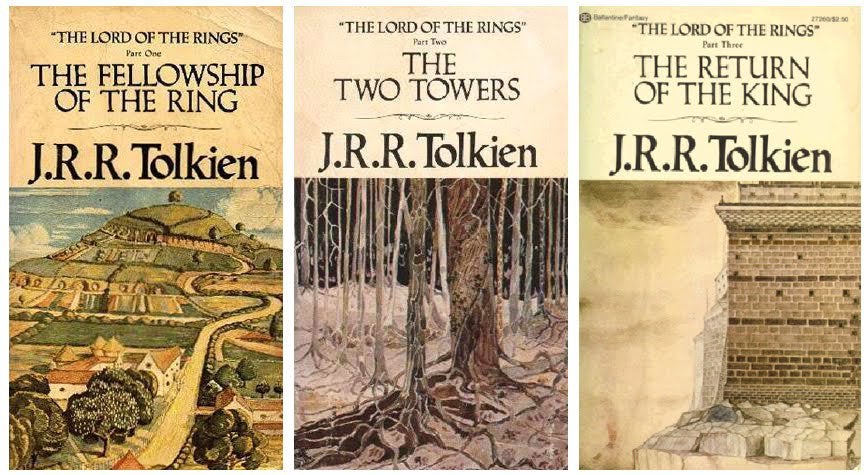
  • The Lord of the Rings and The Hobbit, which are probably as close as I’ll ever be willing to get to books that I insist any fan of fantasy literature must read, if only because that way you get it when people are trying to subvert them.
  • Dune. You can skip every single other Dune book other than the first one, but you should read Dune.
  • The Harry Potter series. Yes, I know, J.K. Rowling is cancelled, but there’s an entire generation of folks out there for whom these books were foundational and just because we’ve decided that they were magically written by no one is no reason not to read them.
  • Speaking of cancelled people, you really should read at least the first two books of the series that is actually called A Song of Ice and Fire but is known as Game of Thrones now. Read the third if you liked them. Do not read further than that.
  • The Broken Earth trilogy by N.K. Jemisin, the only person to win Best Novel Hugos three years in a row.
  • Read Sandman. Yeah, I know it’s a comic book. Do it anyway.
  • Frankenstein. No, seriously, read Frankenstein. Like, do it anyway even if you generally don’t care about science fiction. It’s a better book than you think it is. Seriously. Try and find an edition with the extended ending, though.
  • Read something– I don’t care what– by China Miéville. Perdido Street Station, maybe, or The City and the City.
  • I will probably catch some crap for this, but read something by Lovecraft. Yes, he is a supreme asshole. But he’s dead, so he’s not going to get any of your money and a lot of his stuff is public domain by now anyway. Call of Cthulhu, The Shadow over Innsmouth or The Colour Out of Space, maybe. They’re short. Take a bath afterwards.
  • Orson Scott Card is a living utter asshole, but … man, Ender’s Game. Do it without spending money.
  • Watership Down. Which doesn’t have swords or orcs or spaceships in it, but does have talking bunnies and shocking violence.
  • Haroun and the Sea of Stories, Salman Rushdie’s most underrated book, and squarely in the realm of fantasy.
  • Scalzi’s Old Man’s War series could sub in for Heinlein, who is an obvious inspiration.
  • Read some Kameron Hurley. Really, just pick something, although if you pointed a gun at me I’d say something from her Bel Dame Apocrypha series.

And, like, I could definitely go on, and there are a ton of books that I think are magnificent but I wouldn’t necessarily put on this type of list (an example: the Expanse novels, which are brilliant but the series isn’t finished yet, and unlike ASoIaF I think you should actually read all of them) so obviously we could just keep adding things forever. But if this is a list of Where Should I Start, I feel like you could do worse than working your way through these.

What else is part of your fantasy/sci-fi canon?

(Also, I want to note, for the record, that I deliberately didn’t include Amazon affiliate links for any of these, because I feel like it would have been overkill.)

Well that escalated quickly

colored-pencilsSo now I’m researching sketching pencils and I’m in a Facebook group designed specifically to encourage people to create every day.  I actually did buy some new pencils today but, as ridiculous as this sounds, I feel like I need to know more about what the letters and numbers mean beyond the obvious “hey, this one has a lighter line!” and “hey, this one broke instantly when I tried to draw with it!”

So, yeah, the draw every day project is still going and is gradually absorbing more of my mindspace.  In case you were wondering.


Nobody is really crying out for my opinion on this, but there is a deeply stupid little kerfluffle going on on Twitter right now (TwitterTM: The Place for Kerfluffles) about politics and science fiction.  A batch of yahoos calling themselves the Science Fiction & Fantasy Creators Guild was dumb enough to insert themselves into the mentions of N.K. Jemisin, of all the goddamn people they could have chosen, to ask her to join them in their search for… wait for it…

…politics-free science fiction.   Which… come the fuck on.  Witness this dumbshittery:

The backlash and dumpster fire that has followed has been positively breathtaking to behold.

Let’s be real clear here: this notion of “politics-free” science fiction is code for science fiction what doesn’t have those brown people and those gays in it.  The phrase “social justice” is the tell here, if that’s not perfectly obvious.  To these idiots, science fiction is free of “politics” if it only has manly white dudes doing manly white dude things in it.

Which, speaking as a manly white dude: fuck that.  And fuck these guys for trying to set themselves up as some sort of baseline of “non-political” SFF by which everything else must be judged.

I hate these assholes, in all their forms– the Sad Puppies, Gamergate, most of the idiots downrating THE LAST JEDI right now– and I’m going to keep writing, reading, and most importantly promoting science fiction and fantasy that makes them sad, every chance I get.

On genre and gender

Had an interesting conversation on Twitter (shut up, that’s a real thing) the other day with another writer that started off with him asking this:

Now, I’ve had this conversation and this exact thought before: either there are not enough women writing in those genres, or (vastly more likely) I’m not reading enough of their work.  If I went through my shelves and started writing down names, I’d probably write down a couple dozen before running out of names.  That’s not enough.

This isn’t why I’m bringing the conversation up on the blog, though.  I literally couldn’t think of a single female author who qualified in my head as a “horror writer.”  Not one.  Lauren Beukes, who wrote last year’s The Shining Girls, sorta qualified, but I thought of her stuff more as supernatural crime fiction.

Did you catch the move I did there?  I kept thinking about it over the course of the evening and eventually it hit me that I couldn’t name more than two or three male horror writers, especially if I limited myself to writers who were still alive.  Stephen King.  Dean Koontz.  Clive Barker.  My wife tossed Christopher Pike, who I haven’t read, into the mix.

Of the four, the only one whose work I’m still regularly reading is King, and at least two of his last several books (Joyland and Mr. Mercedes) have explicitly not been horror.

Eventually it hit me that, at least in my head, and with respect to novels, “horror” as a fiction genre seems to barely exist on its own anymore.  I found this list from last February (did you know February is “Women in Horror Month”?) and found several authors who I’m quite fond of or at least familiar with– Cherie Priest, Mira Grant, Cat Rambo, Catherynne Valente, Elizabeth Bear, Patricia Briggs, Laurell Hamilton and a couple of others– and the only ones who I thought “yeah, okay, she’s a horror writer” where Hamilton and Briggs– who are the two I haven’t read.

In every other case, including when the list specifically referenced books I’d read, I thought to myself “Huh.  I thought that was (insert other genre here.)”

Which is weird, right?  Horror (at least to me) seems to be something that exists as an element inside books of other genres, as opposed to something that is a genre unto itself.  I’m not even sure I know anymore what it would take for me to read something and think “Yeah, that’s a horror novel.”

I don’t know that I even really have a direct point for this post other than to ask who you guys think of as “horror writers” or maybe less specifically as “horror books.”  This doesn’t have to be limited to women; the conversation started off that way but as I said it quickly got beyond that point when I realized I could barely name any horror writers of either genre. (Late edit: the Faceyspace has already brought up Mary Shelley; I’m mostly thinking of living authors right now.)

(Note:  Beukes herself popped up on the thread a bit later to suggest a few other writers– Sarah Lotz, Sarah Pinborough, and Kaaron Warren, none of whom I’m familiar with and who I’ll have to look into.  Just FYI.)