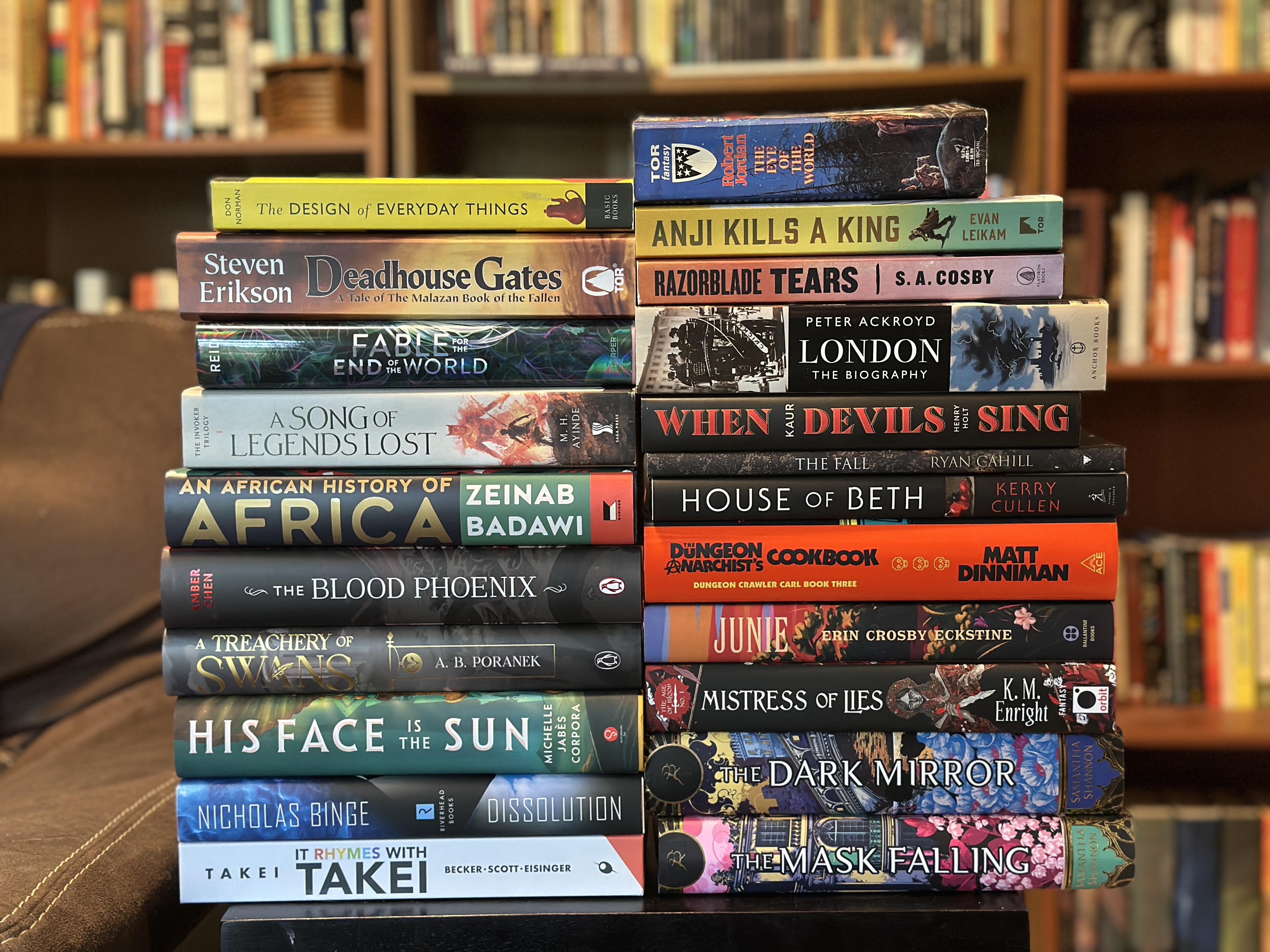
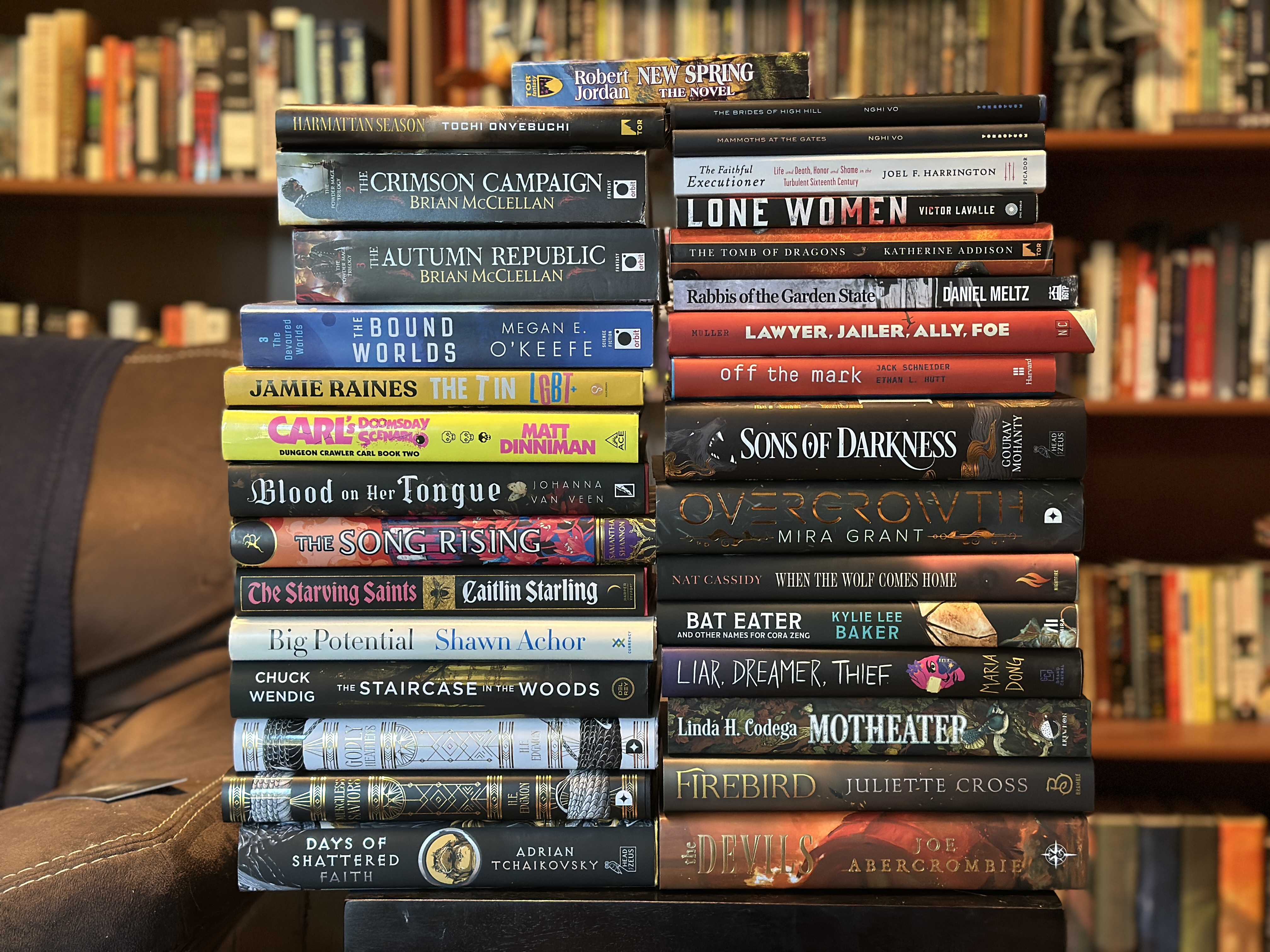
Storygraph tells me this is 11,505 pages. That’s not completely accurate as there are a handful of DNFs in there, so let’s say 10,500. Either way, can you tell I did nothing but read in June?
Book of the Month is gonna be The Faithful Executioner, by Joel F. Harrington.
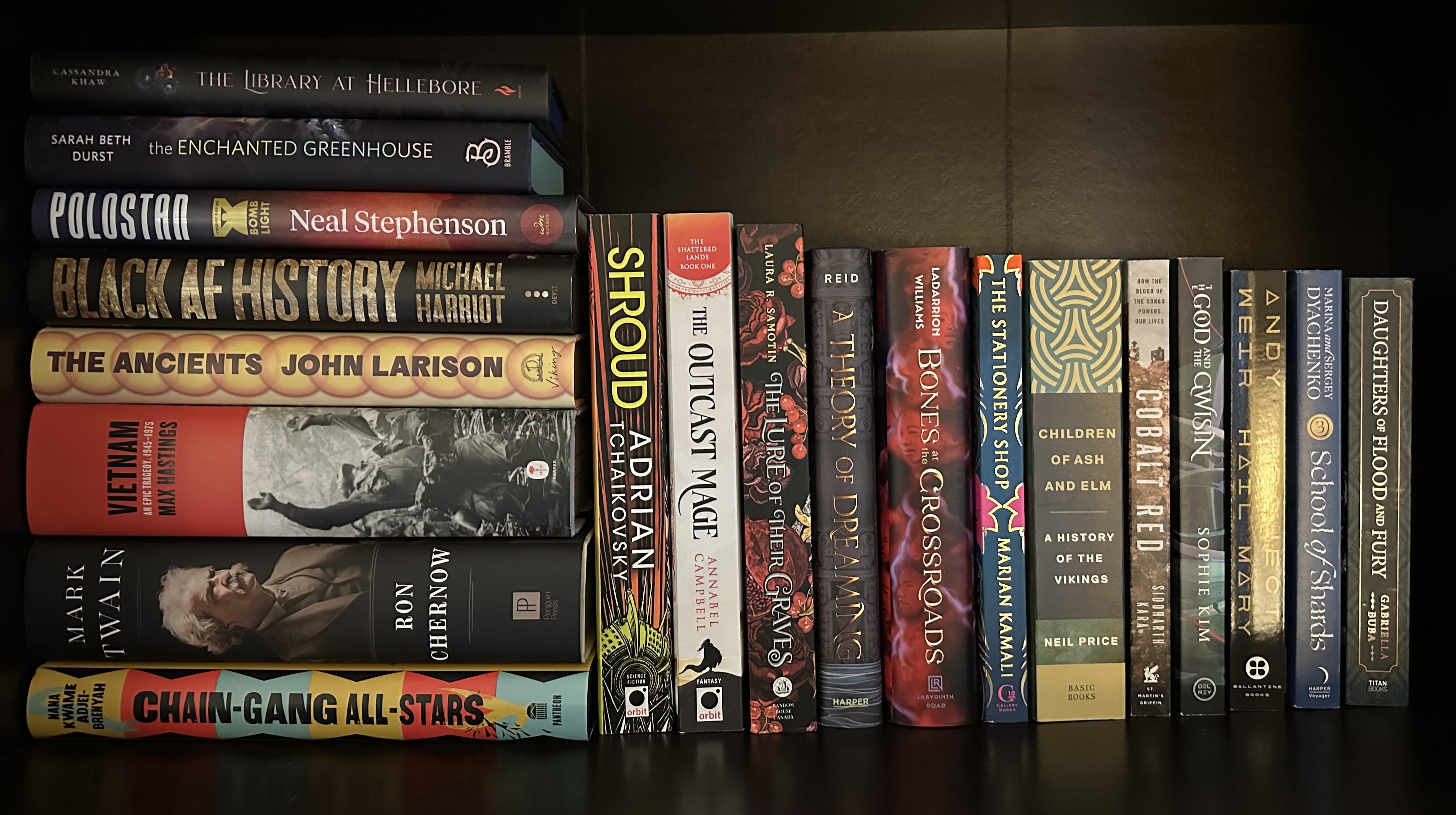
Pretty sure this is the lightest the shelf has been in months (EDIT: It’s been a year.) I can make a significant dent in this next month if I’m disciplined about not spending a ton of money. LOL.
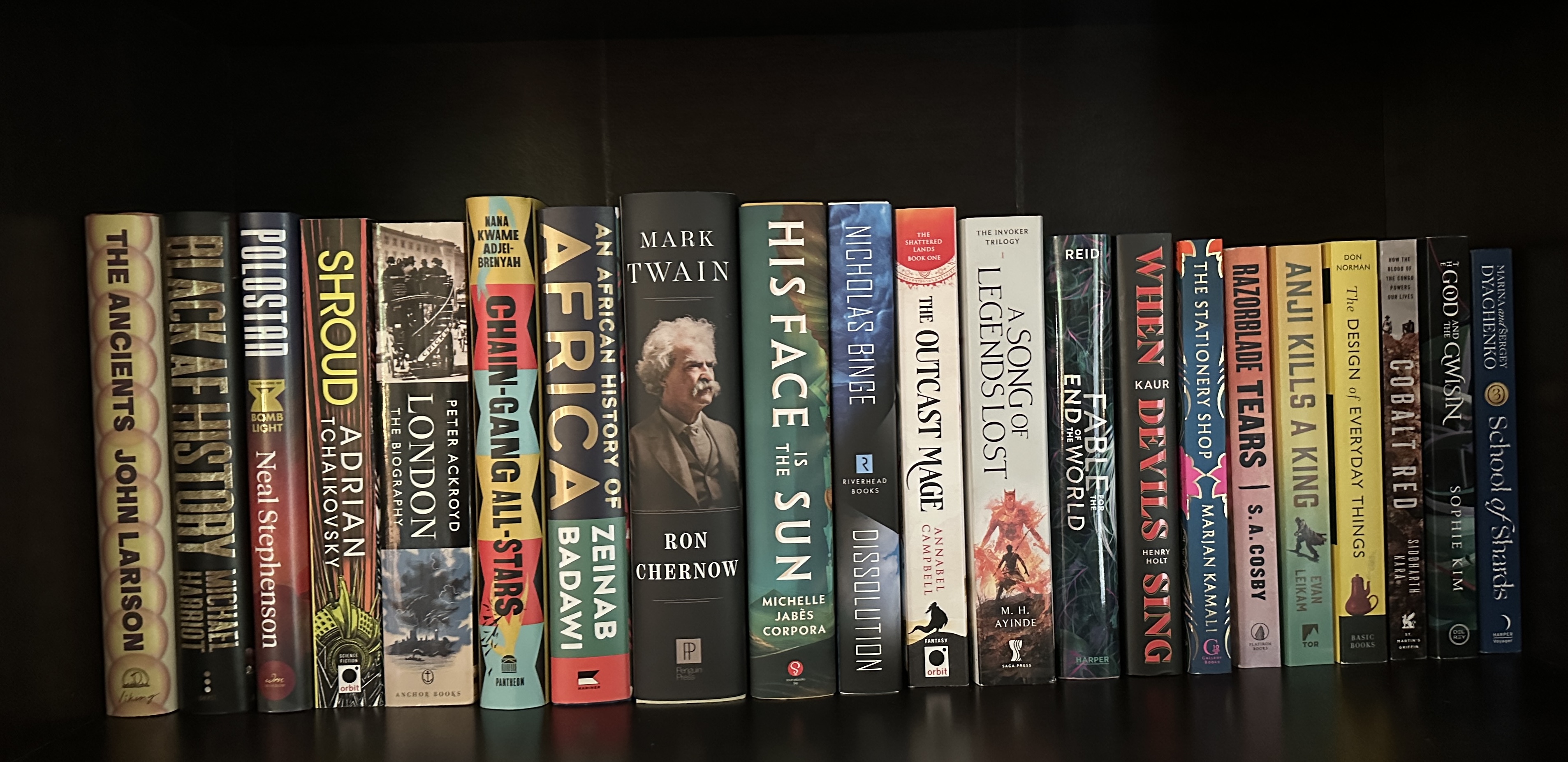
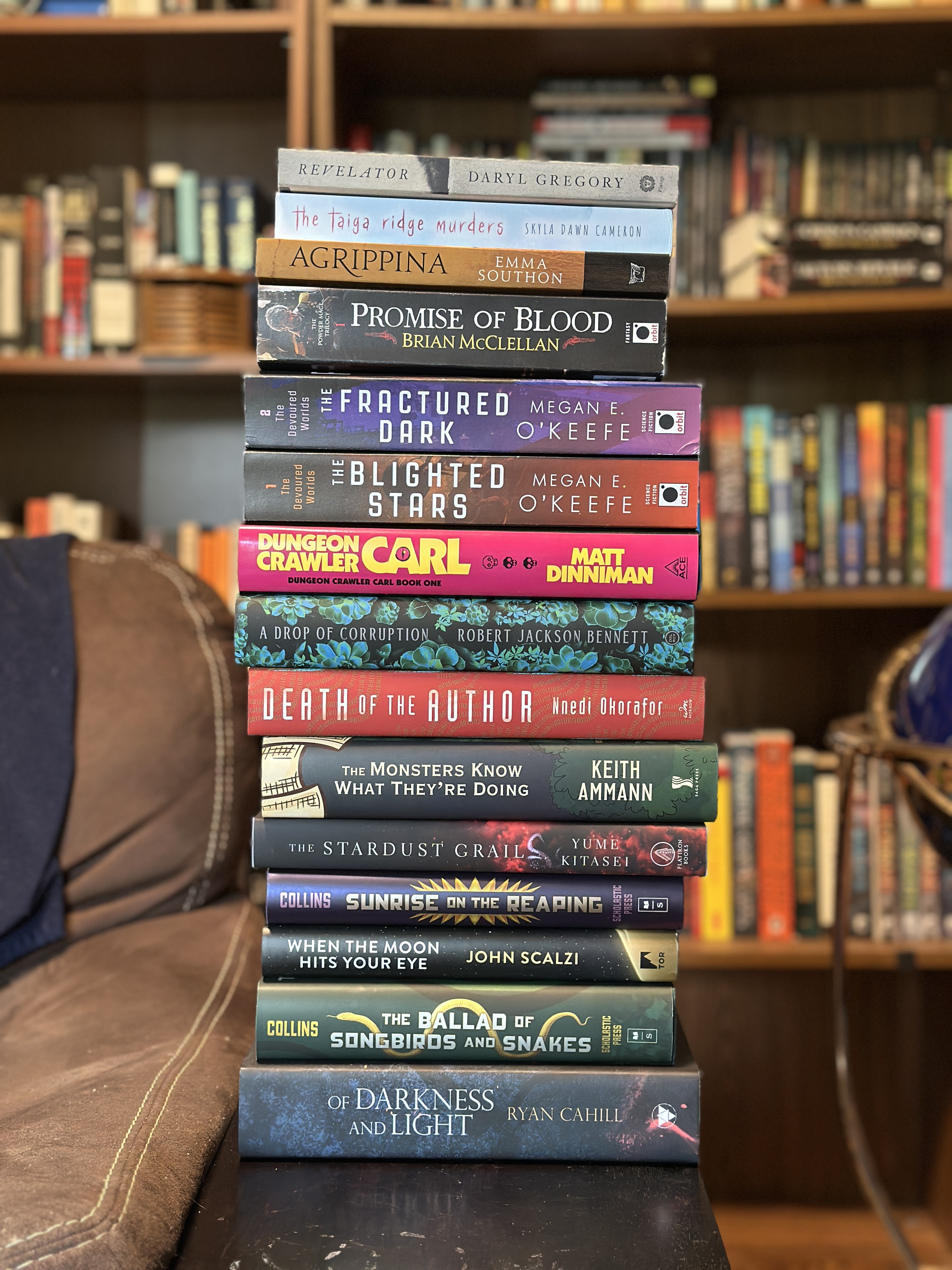
Tomorrow’s Monthly Reads is going to be insane.
Picking on church billboards is such low hanging fruit that it’s not even worth it most of the time, but I drove past this … message on my way home today, and I needed to preserve it. I may have the verbs slightly wrong (I was driving, after all) but the weird part is preserved correctly:
Trust in The Lord Delight in “ Commit to “
… with fucking quotation marks, just like that. The quotation marks were red, though.
Well, that was a fun little rabbit hole to fall into at 10:00 in the morning.
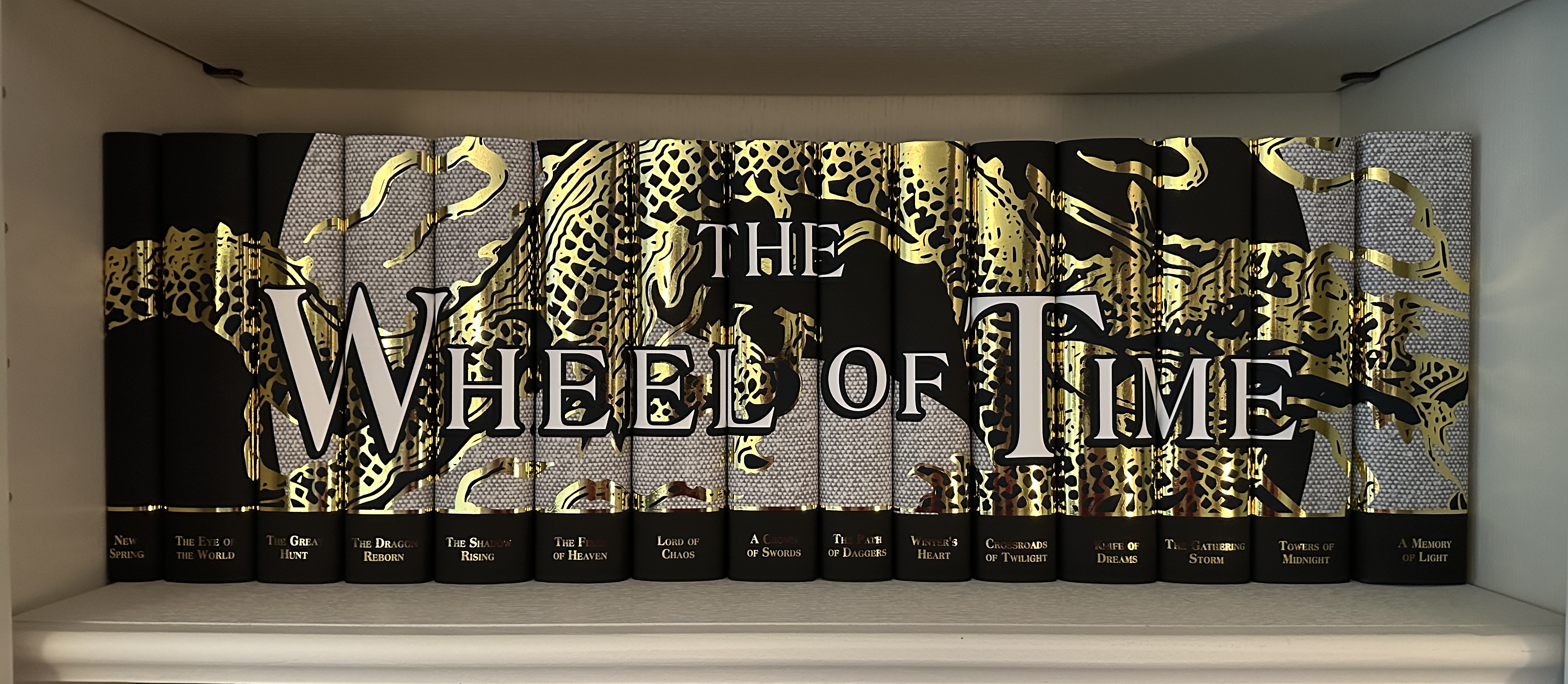
I posted these beauties not long after buying them, and they make me happy each and every time I walk past them, which was how I justified the $Jesusdon’task cost. The problem: despite their status as one of the non-negotiable canon series of fantasy literature, I haven’t finished the damn series. I’ve read the first … five? Six? and tried to reread/finish them a few years ago and had to tap out after the second book.
I’m doing this, damn it. I’ve spent a lot of money on this damn series and I’m stuffing it into my brain whether I want it there or not. I’m not stupid enough to try and read them straight through, though; I’ll commit to one a month (still over a year!) and try to go at least a little faster than that in practice.
(I plan to start with New Spring, the prologue, which I haven’t actually read yet. If you have strong feelings about whether I should hold off until later, let me know, but do keep in mind that I’ve read the first two books twice each already. You have, like, an hour or two until I’ve started it and can’t be stopped.)
I recognize that “I started a book!” maybe isn’t the most compelling blog content ever, but I wanted to mark the first date in something less ephemeral than Bluesky. So.
Anyway, that rabbit hole: I thought that I had posted about these books when I got them, and I couldn’t find the post at first. It took me a minute to track the post down, because the words “Wheel of Time” didn’t actually show up in the post title. I went to Google and searched “infinitefreetime wheel of time” and this bullshit happened:
Other than the first half-sentence of the second paragraph, none of that is fucking true. Those quotes? Not real. The AI made the whole thing the fuck up. I hate this fucking useless-ass, destructive-ass technology with every fiber of my being and I cannot wait for it to die, hopefully taking a large chunk of the stupider element of our tech sector along with it.
So, yeah. I’m starting up on Wheel of Time again, and fuck GenAI straight to Hell.
This game made me, for the first time in quite a while, want to turn my YouTube channel back on.
I’m still not quite done with Khazan, thus the lack of a review yet. I’ve beaten it, and I want to get through New Game+ before I put it away, but I wanted a palate cleanser, something that wasn’t combat-focused and that didn’t brag about being difficult. Something chill, for lack of a better word.
How about a puzzle game about translation? How much more directly up my God damn alley could a puzzle game about linguistics possibly be? It’s unimaginable.
Here’s the premise of Chants of Sennaar: you’re the … person, of indeterminate gender and no name, in the faceless hood up there. You’re exploring what is effectively the Tower of Babel, which is occupied by five different groups of people, each of whom speak a different language. Your job is to 1) get to the top of the tower, 2) learn everybody’s languages on the way up there, and 3) get everybody to talk to each other. There’s a bit more of a story to it than that, but it’s a little on the obscure side, and gets downright weird towards the end of the game. That’s good enough as a gist.
Each language has 42 glyphs associated with it, and follows different rules as far as subject-verb order, plural marking, and other things like that. Sometimes the meaning of a glyph can be intuited by what it looks like, and one language lays glyphs on top of one another in a really neat way that, once you figure out what’s going on, lets you create glyphs correctly that you’ve never seen. Your avatar keeps pretty good notes, and glyphs are marked in your journal as you discover them while you explore. You can add your own notes to any glyph, and if you think you know what something means but haven’t proven it yet, your assumed translation will show up in a different font when you’re trying to read something, so that you can see what you’re still guessing at versus what you’ve definitely successfully translated.
(What will happen is every so often your notebook will have a page that will have three to five pictures on it, and if you match glyphs successfully to the pictures, it’ll confirm the meaning and translate that glyph automatically from then on. This will happen even if your guess at the meaning was wildly wrong. It does mean that it’s possible to brute-force your way through some translations, and there were definitely times where I was certain I knew three of the four glyphs and wasn’t sure about the remaining one, and just worked through my unknown glyphs until I got the right one.)
You will also occasionally find Rosetta Stone-style texts that will have the same thing written in more than one language, which can help you figure out new glyphs if you’ve already completed one of the two languages. This is where different word orders and different pluralization rules can really mess with your head, though, and there are two languages that use markers to make an entire sentence negative, which can also be fun. I loved this shit, y’all.
There are some non-language-related puzzles here and there, but they’re rare and generally not hugely challenging and the occasional very light stealth section; they weren’t difficult (and not very punitive when you screwed up) but I found myself kind of resenting them after a while just because they kept me from the stuff I was interested in. You’ll eventually unlock teleporters between the different levels, and you’ll be able to translate entire conversations between different groups that will cause the residents to start cooperating with each other and sometimes change things about some of the areas. These were my favorite parts, honestly.
Graphics and audio do their job; my wife commented at one point that she found the sound of my character walking around to be really satisfying, for whatever that might be worth, and the different areas are really visually distinct from one another, from a forbidding fortress area to a science lab to mines to a really futuristic area toward the very top of the tower. This took me nine hours to play through for $15, and I got a Platinum trophy out of it. I did have to consult a guide once, where I couldn’t figure out how to move forward and it turned out that I’d been meant to pick up an object that I didn’t realize I could interact with. That was it, so it really hit that sweet spot where some careful thinking could always get me past whatever obstacle had been thrown in my way.
This isn’t for everyone, I realize, but for me at least it was a hell of a game, and at just $15 you should definitely grab it if puzzlers are your thing.
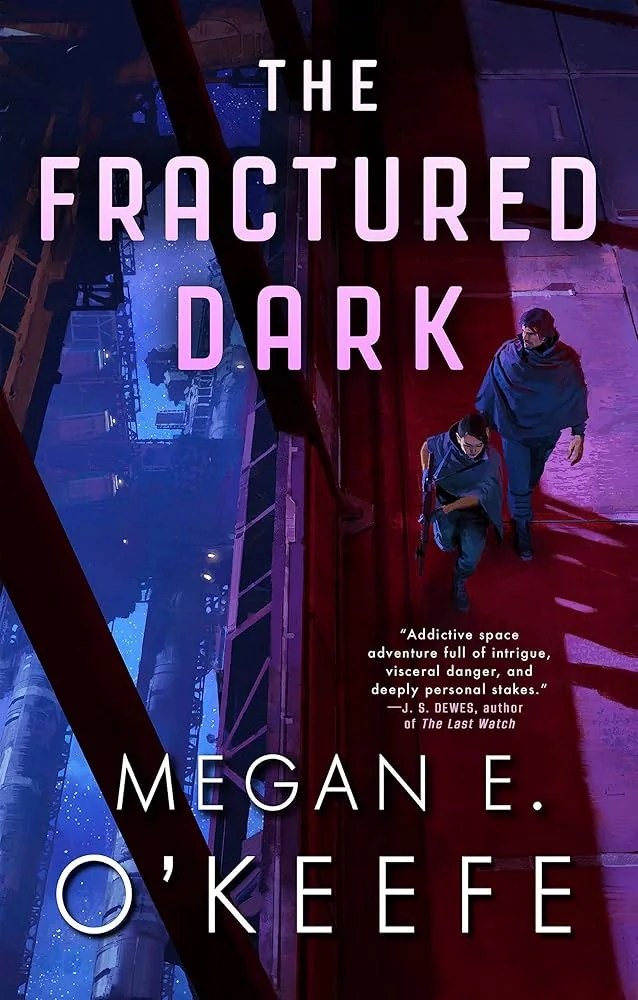
The first book of this trilogy sat on my Unread Shelf for way too long, mostly because I knew it was book one of a trilogy and if I read it and liked it I was locking myself into the next two books. And, well, yeah, in accordance with prophecy, I ordered The Fractured Dark and The Bound Worlds within the first couple hundred pages of The Blighted Stars, and … well, yeah. This is real good stuff.
The Blighted Stars starts off as a combination of a corporate espionage book (it’s one of those worlds where five big ultra corps control basically everything, and the leaders of those corporations are basically royalty) and an eco-disaster book. The Mercator corporation holds a monopoly on mining a material called relkatite, which is more or less completely essential to human civilization; it powers starship drives, for one thing, and it’s essential in printing human bodies as well.
… yeah, roll with that for a minute, I’ll come back around, I promise.
The two main characters are Tarquin Mercator, the scion of the family, who would prefer to not actually have anything to do with the family business and just study geology for a living, and Executor Naira Sharp, a monstrous badass who acts as a personal bodyguard, more or less, to Tarquin’s father. She’s also a revolutionary who wants to tear down the entire system from the inside. The Mercators are battling a major problem on their mining planets; a fungus that they’re calling the Shroud has begun appearing anywhere relkatite is mined, and it’s been overwhelming entire planets, rendering them more or less biologically sterile and preventing further mining from taking place. There are not many planets where humanity is actually able to live and thrive (the Earth has been rendered inhabitable a long time ago by the start of the series) and so the Shroud’s spread poses a genuine threat to the further existence of humanity.
That’s where it starts. It gets really fucking wild after a while, trust me.
For me, though, the most interesting thing about the series is the whole “human printing” thing. Basically nobody is in the body they are born in; if I understand the process correctly, once a kid comes of age they can be reprinted into new bodies that are more to their tastes, and people back up their own minds with some regularity, so that if they die the body they get reprinted into will have memories that are as close to “up to date” as possible. This isn’t necessarily unlimited; for one, it’s quite expensive, and especially traumatic deaths (or too many of them) can lead to a psyche being “cracked,” which basically drives the person irretrievably insane. The same will happen if someone is accidentally (or deliberately, as it turns out) double-printed, so that their mind is in more than one body at the same time. The fact that a cracked mind cannot simply be restored from a backup sounded like a weird sort of cop-out at first and ended up being really important later on.
The thing I like the most about this plot device is that O’Keefe really appears to have carefully though through its implications on society, to the point where I spent the whole first book trying to poke holes in this idea and make it retroactively dumb and every time I came up with something she’d anticipated it and dealt with it. Society is completely queernormative, for one thing; when you can simply reprint yourself into another body any time you want it’s hard to be against trans or gay people, and it’s heavily hinted that Tarquin was not born into a male body. There are a couple of prominent gay married couples as side characters as well.
The second thing, and I suspect some people might really be bothered by this, is the wide acceptance of suicide. Because you’re not really killing yourself; you’re just killing that print (the word “print” is used much more often than “body,” if not, possibly, every time) and you’ll be back soon anyway. In fact, a quick and clean suicide is a much better idea than several other ways you could be killed, because remember, really traumatic or messy deaths can lead to cracking. I feel like slitting my own throat might be kind of difficult, but it happens repeatedly across these books.
This blasé attitude toward death extends to murder as well, which is probably still illegal but not as much? This is probably a bigger deal for the poor, who can’t afford what are called “phoenix fees” to reprint, but all of the book’s main characters effectively have access to infinite money and so the characters kill each other with astonishing regularity. There is at least one point in the book where a character gets killed at the end of one chapter and then is the POV character of the next chapter after being reprinted in between the chapters.
My two biggest critiques of the series are both connected to reprinting. One, shit can get really confusing when a character dying does not have any actual impact on whether that character continues to show up or not. There are also occasional jumps forward or back in the timeline– not a ton of them, but they happen– and when you aren’t the world’s most careful reader (ahem) there can be a lot of rereading happening because something confusing has happened and you’re not sure if you missed a detail or not.
Second– and literally as I’m typing this I’m realizing what the answer is, but I’m going to do it anyway– is the notion that reprints are literally being loaded back into bodies from a “map,” which is their word for a personality download or backup, and maps can be altered through various nefarious means, but no one is against this whole idea, which I would think would be a thing. It’s the Star Trek problem– is the transporter really moving you from one place to another, or just killing you at location A and reconstructing you at location B? Personally, I’ve always been of the “killed then rebuilt” school, but people in this world really just treat reprinting as an inconvenience that might cost them some memories– and that’s occasionally even used strategically from time to time.
(The book does answer this, but kind of obliquely, to the point where I really did just realize what was going on, and I think they’re just relying on the tech having been around for so long that nobody thinks in these terms any longer, much like by the time Star Trek: The Next Generation rolls around absolutely no one is fighting against using transporters.)
I really enjoyed this series, and Megan O’Keefe has been around for a while, so there’s a bunch more where this came from, although these are currently the only books in this series. Strong recommend, especially if you’re in the mood for some complex, twisty sci-fi.




 Welcome to infinitefreetime dot com