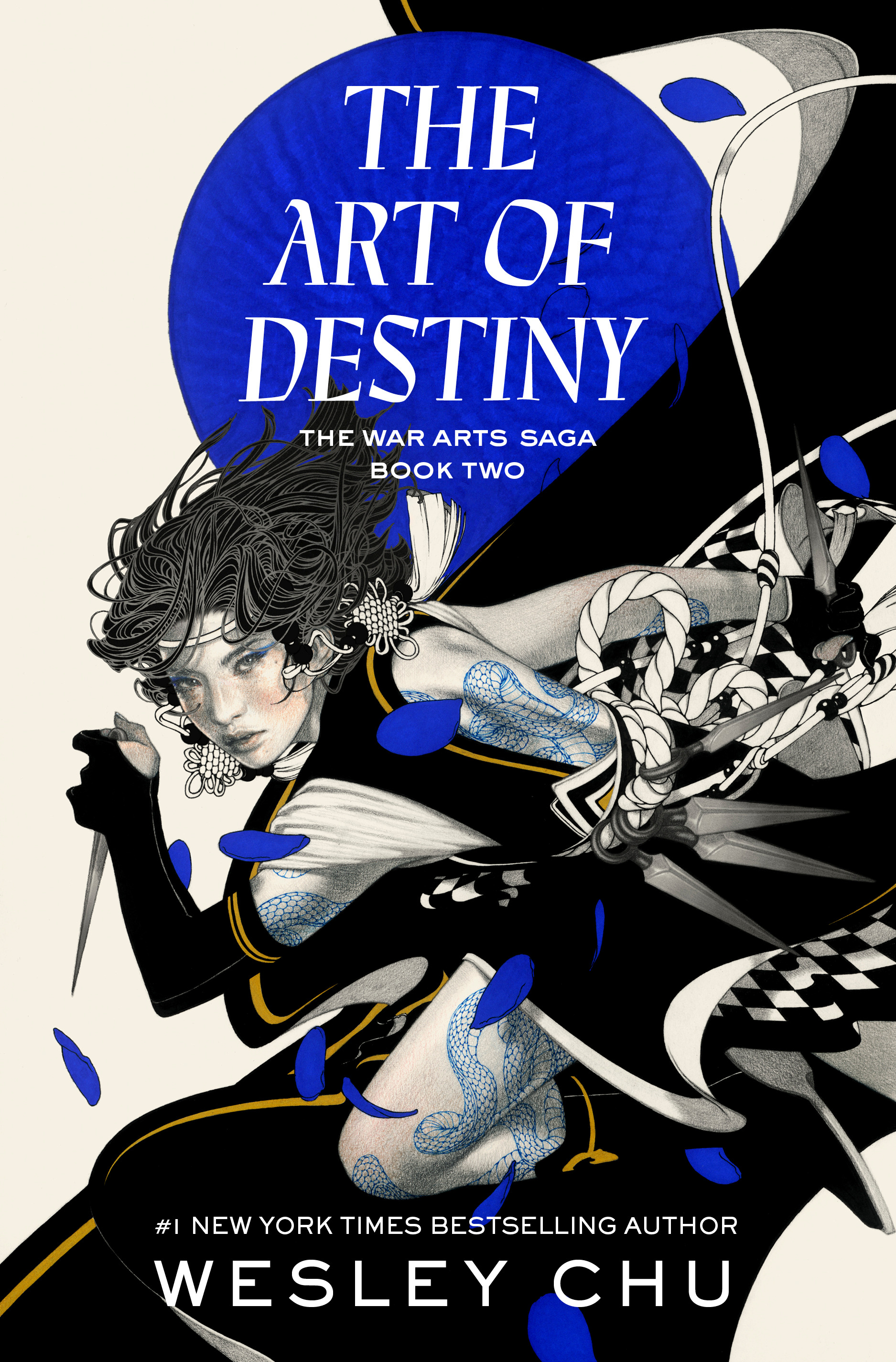
#REVIEW: The Art of Destiny, by Wesley Chu

Middle books in a trilogy can be so weird.

A quick recap: I got asked if I was interested in reviewing Book Three of Wesley Chu’s War Arts Saga, and replied that I’d love to, but I hadn’t read the first two books yet, and somehow that led to me getting sent review copies of the entire trilogy. My review of the first book, The Art of Prophecy, is here, and while I’m not going to go directly into Book Three like I thought, there’s only going to be one book in between, so I’ll probably have a review of that next week sometime.

But yeah. I enjoyed the book, but it definitely has a case of Middle Book Syndrome, where it sort of feels like they’re moving pieces around in preparation for finishing it off in Book Three. Destiny sticks with its same crew of players as the first book; Jian and Taishi are in training, Qisami spends most of the book on a job, and Sali spends the book trying to get the fragment of the Khan’s soul out of her body. Qisami feels like the main character of this one, which is a little odd, as I felt like she was the least important of the leads in the first book, to the point where I don’t think I mentioned her in the review. She has some interesting character development that is almost entirely tied up in spoilers, and Sali has a major status quo change and a clear direction going into the last book. The characters don’t interact as much in this one, either; they all end up in the same place for the last third of the book, but even then nobody really runs into each other; they’re all just doing their thing in the same city.

Jian and Taishi … feel kinda wheel-spinny. Taishi was easily my favorite character of the first book and she’s not got nearly as much time on-page in this book, and Jian gets captured again and it just sort of feels like a retread of a lot of what happened in the first book. There are some interesting developments in the religion around Jian; I was thinking as I was reading Prophecy that it’s super rare in the real world for a prophecy to be proven wrong and its supporters to just shrug and give up, and … well, turns out they didn’t, but I won’t say much more about it than that. But Jian still kind of feels like an immature kid for the majority of the book. There are some signs of maturation toward the very end of the book, so hopefully I won’t feel this way about him in the conclusion to the trilogy.

Don’t misunderstand me; even if I had bought these, this certainly wouldn’t put me off the third book, as a lot of my gripes are just part and parcel of the way middle books in trilogies tend to be messy. It’s not like there was much of a risk of anyone trying to read this as a standalone.

I’ve got another book I was sent for review to read next, as it’s out on the 16th, and then I’ll be diving into the conclusion. Stay tuned!

#REVIEW: Katabasis, by R.F. Kuang

In retrospect, this is probably my fault.

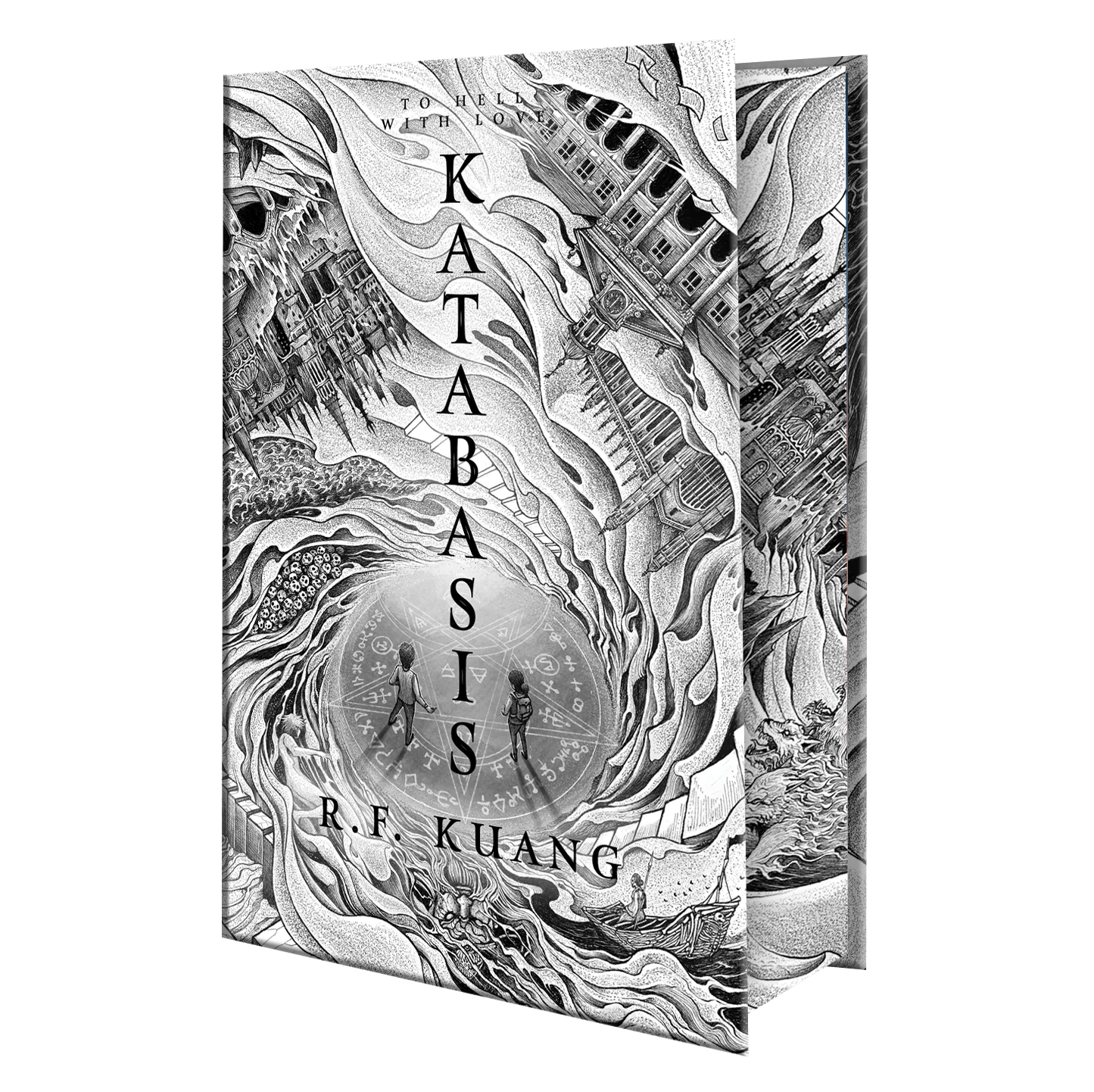
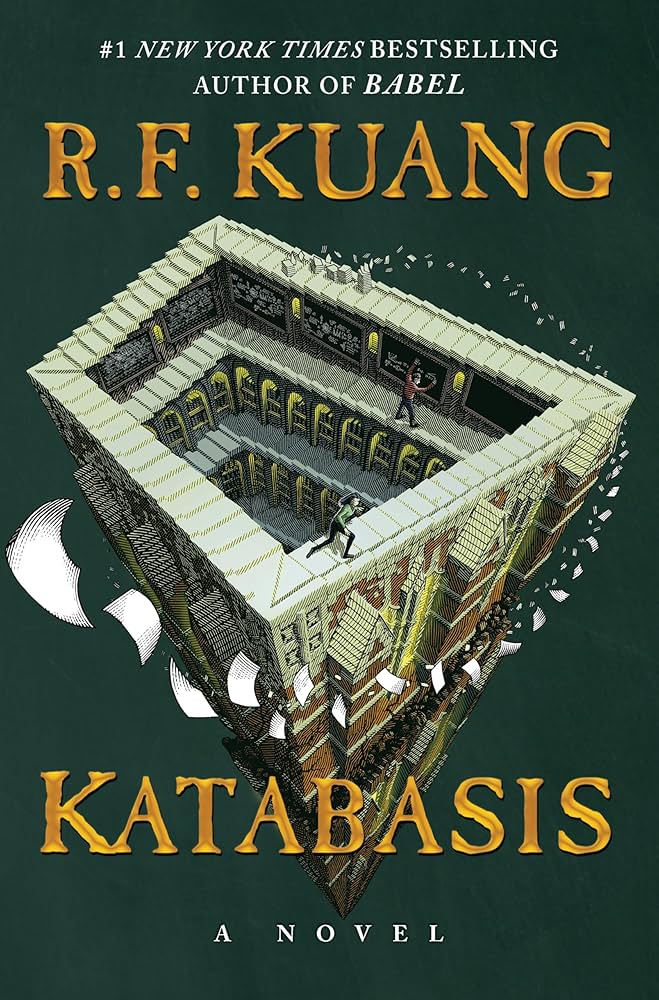
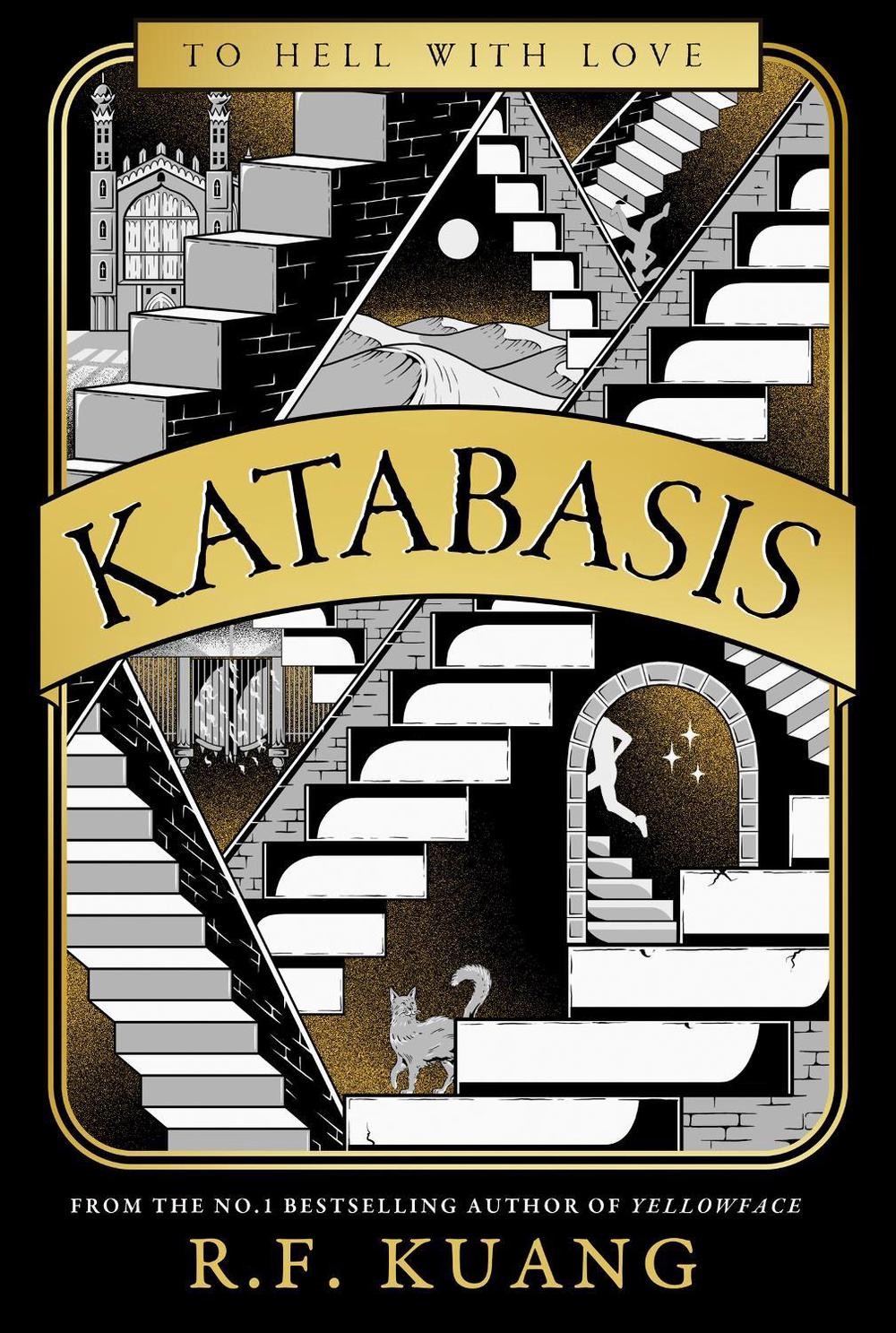
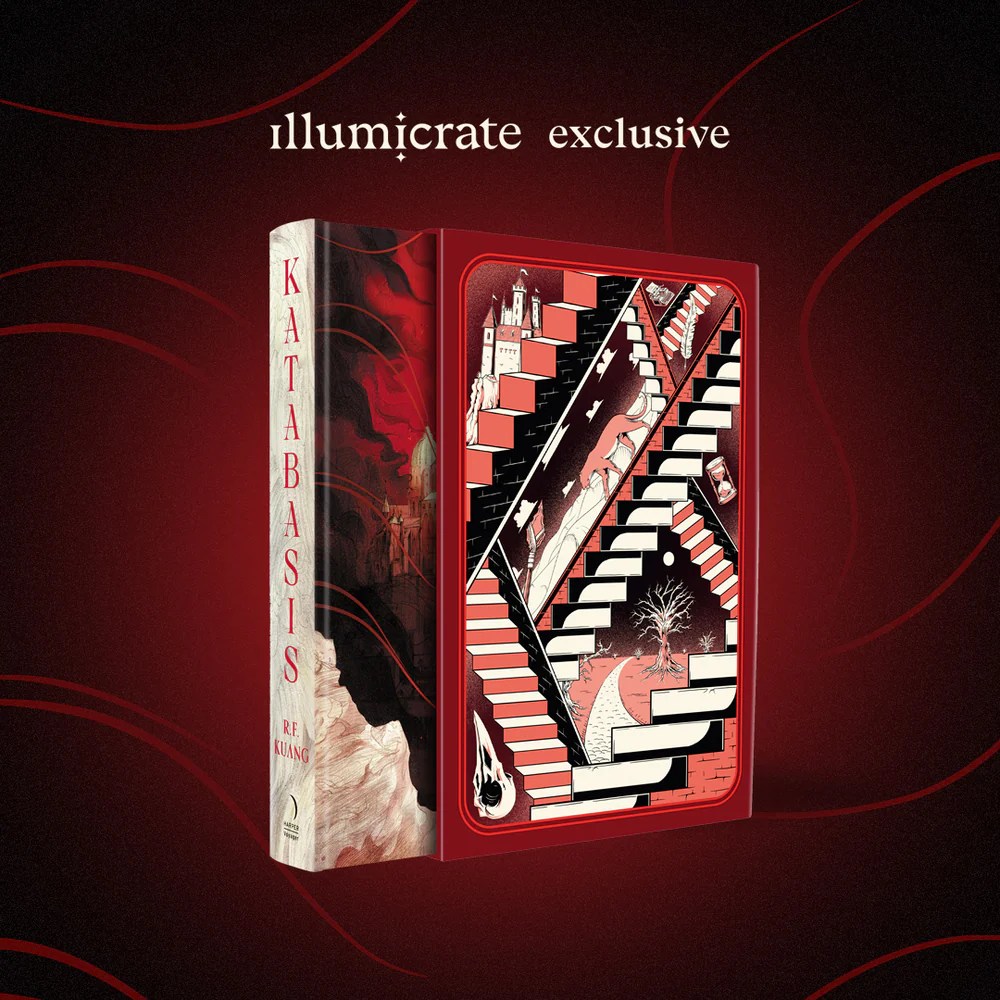
Up there are four of the seemingly unlimited Special Editions of R.F. Kuang’s new book Katabasis. I own three of them; two are currently in my house and I believe one is on the way. The fourth is the UK edition and despite everything I’m about to say it is still a maybe. Perhaps it wasn’t the wisest decision to order three expensive hardbacks of a book I hadn’t read yet, even if it was by one of my favorite authors! But as we’ve firmly established by now, I cannot be trusted with adult money.

Katabasis is the sixth book Kuang has written; I have read them all, and previously my least favorite of her books was one that was ranked third on my end of year Best Books list. My least favorite, mind you. Least. And part of me really thinks that I should sit with this for a minute and not write the review just yet, because part of the problem is that this book did not match the expectations I had set for it, and because I’ve enjoyed Kuang’s work so much in the past, I feel a need to be fair to it that I might maybe not feel with other authors. Then again, maybe not. Maybe, much like main character Alice Law about her mentor and Ph.D advisor Jacob Grimes, I’m making excuses so that I’m not disappointed.

Katabasis, somehow, has made Hell boring.

But let’s back up. Katabasis is the story of two graduate students (in theoretical Magick, of course) who travel to Hell to rescue the soul of their doctoral advisor, not because he doesn’t belong in Hell– he clearly does, and they’re both fully aware of this– but because their careers will be damaged by him being dead, and they need him for recommendation letters and such. I feel like this aspect of their motivation could perhaps have been explored a bit more; sadly, it was not. Katabasis (kuh-TAB-uh-sis, the word is Greek for “descent”) was supposed to be this dense, deeply literary work, heavily reliant on previous let’s-traipse-off-into-Hell books; there were pre-Katabasis reading lists floating around, and while I’m not actually completely certain Kuang was behind any of them, they were kinda intense!

And … well. Kuang is an academic writer; most of her books have at least partially involved schooling in some way and Babel was literally about a group of Oxford students who powered the world with magic based on translation, so this isn’t exactly a road untread for her. But this book is no more complicated than Babel was and no more academic; I was expecting a challenging read, and just didn’t get it. This is also the book that showed Kuang’s youth (she is still, somehow, not even 30) the most, I think; what she knows best is academia and grad school and I think that finally caught up to her with this book. And I get it! I’m not exactly a stranger to pretentious/prestigious graduate experiences; I hold an AM from the Divinity School at the University of Chicago, after all, which probably left me better prepared for going to Hell than most people’s educations, and I “hold” an “AM” rather than “have” an “MA” or a pedestrian “Master’s Degree” because, well, University of Chicago gotta University of Chicago. Those letters being reversed mean something. To somebody. I don’t know what, but they do.

Anyway, Alice (and is that name an accident, no, it is not) and her friend/fellow genius/academic rival Peter Murdoch head off to Hell to drag Grimes back into the world with them, and the book spirals (I see what you did there) back and forth between the past and the present as they argue about the map of Hell and, for the sake of argument, descend down to the final level to find him. They go in without much of a plan, and “no plan” really never gets better; they have a couple of never-ending water bottles and a sackful of, this is really what it’s called, Lembas bread with them so that they don’t starve to death or have to drink anything in Hell, and they mostly just wander around for five hundred pages, occasionally interacting with some of Hell’s shockingly small number of denizens. Most of Hell is an empty wasteland. They eventually arrive at the city of Dis, and I feel like if we’re going to start with a pre-reading list, maybe one of the New Crobuzon books, or Gormenghast, or the Shadow of the Torturer, or something like that should have been on there, because I have definitely read better infernal cities before.

It’s not … bad? Or at least I’m not willing to admit it was bad yet? And if you are someone who reads books for character development, this probably is right up your alley, as Alice Law and Peter Murdoch really are two of Kuang’s more completely drawn characters. But I don’t really read for character; I read for story and setting, and the story and setting here are both far too thin for my tastes. I probably owe this book a reread in a year or two regardless, just to let the expectations clear and to go into it with a better idea of what I’m about to read. But right now I’m deeply disappointed in it. The extra copies are still going to look great on my shelf, and Kuang is still an insta-buy author, but this one really didn’t do it for me.

#REVIEW: His Face is The Sun, by Michelle Jabès Corpora

Finally.

I’ve read some really good books this year– 108 total, with 17 good enough that they’ve made my end-of-year shortlist. But the story this year has been the nonfiction— I have five nonfiction books on the list so far, and all of them have been tremendous. And there are three or four novels that have been really, really fun, but I’m pretty sure Michelle Jabès Corpora’s His Face Is The Sun is the first “#1 with a bullet” novel of the year. I mean, I just finished it twenty minutes ago (it’s 500 pages and I basically read it in one sitting) so standard disclaimers for early enthusiasm, but … yeah, this is real real good.

Oh, and this is also the second book in a row that I’ve bought mostly on vibes? I was wandering through B&N, having just given myself permission to buy another book on top of whatever else I was carrying around, and I picked it up because of the pretty edges. Then I saw the word “Egyptian” on the back and money flew out of my wallet.

The setting is second world Egypt– in other words, it’s Egypt, even keeping the names of the Egyptian gods, but they call it Khetara and the rest of the world hasn’t impacted upon anything. There are four rotating POV characters and one cat. I absolutely love the cat. The book starts with triplets being born to the Pharaoh, delivered by three goddesses when the expected nursemaid is held up in an unprecedented storm. One of the POV characters is Sitamun, the middle child of the triplets and the only daughter. The others are Raetawy, a farmer’s daughter and political revolutionary; Karim, a tomb robber (and his dog); and Nefermaat, the daughter of a spell merchant who sees visions and eventually becomes a priestess.

Throw in a prophecy or two, the living dead, a ton of political maneuvering and fate slowly drawing the four together over the course of the book and you have something I really, really liked. This is my second review in a row where I don’t really want to spoil anything, but the way these four end up interacting with each other and the way all of them have pieces of the larger story happening around them but no one can see the whole picture yet is fantastic, and Jabès Corpora does an excellent job of keeping all the plates spinning and revealing just enough in each chapter to make the book really hard to put down.

This is the first book of a planned trilogy, and Goodreads claims the sequel is coming out in May of 2026, which is too Goddamned far away and I want it right now. You should read it.

Two books I didn’t really like and one I really did

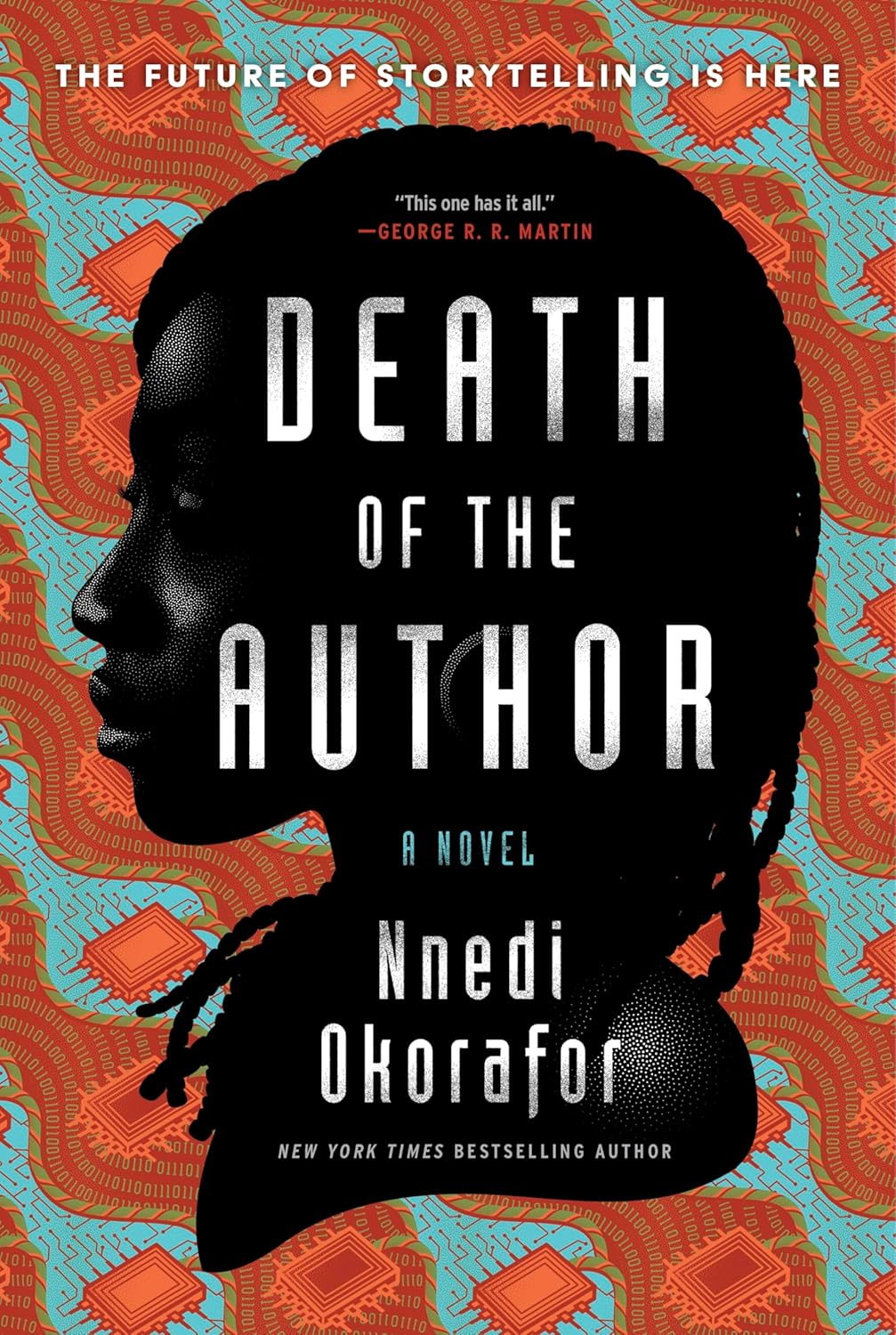
I have spent a couple of days trying to think of a time where I thought a story-within-a-story structure worked for me, and for the life of me I’ve been unable to come up with one. The main character in Nnedi Okorafor’s Death of the Author is– get this– a Nigerian-American female author who lives in Chicago and is in a wheelchair due to a childhood injury, and at the beginning of the book she writes a science fiction novel that is a massive success. A massive, massive, massive success, propelling her to J.K. Rowling or Stephen King levels of fame. Portions of the book are given over to excerpts from her book, Rusted Robots.

The problem is Rusted Robots is terrible. It’s unreadable. By the end of the book I was skipping all of the Rusted Robots sections, and I generally don’t skip or skim parts of novels. And, man, it’s really damn hard to read a book that is all about how amazing and life-changing some other book is, especially when they keep giving you parts of that other book and you keep skipping them. The obvious self-insert doesn’t really make any sense (Okorafor doesn’t use a wheelchair, but had a surgery for scoliosis go bad as a young woman, and she needed crutches to walk for a long time) and Zelu as a character is generally unbearable. She’s selfish and impulsive and her family is terrible, so you’re confronted with a situation where you don’t like the main character and think her family treats her poorly and think they’re mostly right even though they’re terrible about the way that they’re right.

It’s also really weird to read about the various ways Rusted Robots affects Zelu’s life, because as an actual science fiction author Okorafor has to know that this isn’t how this shit works. Okay, granted, Nigerian women in wheelchairs aren’t terribly common sights, and Nigerian women with the experimental leg exoskeleton devices she acquires midway through the book are even less common, but Zelu gets recognized repeatedly every time she leaves the house, by people who a lot of time are reading her book right at that very second so they can shove it in her face to sign. Zelu’s relationship with her Internet fans makes more sense, especially as the wait for Book Two of her unplanned trilogy gets longer, but no debut author has ever gotten this famous this fast. It’s nutty.

I three-starred it on Goodreads because despite my complaints it’s still an Okorafor novel, and it was one of those books that despite not liking it very much I didn’t want to put it down, but a twist at the end very nearly made me knock it down to two, and I still might.

Sigh. I really like all three of the authors in this post! Scalzi, in particular, is someone who I have referred to as “one of my favorite authors” more than once, but When The Moon Hits Your Eye marks his second miss in a row after Starter Villain, which was mostly underwhelming.

The biggest problem is that When The Moon Hits Your Eye actually is the book that Scalzi’s online detractors want to tell you all of his books are– it’s slight (I read it in three hours or so, and not because it was so amazing I couldn’t put it down), all of the characters feel exactly the same, and all the dialogue is bantery and quippy in a way that’s okay for one or two characters in any given book but not for damn near everyone. The concept of the book is that the moon suddenly turns to cheese, and the book talks about the next thirty days after that. There’s no main character, although some people are revisited a few times, but Day Fourteen might talk about a character that you never see again, or you might jump back to the people from Day Three on Day Twenty-Two and it’ll take you half of the four-page chapter to realize you’ve seen them before.

Oh, and I knew a girl once whose nickname was Mooncheese, for reasons I no longer remember, and I spent the whole book thinking about her, which wasn’t entirely unwelcome but was kinda distracting.

I dunno. The whole concept of the book is kind of deliberately dumb, and you can take something like that and play it kind of straight if you want to, but the characters in the book keep talking about how fucking stupid it is (those exact words) that they have to take the idea of the moon turning to cheese seriously, and after a while it’s really wearying. It’s just … it’s blech. It’s not very good, and it pains me to say that about a Scalzi book.

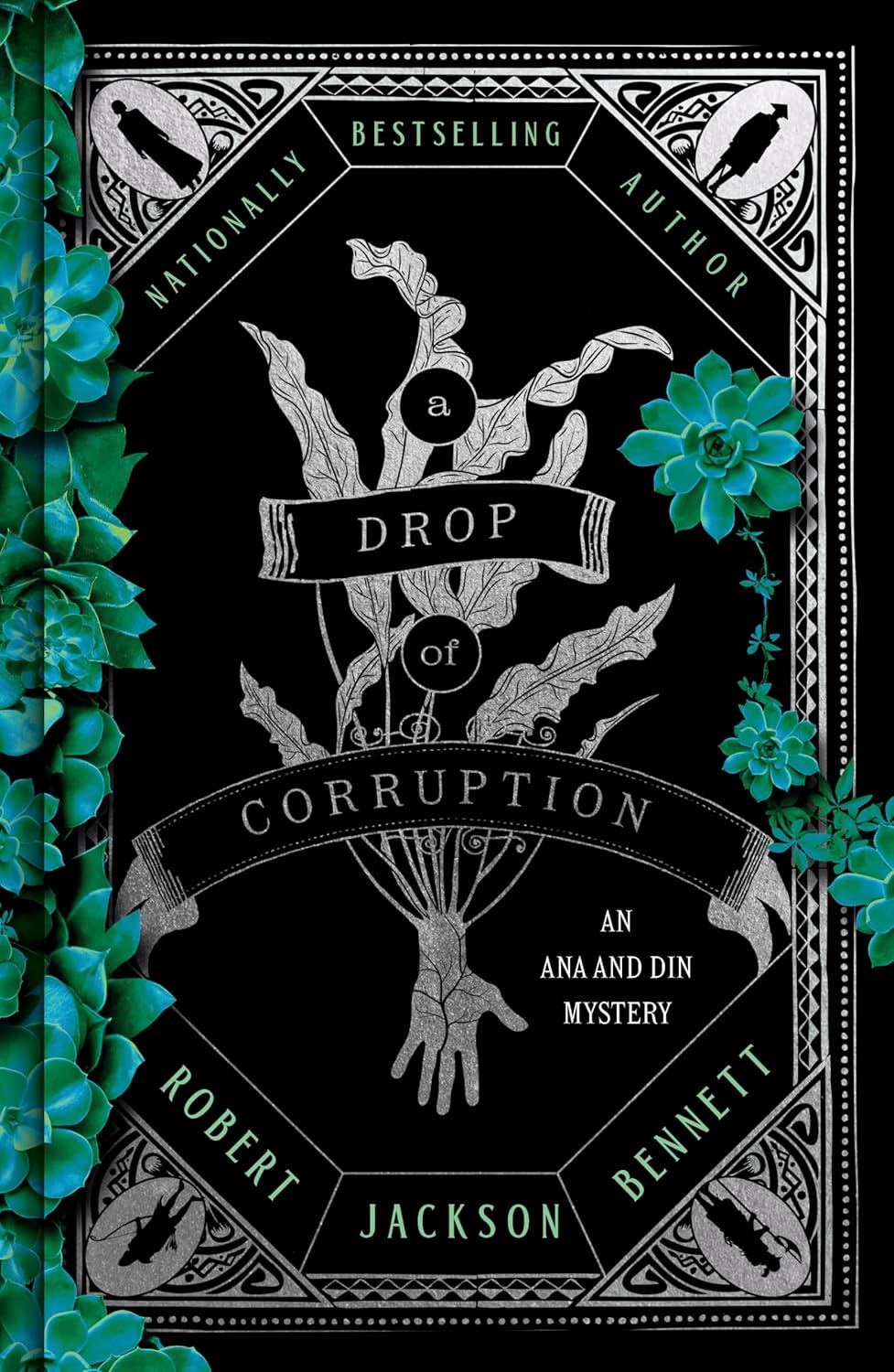
This, on the other hand. Go buy this immediately, and if you haven’t read the first book in what are apparently called The Ana and Din Mysteries, go grab it right now; it’s called The Tainted Cup and it’s really damn good too. The series hails from one of my favorite subgenres, “Sherlock Holmes, but …”.

This time our crime-solving pair are representatives of an Empire on a fantasy world with lots of biopunk “grafting” tech and occasional attacks by what are basically kaiju but they call Leviathans. Jackson Bennett leans heavy into body horror here– the victim in the first book died when a literal tree suddenly grew out of his body– and the Holmes of the series, Ana Dolabra, is a drug-addicted and probably genetically modified ubergenius who wears a blindfold because she can’t handle the constant visual input of the world around her. Dinios Kol, the Watson, is an Engraver, possessed of perfect recall but with a neat little twist where he needs to anchor his memories with scents to be able to describe them in a way that makes sense to anyone else. Ana is delightfully nuts and the world itself is fascinating as hell, and the Macguffin of this book is Leviathan marrow, which is just a great thing for characters to be chasing around and trying to find. I love this series, and right now this book is on my shortlist for 2025.

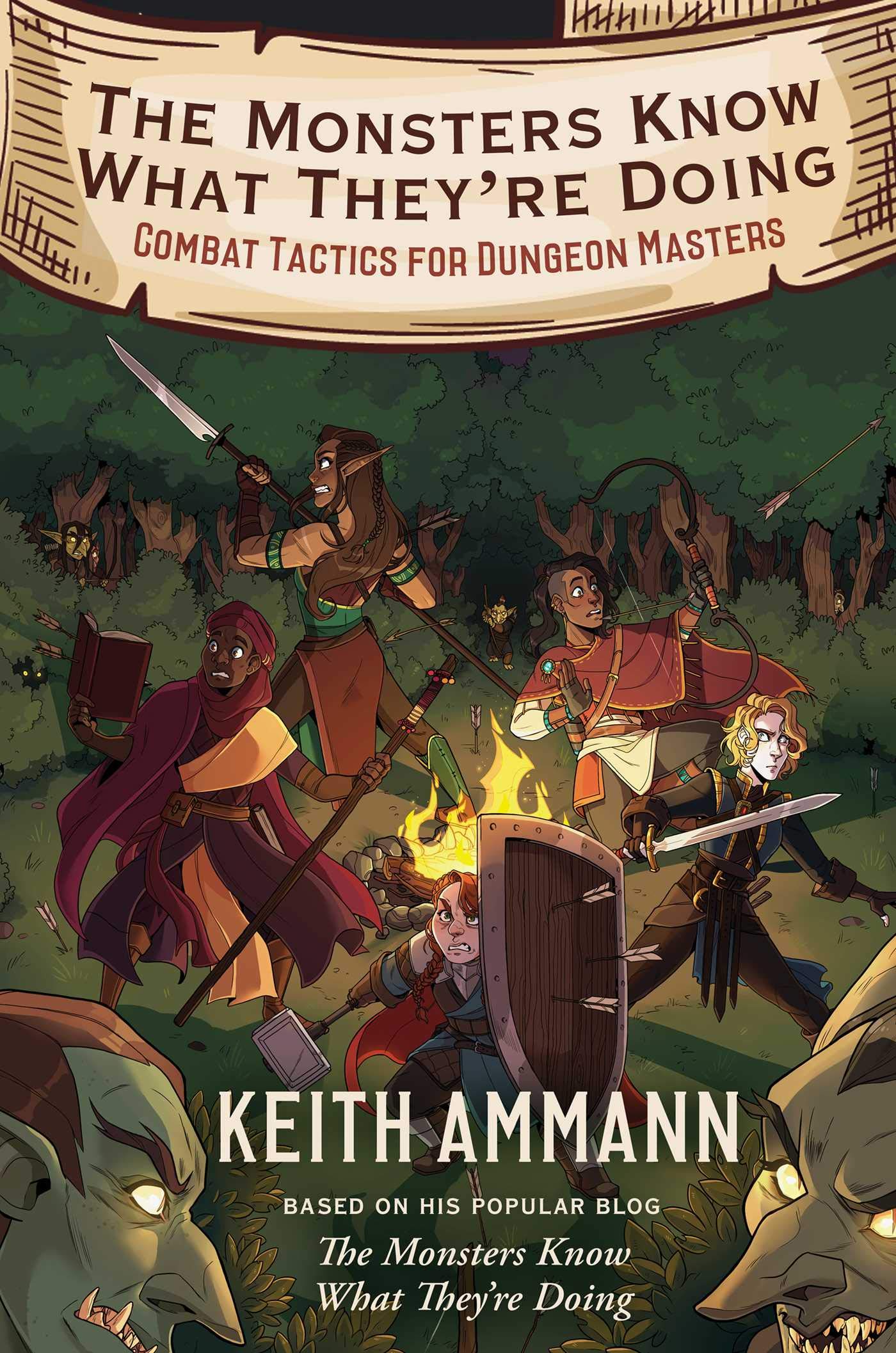
#REVIEW: The Monsters Know What They’re Doing: Combat Tactics for Dungeon Masters, by Keith Ammann

This is a new one: I’ve started reviews before by pointing out that I know the author, but in this case, I really know the author, as in “he knows my real name, was in my ed school grad program, and he’s been to my apartment.” Keith and I essentially had the exact same day-to-day schedule for two solid years, and while we’ve fallen out of touch other than occasional social media interactions since graduating in 2005, it’s simply not possible for me to leave my relationship with him aside while talking about this book. The Monsters Know is, in a lot of ways, possibly the Keith Ammanniest thing Keith Ammann could possibly have written, and while that’s a compliment, it’s very likely not one that’s going to be salient to anyone other than me.

Here’s the tl;dr: If you play Dungeons & Dragons, and especially if you’re a DM, you’re highly likely to really enjoy this book. If you do any sort of fantasy roleplaying that isn’t exactly D&D but is D&D adjacent, it’s probably going to be useful anyway. The book– five hundred-plus pages– is filled with essays on what feels like the entire Monster Manual (it probably isn’t, but still) breaking down various fantasy monsters based on their provided stat blocks, and providing suggestions on how they might act, what tactics they might use, and how they might react to any number of possible actions by your player characters.

There is also math. I’ll get to that in a bit.

Now, to be clear, I did not read this entire book. Why? Because it’s more of a sourcebook than something you sit down and read straight through, and if I have a criticism of it it’s not of the writing or the subject matter but the physical format of the book, which looks like a novel or, like, a “regular” book, when I really feel like it ought to be formatted more like a roleplaying sourcebook of some sort. I probably read … half of the entire thing, skipping around to different monsters I was interested in and occasionally occasionally passing over sections that were a little more power gamey than I’m interested in. Ordinarily I wouldn’t review something if I hadn’t read all of it, unless it was an actual DNF, but again: that’s not what this book is. The section on the kuo-toa will be there whenever you actually decide to include kuo-toa in your game; you don’t really need to read every word of that to appreciate what the book is doing. I am fairly certain that if I told Keith, word for word, “I liked your book but I didn’t read all of it,” he would not be a bit surprised, nor should he be.

Let’s be a touch more specific, though: based on, for example, the description of a species as being high Dexterity but low Strength and medium Intelligence, and the different combat abilities that a species or monster might have, The Monsters Know might suggest that this species prefers to attack from ambush, using sniping tactics and a high likelihood of retreat once injured. From there the section might move more specifically into D&D language, suggesting that Dash and Disengage actions might be used frequently in combat, and sometimes it’ll go so far as to map out a model encounter of sorts. A lot of the time it’ll then get into the actual mathematics behind various attacks, spells, etc, using those numbers to suggest which abilities a monster might prefer to use and which would provide a bit more utility and a higher reward to risk ratio. A lot of the time it’ll suggest a hit point threshold at which point a monster might retreat, too. I haven’t DMed much at all, really, but this was still fascinating to read and to think about, and I may suggest my son look through it, as he’s starting his first homebrew campaign soon. The book loses me a bit when it gets super granular about the numbers behind the abilities, but that’s the beauty of a sourcebook; you can ignore the stuff you aren’t as interested in. I was never a power gamer, and was always more interested in the abilities that felt fun or cool than whatever might be strictly the most effective move at any given time, so that stuff isn’t for me as much.

So yeah. My buddy wrote a book. If you’re into the same kind of nerdery we are, you should definitely check it out, and you can also go to Keith’s blog (the source of a lot of this material) at themonstersknow.com. If you’re in, he’s on his … fourth or fifth book by now, I think, so there’s a lot more where this came from.

#REVIEW: The Raven Scholar, by Antonia Hodgson

I got a second copy of Antonia Hodgson’s The Raven Scholar on the day I started reading it. And it wasn’t quite on purpose– the copy on top there showed up on release day, since I’d preordered it after it caught my attention somewhere at some point in the last few months, and then Illumicrate sent me another copy as part of their monthly box. This is the first time that’s happened; the unofficial rule for Illumicrate books seems to be that they only send me books I’ve never heard of, and this is the first time they’ve sent me one I already owned, although I have bought a couple after reading them so that the series were sure to match. One way or another, though, the Illumicrate edition is fucking gorgeous, one of the prettiest books they’ve sent me, so I’m not pressed about it.

… and suddenly I want to change the title of this post and take the word “review” out of it, because the more I think about it the less interested I am in writing even a traditional-by-my-standards book review. This book is weird; I enjoyed reading it, and I’ll pick up the sequel– which may be, in and of itself, enough of a review for anyone who cares at all about my opinion– but there’s a lot about it that makes me reluctant to star-rate it. For one, it’s a Magical Tournament book, and I am tired of books that can be boiled down to the name of a trope. On top of that it’s a People Are Sorted Into Categories book, although it’s not the entire society, at least, but nearly all of the main characters in this book represent the devotees of one of the eight animal gods (creatively named “the Eight,” although it’s fun seeing the word “eight” used as a swear word) and some of the ones who don’t used to. Which leads me into another gripe, which is that every character effectively has three names, since sometimes they’re referred to by their first names, sometimes by their last names, and sometimes just by their faction, so you might see someone talking about “the Hound” and you have to remember who that is. Spread that out over the eight people involved in the tournament (which is how they pick their emperor, who appears to be a king, and I wish people would learn the difference) and keeping track of everyone can be a little more complicated than maybe it should be.

But! There’s a murder mystery at the heart of this book, and the murder mystery is wrapped around the succession tournament and the eight-faction worldbuilding thoroughly enough that it’s hard to extricate from it– this story only works in this world– and main character Neema, the titular Raven Scholar, is tasked with untangling the mystery as well as trying to become emperor on the side, a job she’s not even interested in, because the outgoing Emperor has ordered her to try to become his successor, which makes more sense in context than it might sound. Only Neema’s not much of a scholar– she’s more of an autistic nerd, which isn’t quite the same thing– and occasionally she gets really good at physical combat because she has to.

Oh, and there’s a Shoehorned Enemies-To-Lovers Romance, because everything has a name nowadays.

I dunno. I liked this book, as I said, but every ten pages or so something jumped out and kind of annoyed me? But not enough that I didn’t five-star it, although right now I’m not sure why? Because maybe I don’t know what a five-star is, and of course I’m writing this, when I could have just not talked about the book.

Maybe I should just go back to bed.(*)

(*) It is 6:18 PM.

#REVIEW: Advocate, by Daniel M. Ford

The standard disclaimers apply: Dan and I are Internet Mutuals, the origin of which is lost to time but almost certainly involves Twitter somehow. I spend a fair amount of time hanging out in his Discord server, which is, in fact, the only Discord server I spend any time in. And while I reviewed The Warden, the first book in this series, I somehow did not review Necrobane, the second book. My vague recollection is that I had kind of complicated feelings about it and the review just kind of got away from me; I didn’t dislike it, although I do have to talk about it in order to talk about Advocate.

Which, by the way, I’m gonna screw this up: the name of the book is Advocate, not The Advocate. I keep wanting to put that The in there.

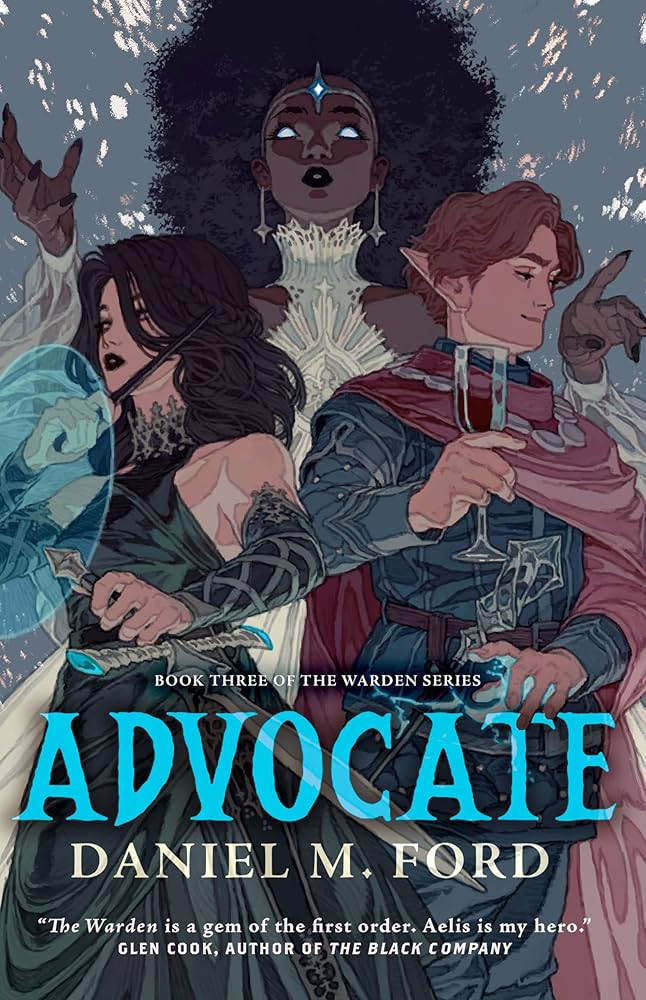
So let’s rip the Band-aid off here: viewed on its own, I really enjoyed Advocate, for much the same reasons I enjoyed Warden, and the rest of Dan’s work. Aelis is a fabulous asshole, of a type I enjoy reading about, and a couple of the new characters, particularly an alcoholic gnome named Mihil and a fellow Warden (and ex-girlfriend) of Aelis’ named Miralla, are also a lot of fun. That’s Miralla in the back on the cover, although the elf on the right is not Mihil, even though he should be.

(I get why he isn’t; that’s Amadin, another Warden, and he’s a fairly important character, but I suspect the real reason Mihil isn’t on the cover is that including a gnome in the composition would make placing the cover text tricky.)

The bulk of Advocate unfolds like a mystery, although we know who committed the crime from the first pages of the book, and Aelis’ job is less to prove her former mentor innocent than to convince the court that no crime was committed in the first place. The story is satisfyingly twisty-turny and Aelis gets plenty of time to show off her two best character traits: her utter confidence in her own ability to outwit literally anyone and her tendency to make a snap decision, get in over her head, and then somehow come out on top anyway. There’s lots of swordplay and quite a bit more actual necromancy than what we saw in the last couple of books.

Advocate‘s biggest problem is that, while the cover calls it “Book Three of the Warden Series,” it is, for now at least, the final book of the Warden series, and it’s structured much more like Book Three of Six than Book Three of Three. But let’s back up a little bit and talk about Warden and Necrobane.

Warden ended with Aelis screwing up in a fairly spectacular way, potentially unleashing a continent-wide zombie plague. I was expecting the rest of the series to be focused on that not-minor problem, and the book went an entirely different way than I expected, dealing with what I thought was going to be a two-book problem in about a hundred pages or so and then pivoting into something else. At the end of Necrobane, Aelis’ love interest is magically bound to a particular plot of land in the midst of a wild forest a fair distance away from Lone Pine, and Aelis is unable to figure out how to free her. Then, at the end of the book, she is summoned to the city of Lascenise, a major (and wealthy) metropolitan area, to serve as an Advocate for her old mentor, who has been accused of murder. An Advocate is basically a Warden lawyer; Bardun Jacques has a lawyer but is entitled to a Warden defending him (and investigating his case) as well. He has asked for her specifically. She has no real choice but to go.

This was another left turn, and I was concerned with what it meant; that Book Three would be taking place in an entirely different place and with, importantly, an entirely new cast— Maurenia being magically stuck on a couple acres of land a week or two away, and half-orc werebear Tun being entirely unsuited to life in a city. And, in fact, that’s exactly what happened. The two stories do end up knitting themselves together, but Tun’s presence in the story is minimal and Maurenia’s role is basically to be something else that Aelis has to worry about in addition to the rather significant number of new problems the story is dumping on her head. It’s probably important to point out that Aelis was going to have to head toward civilization anyway, as she was going to need access to libraries to figure out how to release Maurenia, but she’s more or less stuck there until her Advocate duties are discharged. Making things worse, in her last scene with Maurenia before leaving it’s made clear that there’s a time limit on how long she has to break the spell before Maurenia is, effectively, taken over by the forest.

(Side note: Necrobane also features a fight with one of the creepiest monsters I’ve seen on-page. The book contains a tooth golem, which is every bit as awful as you might think, and maybe worse.)

So your appreciation of Advocate is going to be contingent on how much you like Aelis, and how willing you are to lose the supporting cast we’ve grown to like over the last two books. This is what I mean by it being a better “book three of six” than an end to a trilogy; there’s lots of expansion to the worldbuilding and lots of character development for Aelis (we meet her family!) and all of that is cool but if you were really vibing with her and Maurenia’s relationship, or her mentor/mentee relationship with the little girl she’s teaching to read at the end of Necrobane, you’re gonna have a hard time. And this would be much easier to bear if we knew there was Book Four on the way out there, but Tor has really screwed this series over(*) and right now there isn’t one. I decided to star-rate it on its own merits, mostly because no one can stop me, but I can imagine other readers being less happy.

I want more books in this series, in other words, not only because the world is fascinating and I want more but because I think the story and the characters deserve it.

(*) Not my story to tell, unfortunately, but I feel like they owe Dan another trilogy to make up for how they treated this one. Even if I didn’t know him, the simple fact that somehow I have bought five copies of the three books in this trilogy and still don’t have a matching set to put on my shelf would have me deeply pissed.

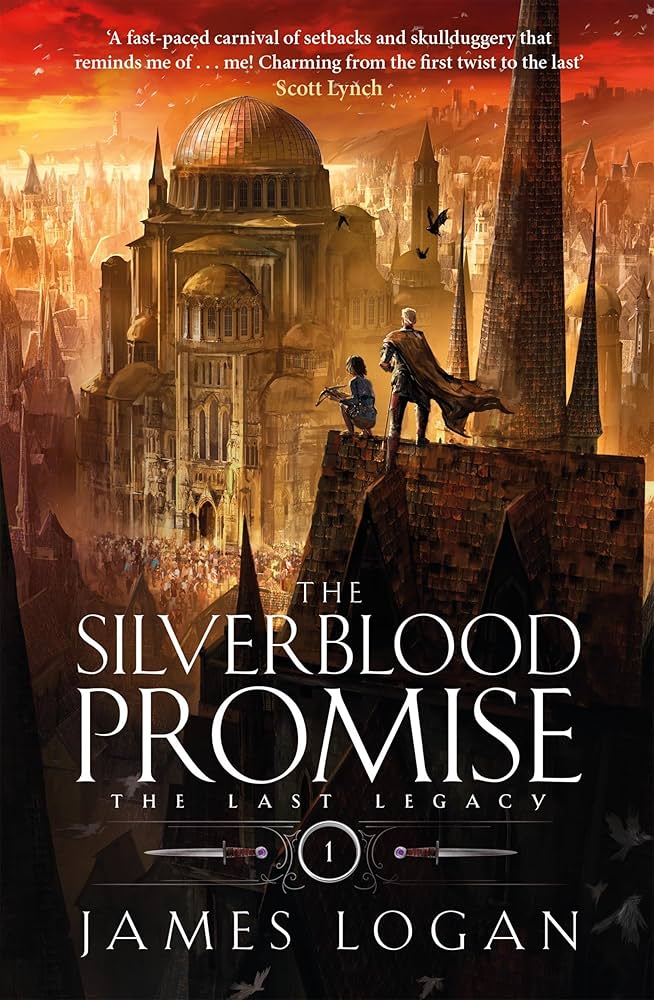
#REVIEW: The Silverblood Promise, by James Logan

You may have noticed this about me by now: I love me a good heist story. Any time a book is about a charming rogue whose job is to rob somebody, I’m pretty well in from the jump with no further information needed. Breaking into somewhere? Breaking out of somewhere? Scamming the local merchantry or rich assholes into, well, anything? Yep, here’s my debit card, we’re good.

The Silverblood Promise is not quite a heist novel, at least in the sense that it’s not about a single overarching act of scammery. Main character Lukan Cardova is a bit of a con man and certainly a charming rogue, but the story kicks off when his estranged father dies and sends him off on a wild quest to a hive of scum and villainy on the other side of the continent, in search of … well, Lukan’s really not sure at all what he’s in search of. He has a last-words type of note written in his father’s blood with three names on it: his, the name of the city, and another he doesn’t recognize. This is very much a “one thing leads to another” type of book, where he finds out who he’s looking for, but she’s in jail, and then he deals with that, and then there’s this whole other thing that he needs to do, and everything he manages to complete leads to another quest, much to his great annoyance. The story keeps moving along at a pleasantly rapid clip, and by the end of it Lukan is not only hip-deep in local and possibly inter-dimensional politics as well as a thieves’ guild or two but he’s acquired a combination minion and surrogate daughter in an eleven-year-old named Flea, who tries to rob him early on and then just … sticks around after that. There’s no One Big Scheme, but there are literally five or six smaller ones; maybe this is a heists novel, and not a heist novel, who knows.

There are enough ideas for five or six books packed into this book, which is Part One of (I believe) a trilogy, with the second volume to follow this fall. If anything, the book might be overstuffed, as every side character and local power structure Lukan runs into is something I wanted to know more about, but as far s I know the second novel takes place in an entirely different city. The book’s biggest weak spot is, unfortunately, Lukan himself, who can tend toward being whiny (he’s thoroughly exasperated with the plot of his book by the end) and is also a bit of a drunk, but the book at least knows that being the drunk is a character flaw. This is Logan’s debut novel and there’s also a bit of that thing where Lukan occasionally basically replies to the third-person omniscient narrator. The type of thing where the book drops a bit of worldbuilding and then Lukan will think Yeah, that sucked, or something along those lines. It can certainly be overlooked and some people won’t even notice it, but if it’s the kind of thing you notice, it’s gonna knock you out of the book once in a while.

That said, my gripes are minor and I chewed through this book’s 500+ pages in two days, losing some sleep along the way. I had a feeling, picking it up, that this was going to be one of those books that I regretted leaving on my Unread shelf for so long, and … yeah. I’ll be reading the sequel pretty close to immediately, when it comes out in November.