Do you know this man?

I do a trivia question every week. It’s usually a history question of some sort, and the stakes are low; you can get the answer any way you want except for asking me (it’s literally impossible to cheat) and if you get it right you get a piece of candy on Friday. If you get it wrong nothing happens. Some kids do it every week, some when the mood strikes them or a friend offers them the answer, and some will pretend in late May that they never heard me mention it.

I usually theme the questions at least a little bit, and since it’s Black History Month I figured I’d highlight some figures from history and see how many the kids could identify. My building is pretty diverse, which I’m not using as a code word for “mostly Black,” I mean genuinely pretty well-mixed. That said, I’m not really expecting many of them, if any at all, to immediately recognize that fine gentleman up there; my theory was they’d either take a picture of the picture and ask some adults or do a reverse Google Image search, which I believe has been the process for the handful of correct answers I’ve received so far.

(Yes, I know “Who is this?” is not a trivia question in the classic sense of the term. Shut up. It’s my game and I can do it however I want. Next week will be Mae Jemison, I think.)

Anyway, the insistence from the first several kids that gave me answers that that was either MLK Jr. or fucking Steve Harvey has me questioning my sanity. And it wasn’t like it was white kids being clowns, either. At least one Black student asked me in apparent seriousness if it was King. I’m not supposed to give them help one way or another but I needed to shut that down immediately if I planned on surviving the week.

So. Without any research or double-checking, do you know who that is?

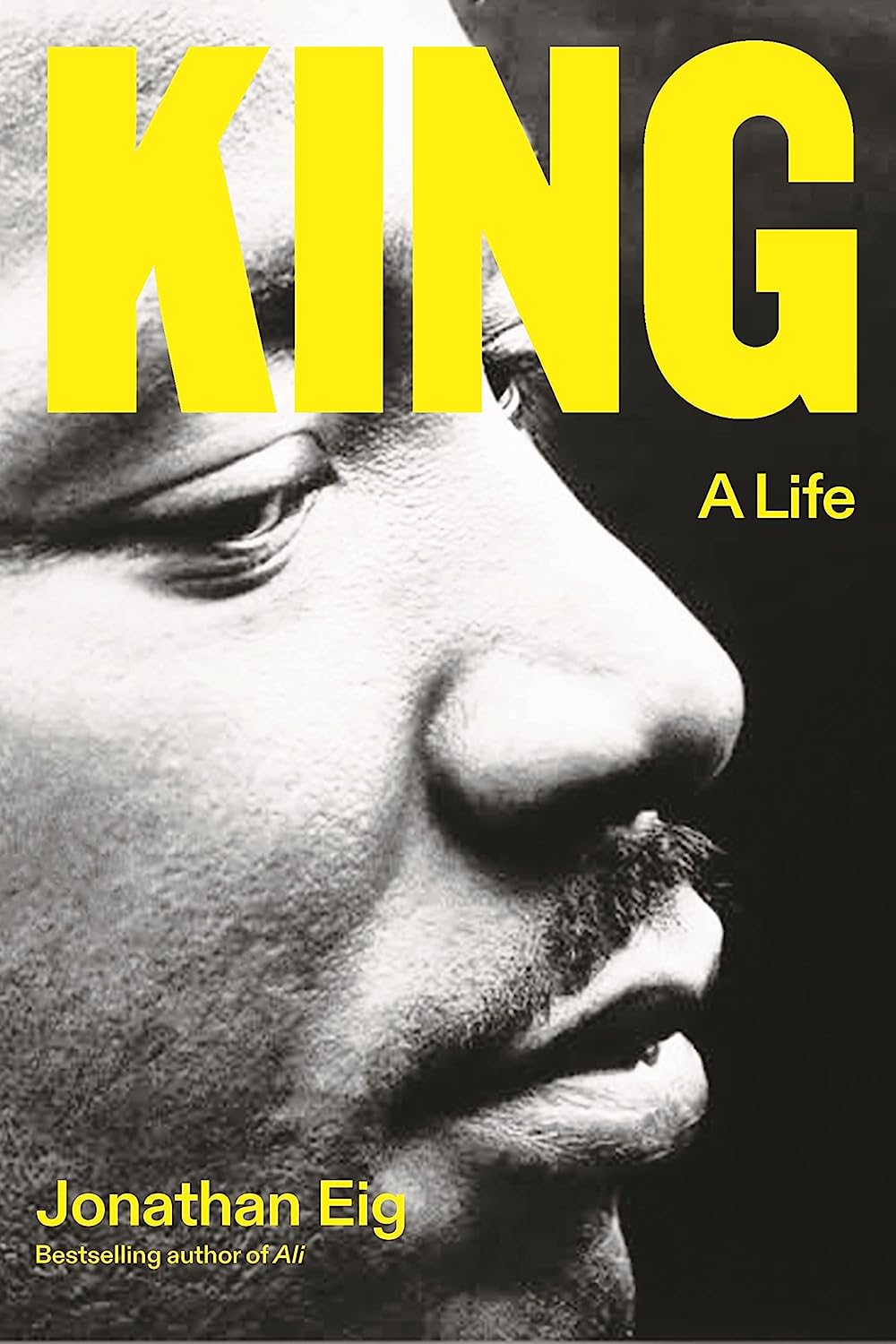
#REVIEW: KING, A LIFE, by Jonathan Eig

It was White People Shut Up Day yesterday, and one of the absolutely great things about the fact that I’m no longer on Twitter is that I made it through the entire day without unwillingly encountering any idiot Republicans’ takes on Martin Luther King. I say this every year: the fastest way to find out how someone would have felt about Martin Luther King is to ask them how they feel about Jesse Jackson, or Al Sharpton, or, hell, Barack Obama, or if you’re feeling adventurous, Jeremiah Wright, if the person you’re talking to even knows who Jeremiah Wright is. Fully 62% of Americans held a negative view of King when he was killed, and that number had been increasing steadily for years as he moved away from civil rights and began talking more about poverty and the Vietnam war. White people hated Martin Luther King, and most of them would still hate him today if he were still around. 

And, well, I don’t necessarily need to do a lot of talking up of a new biography about King to help you decide if you’re going to read it, do I? Probably not. I probably know more about the Civil Rights era than any other time in American history, and there hasn’t been a new major biography of King in ages, so there was little to no chance I wasn’t going to pick this up, and I know enough about the man’s life already that a bullshit take on him isn’t going to get past me easily.

(almost starts another paragraph with “and, well”)

Here’s the thing: for better or for worse, Jonathan Eig’s take on King is the most human I’ve ever seen him. At this point, fifty-five years and some change after his death, we’re bordering on historical Jesus level of mythologizing cruft around this man, and at certain points by treating King like a person Eig almost feels disrespectful. Like, if you aren’t already aware of some of his failures as a pastor and a person– chief among them that he was a massive horndog, cheating on his wife every chance that he got– this book is going to be shocking. I was aware that there were allegations that he’d plagiarized parts of his dissertation but I wasn’t aware just how comfortable he seemed to be with lifting other people’s work more or less whenever he felt the need to. And, perhaps most striking to me personally, he had enormous struggles with anxiety, depression, and imposter syndrome; Eig never comes out and says it directly but it’s hard to not form the opinion that part of the reason for all of the adultery was 1) a massive self-destructive streak and 2) sex, drinking and smoking being one of the few ways the man allowed himself to blow off steam. 

I’m not justifying anything, mind you, but I’m also not especially interested in dwelling on his failures that much, particularly when it’s made clear that Coretta knew exactly what was going on and turned a blind eye. 

The broad historical strokes of the man’s life are already well-known, and I suspect most Americans who have read even a single book about the Civil Rights movement or Black history in America specifically could do a half-decent job of tracing the major events. It’s as a psychological analysis that this book is interesting, and it’s also what makes this book depressing. Because thinking of MLK as a … person … really and genuinely does come off as kind of rude. It just feels funny. It’s well-written, and well-sourced, with a couple hundred pages of footnotes at the end, and I’m absolutely glad that I read it, but … damn. Y’know? Maybe you don’t. I dunno.

Look at how tired he looks on the cover. That’s absolutely not an accident.

At any rate, read the book.

#REVIEW: AND THE WALLS CAME TUMBLING DOWN, by Ralph Abernathy

Dr.-Martin-Luther-King-Jr.-and-Rev.-Ralph-Abernathy.jpgYou may not be aware of who Rev. Ralph David Abernathy is, but I guarantee you know his face.  Why?  He’s the guy standing just behind or just to the side of Martin Luther King, Jr. in every picture of Martin Luther King ever taken.  In many ways he was as influential to the civil rights movement as King was– he was even the guy who brought King in as the visible face of the movement during the 1955 Montgomery Bus Boycott, which was what made MLK a national figure– but because he was so often quite literally the guy behind the guy he’s not nearly as well known.

I just finished his autobiography, And the Walls Came Tumbling Down, a book I have owned for a while and really should have read a long, long time ago.  It’s one of the more interesting autobiographies I’ve ever read.  For example, here is the cover blurb:

The detail Mr. Abernathy offers about his life with Martin Luther King Jr. is enlightening and helps us understand what a remarkable man King was. 

You catch that?  It’s Abernathy’s book, about Abernathy, but even the blurb on the cover is about King.  So the book needs to be read on a few different levels: one, as an autobiography, two, as a biography of an entirely different person, and three, as a history of the Civil Rights movement, and specifically the Southern Christian Leadership Coalition, which King was President of and which Abernathy took over (at King’s explicit direction) after King was killed.

The ultimate result is a book that is most successful at item 3, I think, and, oddly, is weakest at item 1.  Abernathy discusses his early life carefully enough, I suppose, and you get a good picture of what growing up in Alabama in the thirties must have been like, although he’s careful to note that he was more privileged than most.  Once the SCLC enters the picture, though, any mention of Abernathy’s family or private life (or even his pastorship outside the SCLC) disappears.  The births of three of his four children go unmentioned, for example, and while his wife Juanita is present throughout the book she’s mostly there, along with Coretta Scott King, as a provider of home-cooked meals.

The book functions best, as I said, as a history of the major struggles of the SCLC, with one major caveat:  Abernathy, and it hurts me to say this because of who he was, was apparently a bit of a pompous ass.  There are a number of other important figures throughout the movement who Abernathy clearly loathed, and some, such as Stokely Carmichael, endure abuse virtually every time they are mentioned. Jesse Jackson has an entire chapter that, other than the final page, is wholly dedicated to how egotistical he was.  He treats the Student Nonviolent Coordinating Committee like it was overrun with Black Panthers from day one, which is manifestly untrue, yet neglects to mention the actual beginning of the black power movement, which he was present for.  Most amazingly, Abernathy managed to write an entire chapter about the March on Washington without mentioning Bayard Rustin.

There would not have been a March on Washington without Bayard Rustin, and his omission is shocking.  I can only assume that Abernathy disapproved of Rustin being openly gay, because otherwise he should have popped up way more often.  With Carmichael and Jackson, the differences were more clearly personal.

And then there’s the way he treats MLK, and that for me is both the worst and most interesting parts of the book.  Here’s the thing: Martin Luther King was not the perfect saint that modern media wants him portrayed as.  He was, as I’ve said before, human.  And he was, unfortunately, among many, many other things, the vast majority of them good, a philanderer.

Now: if you’re writing a biography of Martin Luther King Jr., you owe it to him and to your audience to not treat him as an unassailable, perfect person, and I think King himself would agree with that.  An biography of King, at least one intended for grown-ups to read, should deal with the man’s darker side.

But if your book is about you, and you were Martin Luther King’s best friend and constant companion through the most important years of his life, and if you were literally the last human person he touched and saw and tried to speak to before the assassin’s bullet took his life, maybe, just maybe you don’t devote a chunk of the chapter about the night he was killed to the fact that he slept with as many as three different women during the couple of nights before the assassination.  Maybe you leave that detail out.  Maybe you don’t devote several pages to it.  Just maybe.

It comes off kinda fucked up, is what I’m saying.

So, yeah: make no mistake, Ralph Abernathy was a pompous ass and one of the ways he uses this book is to settle some scores, and he occasionally takes some credit for things he wasn’t entirely responsible for, and I can’t help but think that I think some residual jealousy toward King was informing the way he wrote about the last few days of MLK’s life.  But I’m not star-rating Ralph Abernathy, and again, the man is allowed to be human, and the good he did in life far, far outweighs spreading some vitriol around in the autobiography he wrote the year before he died (and, possibly relevantly, after having had at least two minor strokes.)  As a book, AND THE WALLS CAME TUMBLING DOWN is fascinating, and any student of the Civil Rights Movement should have already read it.

Five stars.

In which I guess I’m on a watch list now

IMG_2872So that was interesting.

Any of you who have read Searching for Malumba closely have no doubt noted the dedications page.  If you haven’t, feel free to click on that link right there and check out the “Look Inside” feature and you can go see it for yourself right now.

Then buy the book.

Ahem.  Anyway. SfM is dedicated generally to all the teachers I have known and/or worked with in my life, and specifically to about a dozen or so who have been my teachers, ranging from my second grade teacher to graduate school.

One of those professors is Bill Ayers.  Yes, that Bill Ayers.  Y’know, the guy who gave DeRay McKesson the idea to wear a vest everywhere he goes.

This week, I got in touch with Bill and another former professor and asked them both if they would be interested in me sending them copies of Malumba, seeing as how they’re mentioned in it and all.  Both were incredibly gracious about it and managed to actually seem excited about me sending them some of my nonsense through the mail.  Now, Bill still lives in Chicago.  The other professor is on sabbatical in Rome right now, but actually works at the Catholic Theological Union, so both packages were going to the same ZIP code.

I have mailed dozens of books from my local post office, and my PO box is there, too.  This means that the employees recognize me and that, furthermore, I’m always mailing the same thing— a book or two in the same damn kind of padded envelope I used last time, book rate, and yes I want a tracking number because I send people the tracking numbers.

I have never been hugely fond of the woman who took care of me today.  She always seems to be in a bad mood and has the type of pinched. harried look about her that brings to mind the old adage about having the face you’ve earned once you turn fifty.

I hand her my (identical) packages.  “Book rate,” I say.  The one on top is Bill’s.

She takes a long look at Bill’s, frowns rather conspicuously, and says something that no post office employee has ever said to me when trying to mail a book.  And, again, I’ve been in there dozens of times in the last couple of years.

“You understand that any postal employee may open and inspect any book rate package at any time and for any reason, yes?”  She stamps the package with something, then looks at the other one, hesitates for several seconds, and stamps it anyway, which seems to indicate that she didn’t have to stamp it.

I keep my face neutral, neither laughing at her nonsense nor arguing with her.  Just said yes.  You just better package that shit up correctly when you’re done with it.

She takes care of business, carefully putting the book off to the side (note that this isn’t suspicious; she put it where they always put my books when I mail them) and then suddenly remembers that the second package is there too.  Stares at that one for a second.

“Are you sure that this address doesn’t need an apartment number?”

What the fuck, lady.  Just mail my shit, okay?

“It’s the Catholic Theological Union,” I say.  “No.”

I leave out that the professor I’m mailing it to is the CTU’s professor of Islamic Studies.  Because I think I’ve had enough shade thrown at me today.

The end.

In which I gently suggest something to white people

Take a look at these two pictures.

JESSE JACKSON EATONVILLE al-sharptonWhat do you think of these two guys?  Go ahead, jot down a few thoughts.

Okay.

I hate to break it to you, but you just told yourself more or less exactly what you’d think of Martin Luther King Jr. if he were still alive, or (having just had his 86th birthday, after all) if he’d been allowed to live a normal human lifespan and was no longer with us.

Yes.  Really.

No, he wasn’t different.  Look at the things white people were saying about Martin Luther King Jr. when he was alive.  People say the exact same things about Jackson and Sharpton.  Word for goddamn word.

Publicity hound?  Outside agitator?  Stuck his nose in where it didn’t belong?  Communist?  White people said all that shit about King, and white people say all that shit about Jackson and Sharpton now.  (Okay, Al Sharpton to my knowledge has never been accused of Communism.  But Jackson has.)  Do you happen to know what King was doing in Memphis when he was killed?  Supporting a sanitation workers’ strike.  Hardly a national issue, right?  He’s just preening for the cameras.  Just likes the attention.

Same.  Exact.  Shit.

Oh, but <insert ethics thing here>?

King was a notorious womanizer who plagiarized much of his doctoral dissertation.  These assertions are facts; they aren’t even controversial.  Had he not been assassinated, there’s every chance that Coretta would have divorced him eventually.  And he’d have had an extra forty-some-odd years for either the press to dig up more dirt or to make more mistakes in his life, depending on how charitable you feel like being about it.

This is not to denigrate King’s legacy.  That is unassailable– and, in fact, part of the reason King’s legacy is unassailable is precisely because he was killed.  I am trying to point something out that should be obvious: Martin Luther King, Jr. was. a. PERSON.

He was not Jesus.

Hell, Jesus wasn’t even Jesus, but that’s a whole ‘nother post.

He was a man, and white people hated him.  Murdered him, in fact.

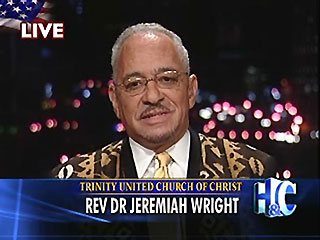
You are not different by virtue of the fact that you’re alive nearly fifty years after he was shot.  If anything, King was more of a leftist than Jackson and Sharpton are now, and given where his rhetoric and politics were going at the time he was killed, maybe I should have included a third picture up there:

wrightfoxnews

(Went ahead and gave y’all a caption, because I know you don’t know what Jeremiah Wright looks like.)

I’m not sure what in particular got on my last nerve about this year’s MLK Day, but… damn.  Learn something, y’all.  Read some of what this dude had to say– and not just the I Have a Dream speech.  Look at what he had to say about Vietnam; muse on the fact that he was calling America “a sick society” as early as 1963 if not before that.  King was alive in the sixties, and most white people hated him.  If King was still alive in the 2010s, most white people would still hate him.  I hate to break it to y’all, but it’s true.

This is Martin Luther King Jr, white people:

An extended quote:

The only change came from America as we increased our troop commitments in support of governments which were singularly corrupt, inept, and without popular support and all the while the people read our leaflets and received regular promises of peace and democracy and land reform. Now they languish under our bombs and consider us, not their fellow Vietnamese, the real enemy. They move sadly and apathetically as we herd them off the land of their fathers into concentration camps, where minimal social needs are rarely met. They know they must move or be destroyed by our bombs. So they go, primarily women, and children and the aged. They watch as we poison their water, as we kill a million acres of their crops. They must weep as the bulldozers roar through their areas preparing to destroy the precious trees. They wander into the towns and see thousands of thousands of the children, homeless, without clothes, running in packs on the streets like animals. They see the children degraded by our soldiers as they beg for food. They see the children selling their sisters to our soldiers, soliciting for their mothers. We have destroyed their two most cherished institutions: the family and the village. We have destroyed their land and their crops. We have cooperated in the crushing of the nation’s only noncommunist revolutionary political force, the United Buddhist Church. This is a role our nation has taken, the role of those who make peaceful revolutions impossible but refusing to give up the privileges and the pleasures that comes from the immense profits of overseas investments. I’m convinced that if we are to get on the right side of the world revolution, we as a nation must undergo a radical revolution of values. We must rapidly begin the shift from a thing-oriented society to a person-oriented society. When machines and computers, profit motives and property rights are considered more important than people, the giant triplets of racism, militarism and economic exploitation are incapable of being conquered.

What do you think this guy would have had to say about the Middle East?  About, really, any aspect of current American foreign policy?  In a country where people think Barack Obama is a socialist?

There’s something strangely inconsistent about a nation and a press that will praise you when you say, Be non-violent toward Jim Clark, but will curse and damn you when you say, “Be non-violent toward little brown Vietnamese children.”

Go ahead.  Replace “Vietnamese” with “Muslim.”  And think about how white America would be treating this man if he were still alive.

Kids Who Die, by Langston Hughes

This is for the kids who die,
Black and white,
For kids will die certainly.
The old and rich will live on awhile,
As always,
Eating blood and gold,
Letting kids die.

Kids will die in the swamps of Mississippi
Organizing sharecroppers
Kids will die in the streets of Chicago
Organizing workers
Kids will die in the orange groves of California
Telling others to get together
Whites and Filipinos,
Negroes and Mexicans,
All kinds of kids will die
Who don’t believe in lies, and bribes, and contentment
And a lousy peace.

Of course, the wise and the learned
Who pen editorials in the papers,
And the gentlemen with Dr. in front of their names
White and black,
Who make surveys and write books
Will live on weaving words to smother the kids who die,
And the sleazy courts,
And the bribe-reaching police,
And the blood-loving generals,
And the money-loving preachers
Will all raise their hands against the kids who die,
Beating them with laws and clubs and bayonets and bullets
To frighten the people—
For the kids who die are like iron in the blood of the people—
And the old and rich don’t want the people
To taste the iron of the kids who die,
Don’t want the people to get wise to their own power,
To believe an Angelo Herndon, or even get together

Listen, kids who die—
Maybe, now, there will be no monument for you
Except in our hearts
Maybe your bodies’ll be lost in a swamp
Or a prison grave, or the potter’s field,
Or the rivers where you’re drowned like Leibknecht
But the day will come—
You are sure yourselves that it is coming—
When the marching feet of the masses
Will raise for you a living monument of love,
And joy, and laughter,
And black hands and white hands clasped as one,
And a song that reaches the sky—
The song of the life triumphant
Through the kids who die.