On YA, genre and litratcher

I was originally going to write a review of this book and discuss this in the review, but I took a nap this afternoon and still have 60-some pages left. Why did I just say “this book” and not the name of the book? Well, I’m doing that thing where I don’t want this post necessarily showing up in search results for the book, especially since this post is going to be pretty critical and it’s important for you to know that I’m really enjoying the read. I’m going to be a little sneaky about which title I’m talking about, though. Let’s see if you can figure it out.

I am a lifelong genre reader, and for most of that time I’ve been fairly open about my disdain for what people call Literary Fiction. Feel free to blame it on me being too dumb for Literary Fiction. That’s fine. I have an ego but for some reason it doesn’t extend to being bothered by that particular allegation. I don’t get most of the examples of the genre I’ve read; I usually don’t understand why anyone bothered to write the book in the first place and I understand even less what anyone is talking about when they praise them. In particular, use of the word “comic” can be a red flag. One guarantee is that any time a book reviewer I’ve never heard of describes a book as “comic” is that it will not, in any way, be funny. In fact, for the most part, it won’t even be trying to be funny and failing. “Comic” means something else to Literature People. I don’t know what it means and I’m not going to bother finding out.

This particular book has a bunch of pull quotes by people I’ve never heard of who wrote books I’ve never heard of on the back. The sole exception is George Saunders; I’ve heard of him and I know he’s fancy but that’s all I can tell you. The blurbs aren’t as bad as they can get; none of them appear to be random collections of words, and none of them use words that should not be used to describe books (“deliciously turquoise and refreshing prose”– HARPER’S) in them. But this was on the New York Times’ 10 Best Books list, which usually means only ten people read it, and it was a National Book Award finalist. Here is the list of every National Book Award winner. I admit, I have read five of them– interestingly, all but one nonfiction winners– and I have never heard of considerably more than five.

Anyway, this book should have been YA and nothing, nothing will convince me otherwise.

If the exact same book had been written by a woman, it would be shelved with YA. It’s The Hunger Games with a more complicated vocabulary, more swearing, and footnotes about the American carceral system. The premise is the most YA-coded thing I’ve ever seen; the idea is that incarcerated criminals can get their sentences commuted if they agree to engage in gladiator combat to the death every so often; if they make it three years and are still alive, they get to go free. They earn something called, no shit, Blood Points as they work their way through the combats; Blood Points can be cashed in for food, weapons, armor, better accommodations, shit like that. There’s this weird color-coded & scientifically implausible technology built into their wrists so that their captors can torture them for talking.

And partway through the book the main character finds out that she’s going to have to fight her girlfriend in her final fight– the convicts are loosely organized into teams, and a rule change means people on the same team have to fight if they’re at the same rank– and predictable angst occurs.

Come the fuck on.

Now, I’m not done with the book, so I don’t know whether the two characters are actually going to fight or not, but this is one hundred percent a science fiction dystopia that would have been shelved with YA with a different author. That’s not necessarily a bad thing! I’m thoroughly enjoying the book, and I’ll finish it tonight, having burned through its 360 pages in less than a day. Unless it completely blows the ending, it’s gonna be a five-star review. But looking at these blurbs and a couple of other pieces about it, it’s hilariously obvious that most of the people reading it have never touched dystopian literature in their lives and haven’t read any YA at all, because … one thing this book is very much not is especially original. I could have sketched out a broad outline of the plot within ten pages of the start of the book. So could anyone who has read any YA in the last fifteen or so years. I’m not going to look up how long ago Hunger Games came out because I don’t feel like being old. But there are a ton of “blabla has to fight to the death, because Reasons, plus fascism” books out there and while this is an excellent example of one, that’s still exactly what it is.

I’ve got lesson planning to do and then I really do want to finish this book tonight, so I’m going to leave this here– I probably will do a second post once I’ve finished the book, though. But come on, guys. Somebody got chocolate in your peanut butter and peanut butter in your chocolate and you’re doing your level damn best to not admit that you’ve got a Reese Cup in front of you. It’s a Reese Cup. We love Reese Cups. Just admit what it is and eat the damn thing.
#REVIEW, sorta: The Enchanted Greenhouse, by Sarah Beth Durst

I’ve done not much but sleep this weekend, and at least one person in the house has Covid and at least two are sick, and I didn’t have a lot of grading to do today but what I had to do was immensely annoying.

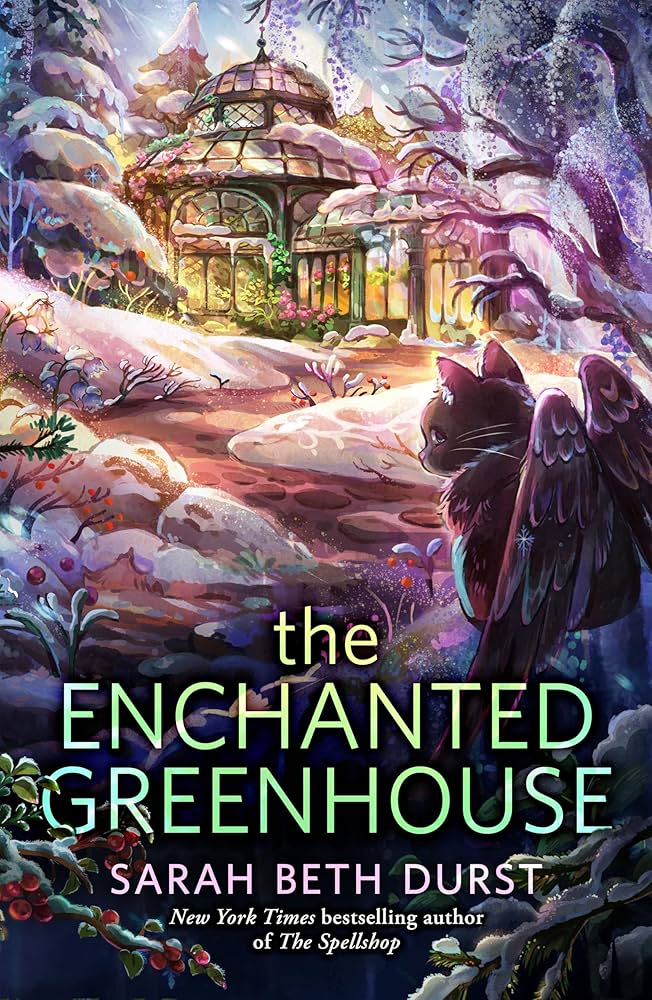
So, please, forgive me, when I write a very short review, less than it deserves: that The Enchanted Greenhouse is delightful, and it’s a sort-of sequel (same world, different characters) to The Spellshop, which I didn’t review when it came out last year but was also delightful, and it was absolutely the antidote to having read a bunch of books lately that I didn’t like all that much. It is short (I finished it in less than three hours, easy), low stakes (sure, “cottage core” or “cozy,” either works) and has a romance angle without ever descending into smut, and there are talking plants and a cat with wings.

I loved it, but I’m too tired to say much more, so just go read it, and enjoy peeling the pages apart, because something about the way they stained the edges kinda locks them together a little bit, and I’m not gonna sit here and pretend that the physical feeling of splitting the pages as I was reading didn’t add to my enjoyment of the book, because it totally did.

Back to bed.

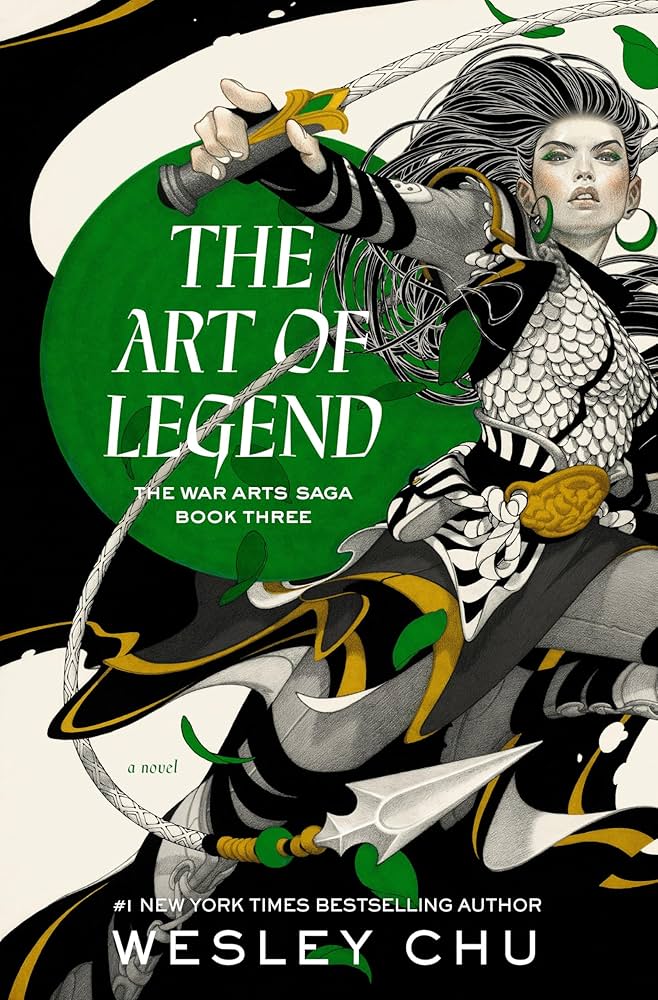
#REVIEW: The Art of Legend, by Wesley Chu

I take no pleasure in this.

I write negative reviews infrequently enough that almost every time I do I start with a disclaimer like this. Under any circumstances other than “The publisher sent me the entire trilogy because I asked for it,” I would simply not review this book. It feels ungrateful to make other people go to trouble to send me books for free and then say bad things about them. But while I really liked the first book in Wesley Chu’s War Arts Trilogy, I was mixed on the second and unfortunately I have to report that the series’ ending really ends up unsatisfying.

The problem is writing this without massive spoilers. I mean, in one sense I don’t really have to worry about that, I can just say “Hey, spoiler alert,” and then go about my day, but I don’t want to do that either. So we’re going to go the “mild spoilers” route; a lot of what you will see in the next few paragraphs could have been reasonably guessed going into the book, but I’m not going to completely reveal the story.

The Art of Prophecy begins with Jian, the Prophesied Hero of the Tiandi and the Champion of the Five Under Heaven. Jian has been prophesied since birth to be the one who kills the Eternal Khan, ending his dominion over the Tiandi people. And then the Khan goes and gets killed on his own, leaving Jian with no more destiny and setting the events of the whole trilogy in motion. In the second book, elements of the Tiandi decide that Jian is actually their betrayer, and he spends the entire series either running from capture or escaping it one way or another.

So, we all know that in Book Three the Khan is coming back, right? Of course we do. And he does. And then he confirms something that I had been wondering about since the first book: he was going to come back anyway. It’s even straight-up stated that even if Jian kills him he’s going to return in a decade or so. Now, one of the POV characters spends the whole first book trying to find out where the Khan has been resurrected and the second book trying to get a chunk of his soul peeled out of her body, so it’s clear that he’s “Eternal” because he keeps getting resurrected. But I had the idea that Jian killing him would be permanent, and … not so much? He’d have come back anyway? Really? What the hell was the point of making such a big deal about Jian, then?

Jian is a problem, honestly, and he’s at the middle of what I didn’t like about the book. The series can’t really decide if if he’s powerful or not– even during the inevitable final battle with the Khan the text itself bounces back and forth between “he’s ready, and this is a real fight” and “the Khan is obviously toying with him and the four other people he brought to the fight” and while Taishi talks about how much he has grown over the years she has known him, I kind of feel like the book doesn’t realize how annoying he is?

A brief diversion: did you watch Smallville or Buffy the Vampire Slayer? You know how Lana was actually really fucking annoying and Xander was kind of a creep, or to use another example, Barney Stinson was a predator and Ted Mosby was a huge loser in How I Met Your Mother, but the TV shows didn’t seem to realize that? That’s Jian. He started off as a pampered, callow youth, and for me, at least, he never improved– he actually faints when he is told the Khan is back. And this is as close as I’m going to come to a huge spoiler, but for a whole series about a prophecy about a dude, that dude has much less to do with the ending of the series than you might expect.

Some of my other gripes are artifacts of having read the trilogy more or less back-to-back-to-back; the bit where Qisami talks like an overenthusiastic memelord and her speech doesn’t remotely match anyone else in the book, or the fact that every insult in the series is inexplicably egg-based, wouldn’t have annoyed me as much had I not devoured 1600 pages of it over a few weeks. Seeing “Let them cook” in dialogue would still have been distracting as hell, though, or the way people keep “eating” punches and kicks.

I dunno, guys. I still stand by enjoying Prophecy, but given where it ends up I can’t really recommend the whole trilogy. I wouldn’t go so far as to call it bad— I three-starred it on Goodreads and Storygraph, and I feel like that’s about right– but it’s not something I’d have talked about had I not been sent the books, and I’d likely have DNFed the final book. I feel bad about it, but there you have it.

#REVIEW: House of Diggs: The Rise and Fall of America’s Most Consequential Black Congressman, Charles C. Diggs Jr., by Marion Orr

This book represents an interesting milestone for me in a couple of ways. First, I am rarely offered nonfiction ARCs for review, something I’d like to encourage more of. Second, I don’t think I’ve ever read a biography of someone I was less familiar with prior to reading the book than I was with Charles C. Diggs. While I don’t think I could claim to have never heard of him– I have read too much about the Civil Rights movement to have never encountered his name before– I couldn’t tell you much other than that he was a Black congressman. I certainly wouldn’t have recognized a picture of him. I was a little worried that this might hurt my enjoyment of the book; as it turns out I have more than enough context around his life that that wasn’t a problem.

The interesting thing here is that, sitting here, I’m struggling with the urge to make this piece a review of Diggs rather than a review of the book. At the same time, though, you weren’t sent a copy of this for free, so I kind of feel like if I’m going to convince you to read it you probably need to know a little bit about the fellow you’ll be spending a few hundred pages with. To wit: Charles C. Diggs Jr. was the son of one of Detroit’s most influential Black businessmen. His father was the founder of the slightly-oddly-named House of Diggs, a funeral home that at one point handled just over half of the deaths among Detroit’s Black citizenry. Charles Sr. had a short-lived political career as a Michigan state Senator but mostly kept his business empire running; Charles Jr. started his political career in his father’s seat in the Michigan Senate but was elected to Congress in 1954 and never looked back. He would remain in office until 1980, when a financial scandal led to him being censured by Congress, forced to resign, and briefly imprisoned. He holds the distinction of being the victim of one of Newt Gingrich’s first acts of assholery, as the future Speaker of the House and fellow resignee-in-disgrace began agitating for Congress to expel Diggs almost as soon as he took office.

When Diggs entered office, he was one of only three Black congressmen, joining William Dawson of Illinois and Adam Clayton Powell, Jr. of New York. He proved himself to be skilled at coalition-building and incrementalist approaches to civil rights– one of his first legislative accomplishments was desegregating airlines, for example– and eventually became one of Congress’s foremost experts on and advocates for Africa as well. Soon after taking office he traveled to Mississippi to sit in on the trial of Emmitt Till’s murderers, which made national headlines, particularly as Mississippi at the time had absolutely no idea how to handle a Black Member of Congress.

But let’s talk about the book. House of Diggs is a very strong political biography and a worthy addition to my library about the Civil Rights movement and is somewhat less successful as a biography of a person. Which, honestly, kind of fits with its subject anyway, as Diggs was quite successful as a politician and much less successful as a person. His children are barely mentioned, but his four wives, three of whom had children with him, would have described him as a poor father anyway, and you won’t find out about any of the three divorces until nearly 80% of the way through the book. He had a gambling problem and was absolutely terrible with money, which is part of what led to his own downfall and at least tangentially led to his father’s business empire slowly disintegrating after the senior Diggs died by suicide in 1967. The finance issues that led to his resignation and jail time are a bit too complicated to go into detail about here, but I felt Orr did a really good job of explaining the details of what happened, both in a literal factual sense and in how Diggs’ own personality flaws led to his eventual indictment. It also seems to be true that the practices that took Diggs down were quite common in Congress at the time, and Orr doesn’t neglect the role of racism in his prosecution while never losing sight of the fact that, no, “everybody else was doing it” isn’t really a top-10 legal defense.

All told, I’m really glad I was sent this, as it’s from a university press and I likely wouldn’t have even encountered it otherwise. If political biography is your thing or you have an interest in the Civil Rights movement, I highly recommend taking a look.

House of Diggs releases September 16.

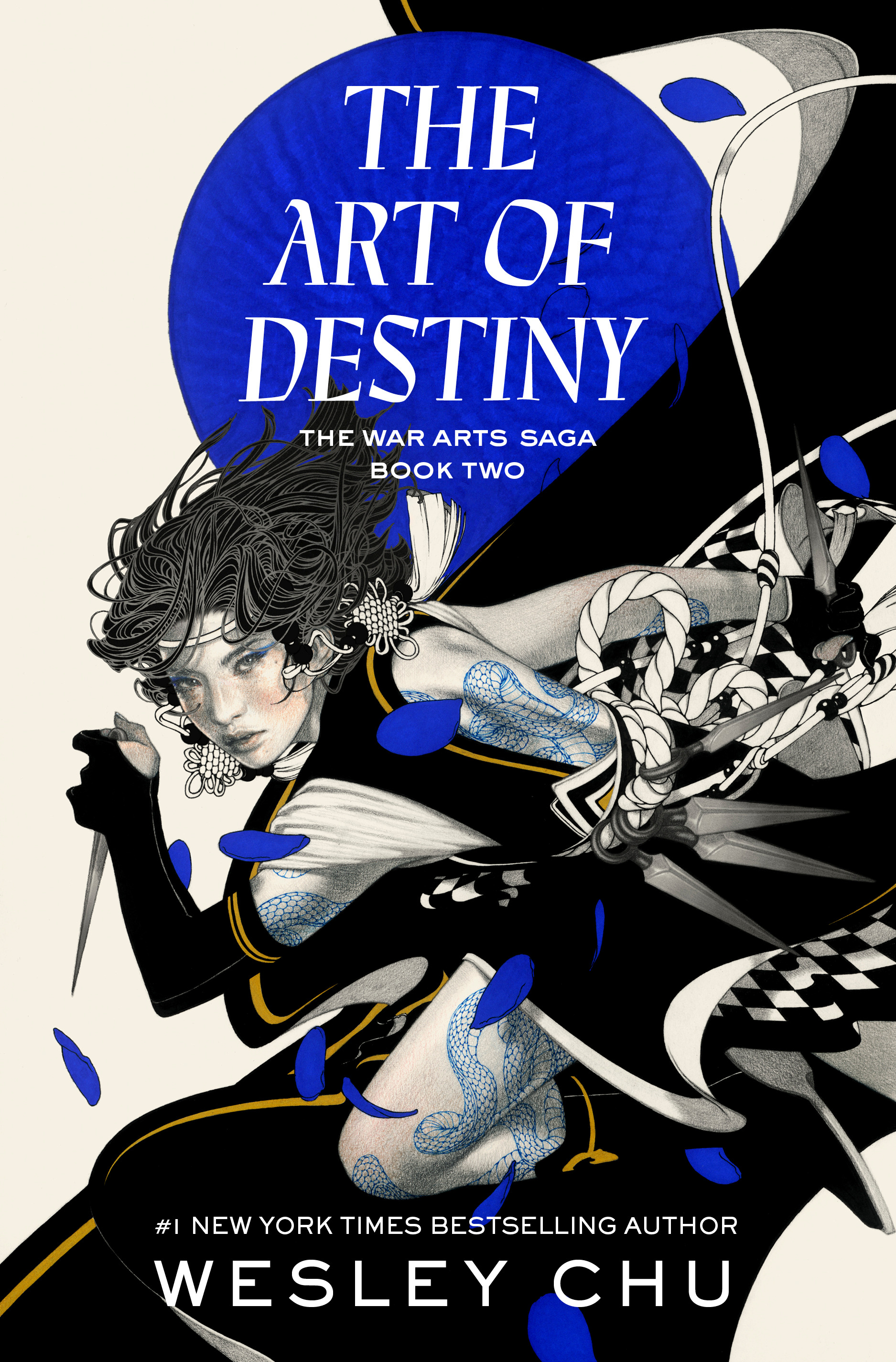
#REVIEW: The Art of Destiny, by Wesley Chu

Middle books in a trilogy can be so weird.

A quick recap: I got asked if I was interested in reviewing Book Three of Wesley Chu’s War Arts Saga, and replied that I’d love to, but I hadn’t read the first two books yet, and somehow that led to me getting sent review copies of the entire trilogy. My review of the first book, The Art of Prophecy, is here, and while I’m not going to go directly into Book Three like I thought, there’s only going to be one book in between, so I’ll probably have a review of that next week sometime.

But yeah. I enjoyed the book, but it definitely has a case of Middle Book Syndrome, where it sort of feels like they’re moving pieces around in preparation for finishing it off in Book Three. Destiny sticks with its same crew of players as the first book; Jian and Taishi are in training, Qisami spends most of the book on a job, and Sali spends the book trying to get the fragment of the Khan’s soul out of her body. Qisami feels like the main character of this one, which is a little odd, as I felt like she was the least important of the leads in the first book, to the point where I don’t think I mentioned her in the review. She has some interesting character development that is almost entirely tied up in spoilers, and Sali has a major status quo change and a clear direction going into the last book. The characters don’t interact as much in this one, either; they all end up in the same place for the last third of the book, but even then nobody really runs into each other; they’re all just doing their thing in the same city.

Jian and Taishi … feel kinda wheel-spinny. Taishi was easily my favorite character of the first book and she’s not got nearly as much time on-page in this book, and Jian gets captured again and it just sort of feels like a retread of a lot of what happened in the first book. There are some interesting developments in the religion around Jian; I was thinking as I was reading Prophecy that it’s super rare in the real world for a prophecy to be proven wrong and its supporters to just shrug and give up, and … well, turns out they didn’t, but I won’t say much more about it than that. But Jian still kind of feels like an immature kid for the majority of the book. There are some signs of maturation toward the very end of the book, so hopefully I won’t feel this way about him in the conclusion to the trilogy.

Don’t misunderstand me; even if I had bought these, this certainly wouldn’t put me off the third book, as a lot of my gripes are just part and parcel of the way middle books in trilogies tend to be messy. It’s not like there was much of a risk of anyone trying to read this as a standalone.

I’ve got another book I was sent for review to read next, as it’s out on the 16th, and then I’ll be diving into the conclusion. Stay tuned!

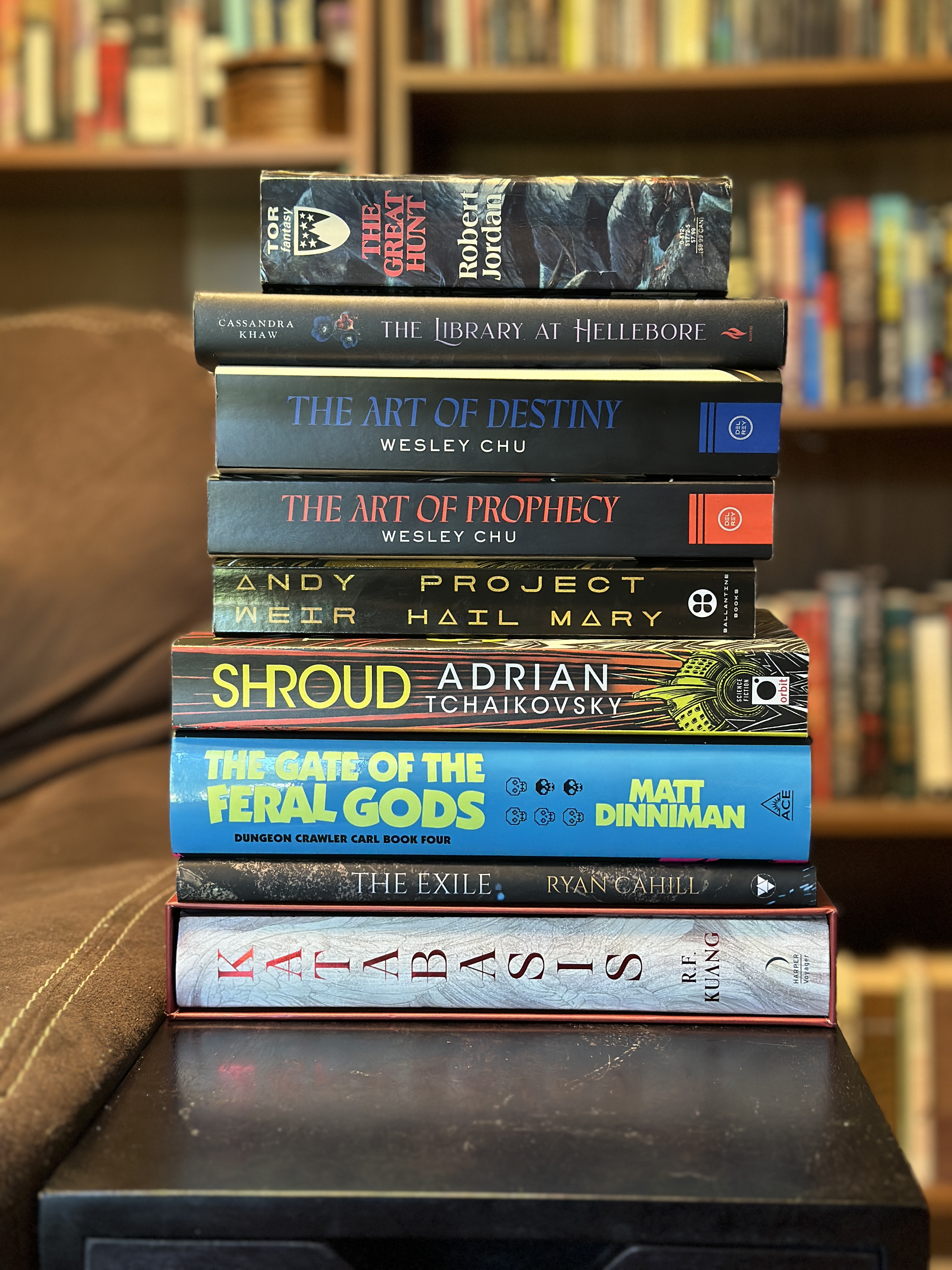
Monthly Reads: August 2025

Depressing, I know, but remember I stared an 800-page history of London on July 31 and school started this month, so it’s not quite as depressing as it looks.

Book of the Month is Shroud, which I guess I should have reviewed.

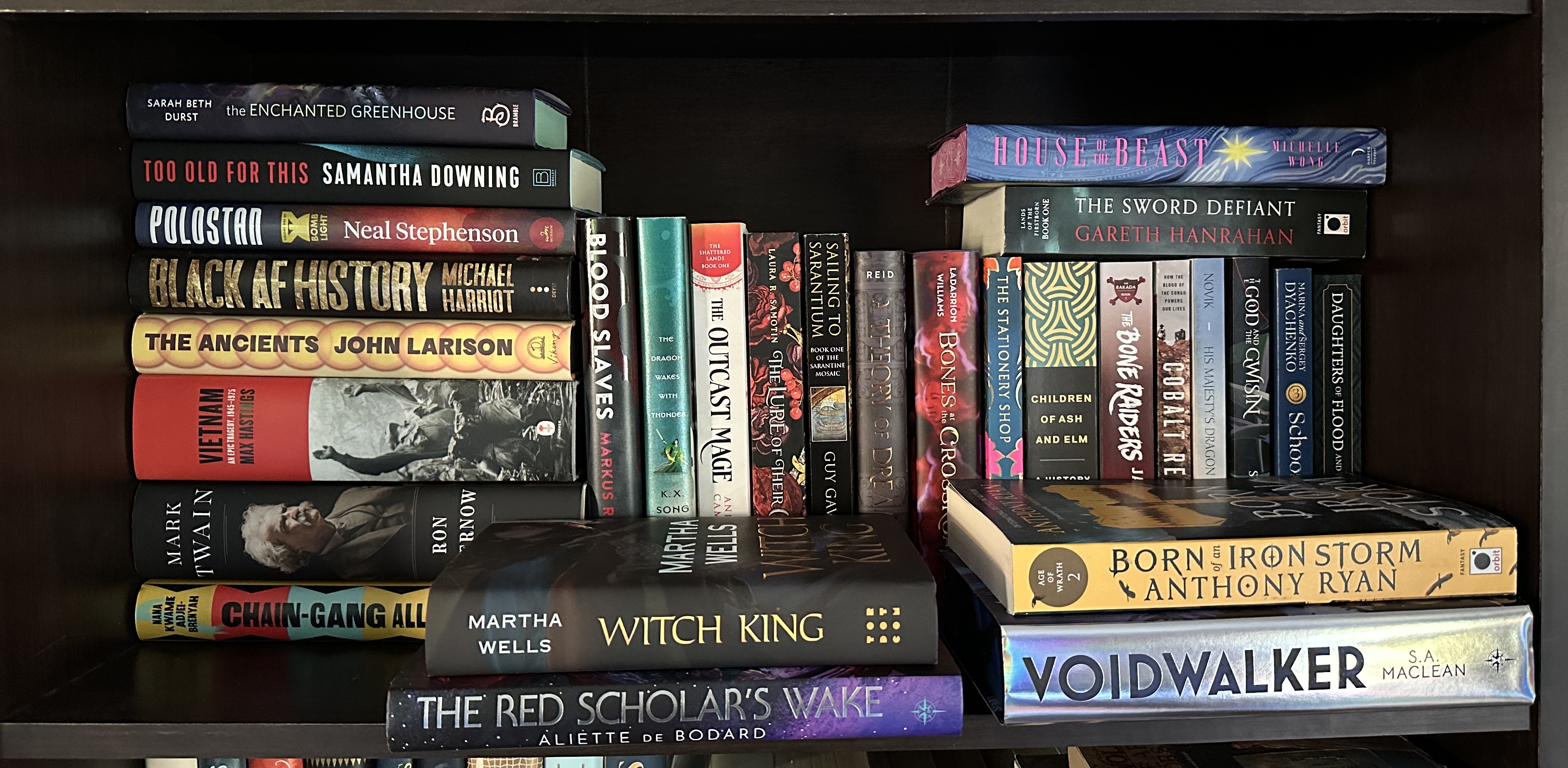
Unread Shelf: August 31, 2025

I swear to God I read books this month, and I also swear to God that end-of-summer book sales are the bane of my existence.

#REVIEW: Katabasis, by R.F. Kuang

In retrospect, this is probably my fault.

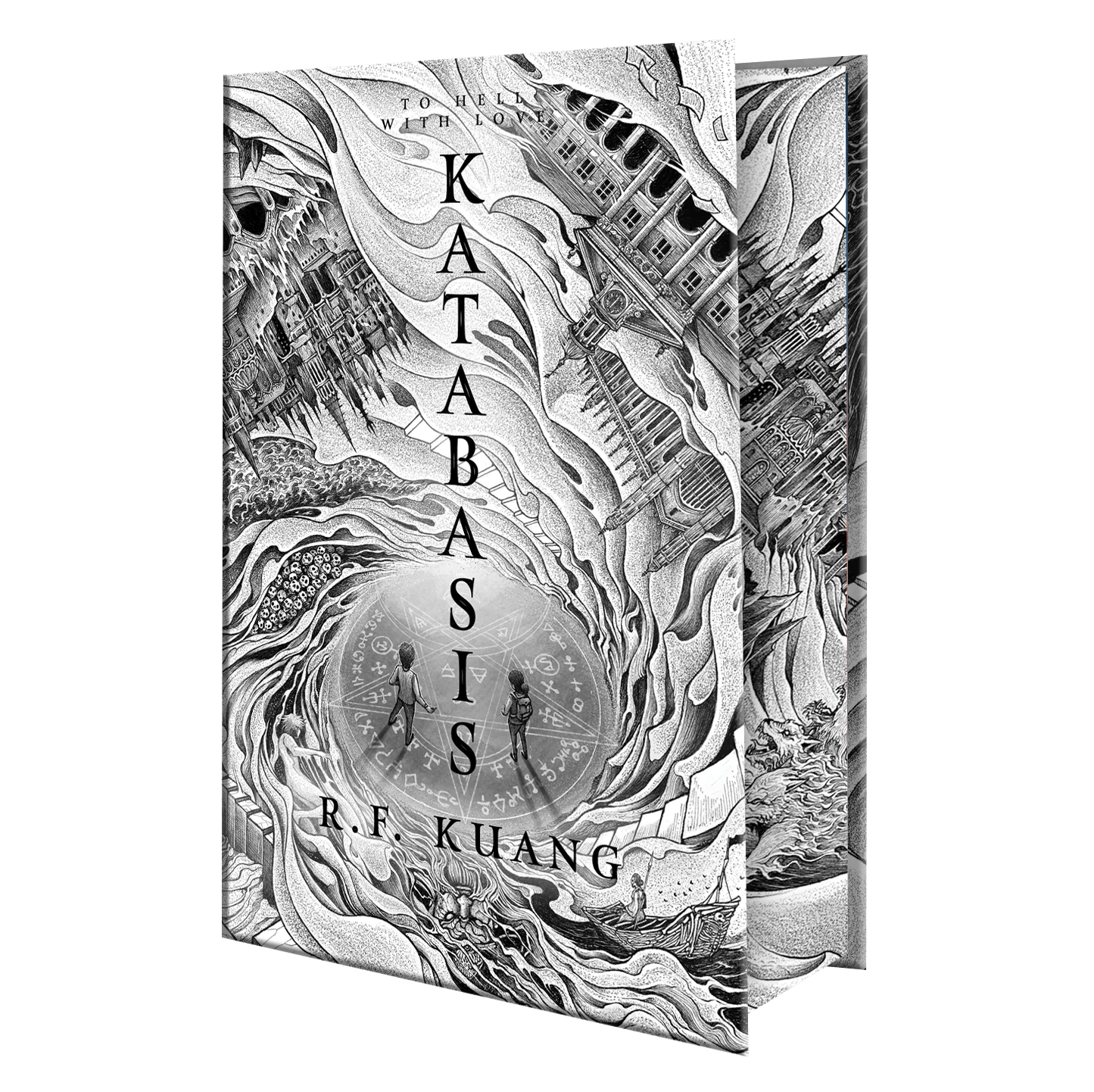
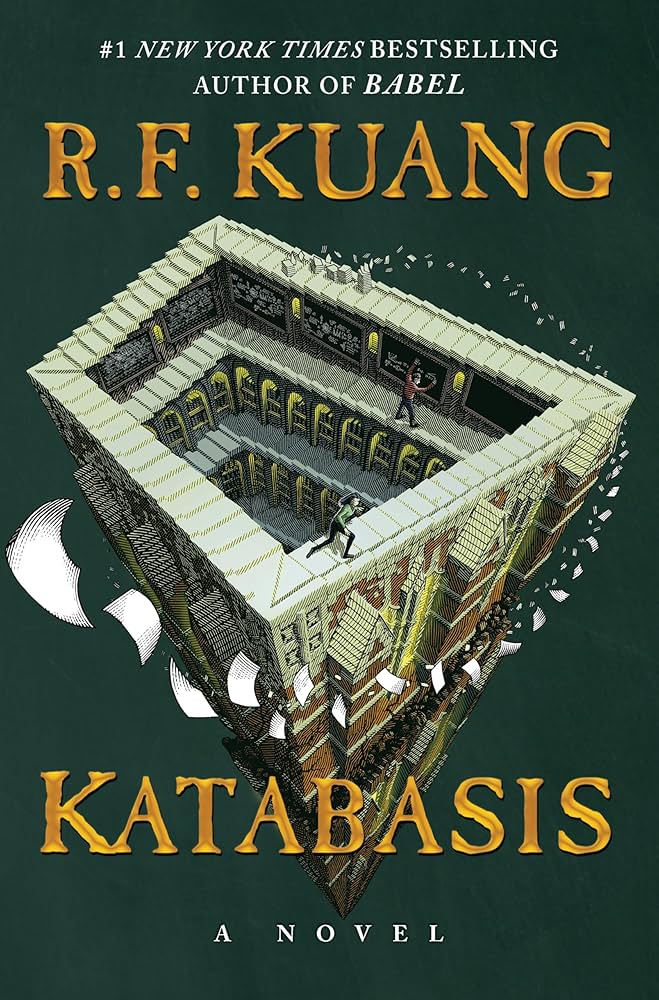
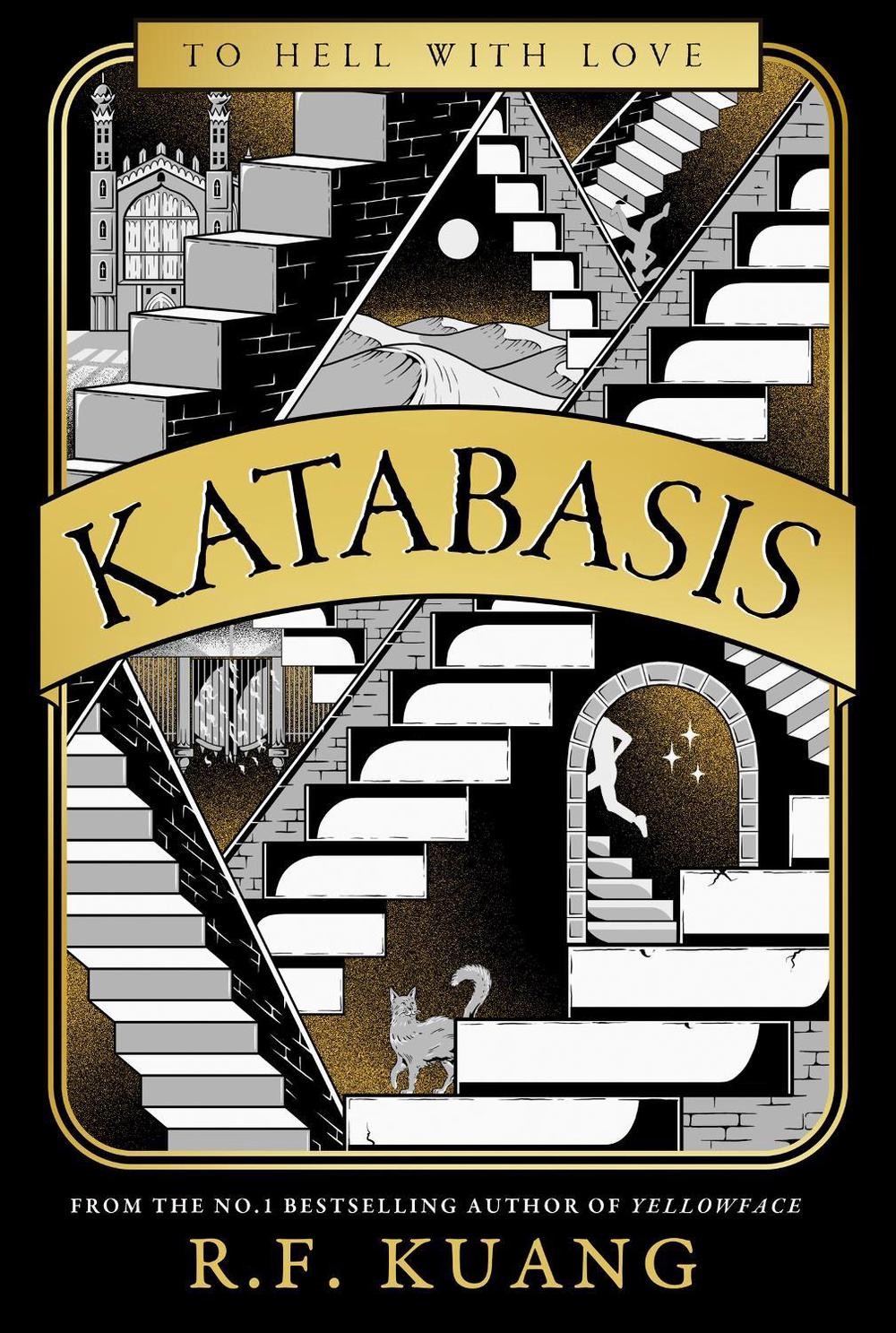
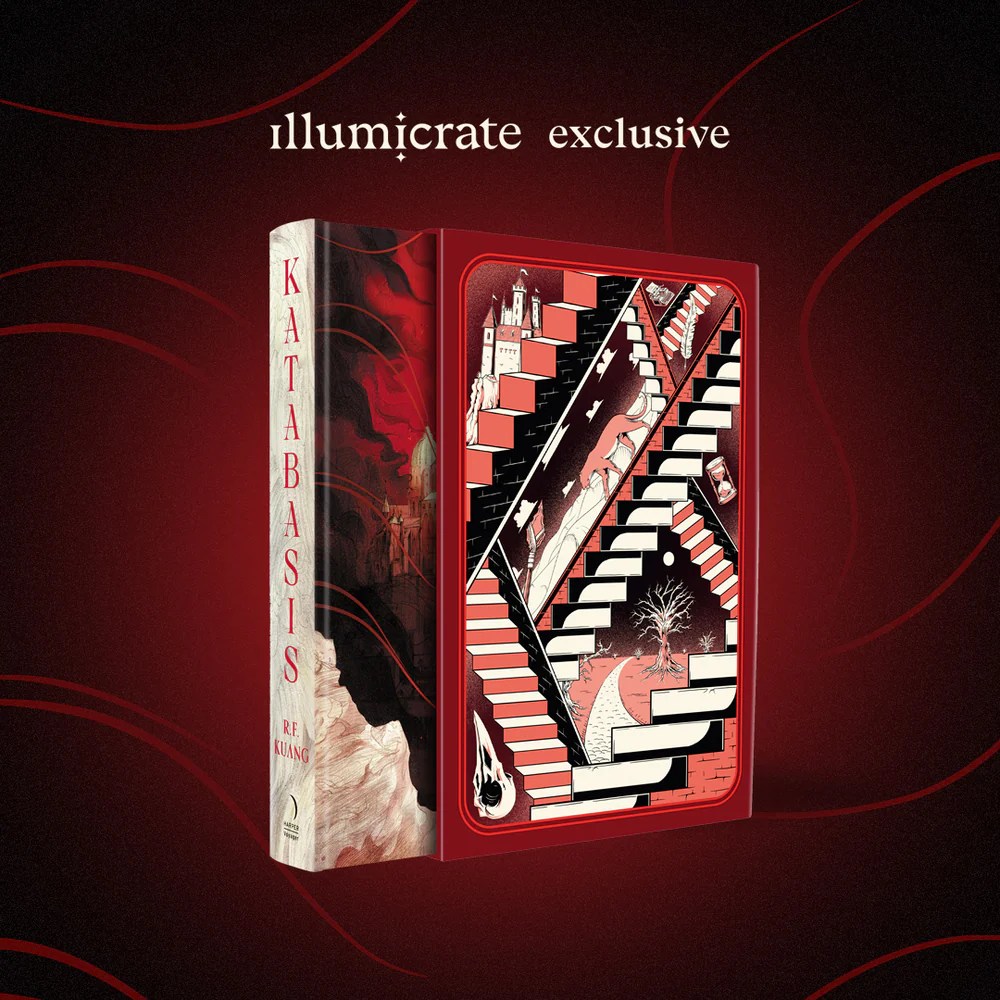
Up there are four of the seemingly unlimited Special Editions of R.F. Kuang’s new book Katabasis. I own three of them; two are currently in my house and I believe one is on the way. The fourth is the UK edition and despite everything I’m about to say it is still a maybe. Perhaps it wasn’t the wisest decision to order three expensive hardbacks of a book I hadn’t read yet, even if it was by one of my favorite authors! But as we’ve firmly established by now, I cannot be trusted with adult money.

Katabasis is the sixth book Kuang has written; I have read them all, and previously my least favorite of her books was one that was ranked third on my end of year Best Books list. My least favorite, mind you. Least. And part of me really thinks that I should sit with this for a minute and not write the review just yet, because part of the problem is that this book did not match the expectations I had set for it, and because I’ve enjoyed Kuang’s work so much in the past, I feel a need to be fair to it that I might maybe not feel with other authors. Then again, maybe not. Maybe, much like main character Alice Law about her mentor and Ph.D advisor Jacob Grimes, I’m making excuses so that I’m not disappointed.

Katabasis, somehow, has made Hell boring.

But let’s back up. Katabasis is the story of two graduate students (in theoretical Magick, of course) who travel to Hell to rescue the soul of their doctoral advisor, not because he doesn’t belong in Hell– he clearly does, and they’re both fully aware of this– but because their careers will be damaged by him being dead, and they need him for recommendation letters and such. I feel like this aspect of their motivation could perhaps have been explored a bit more; sadly, it was not. Katabasis (kuh-TAB-uh-sis, the word is Greek for “descent”) was supposed to be this dense, deeply literary work, heavily reliant on previous let’s-traipse-off-into-Hell books; there were pre-Katabasis reading lists floating around, and while I’m not actually completely certain Kuang was behind any of them, they were kinda intense!

And … well. Kuang is an academic writer; most of her books have at least partially involved schooling in some way and Babel was literally about a group of Oxford students who powered the world with magic based on translation, so this isn’t exactly a road untread for her. But this book is no more complicated than Babel was and no more academic; I was expecting a challenging read, and just didn’t get it. This is also the book that showed Kuang’s youth (she is still, somehow, not even 30) the most, I think; what she knows best is academia and grad school and I think that finally caught up to her with this book. And I get it! I’m not exactly a stranger to pretentious/prestigious graduate experiences; I hold an AM from the Divinity School at the University of Chicago, after all, which probably left me better prepared for going to Hell than most people’s educations, and I “hold” an “AM” rather than “have” an “MA” or a pedestrian “Master’s Degree” because, well, University of Chicago gotta University of Chicago. Those letters being reversed mean something. To somebody. I don’t know what, but they do.

Anyway, Alice (and is that name an accident, no, it is not) and her friend/fellow genius/academic rival Peter Murdoch head off to Hell to drag Grimes back into the world with them, and the book spirals (I see what you did there) back and forth between the past and the present as they argue about the map of Hell and, for the sake of argument, descend down to the final level to find him. They go in without much of a plan, and “no plan” really never gets better; they have a couple of never-ending water bottles and a sackful of, this is really what it’s called, Lembas bread with them so that they don’t starve to death or have to drink anything in Hell, and they mostly just wander around for five hundred pages, occasionally interacting with some of Hell’s shockingly small number of denizens. Most of Hell is an empty wasteland. They eventually arrive at the city of Dis, and I feel like if we’re going to start with a pre-reading list, maybe one of the New Crobuzon books, or Gormenghast, or the Shadow of the Torturer, or something like that should have been on there, because I have definitely read better infernal cities before.

It’s not … bad? Or at least I’m not willing to admit it was bad yet? And if you are someone who reads books for character development, this probably is right up your alley, as Alice Law and Peter Murdoch really are two of Kuang’s more completely drawn characters. But I don’t really read for character; I read for story and setting, and the story and setting here are both far too thin for my tastes. I probably owe this book a reread in a year or two regardless, just to let the expectations clear and to go into it with a better idea of what I’m about to read. But right now I’m deeply disappointed in it. The extra copies are still going to look great on my shelf, and Kuang is still an insta-buy author, but this one really didn’t do it for me.