
Brutal heat in my classroom again today and I have nothing left right now. Don’t be surprised if I take tomorrow off. On the plus side, my next post might be about reviewing pants.
Month: February 2024
I wore shorts today
It wasn’t nearly as hot in my room as it was yesterday, in accordance with prophecy, but it was still hot enough that I wasn’t annoyed at all by having decided to wear shorts. It was also sixty Goddamn degrees at the end of the day.
I don’t have a ton to say today, other than that for some reason everybody kept trying to get into fights around me– I managed to keep anything from developing into an actual fight but by the end of the day I was genuinely pissy about the number of kids I’d had to write up for instigating. Whatever; the day’s over and I survived it, on to the next one.
In closing, I was sent a research survey by someone at Berkeley who is researching teachers and teachers unions. This was the final question:
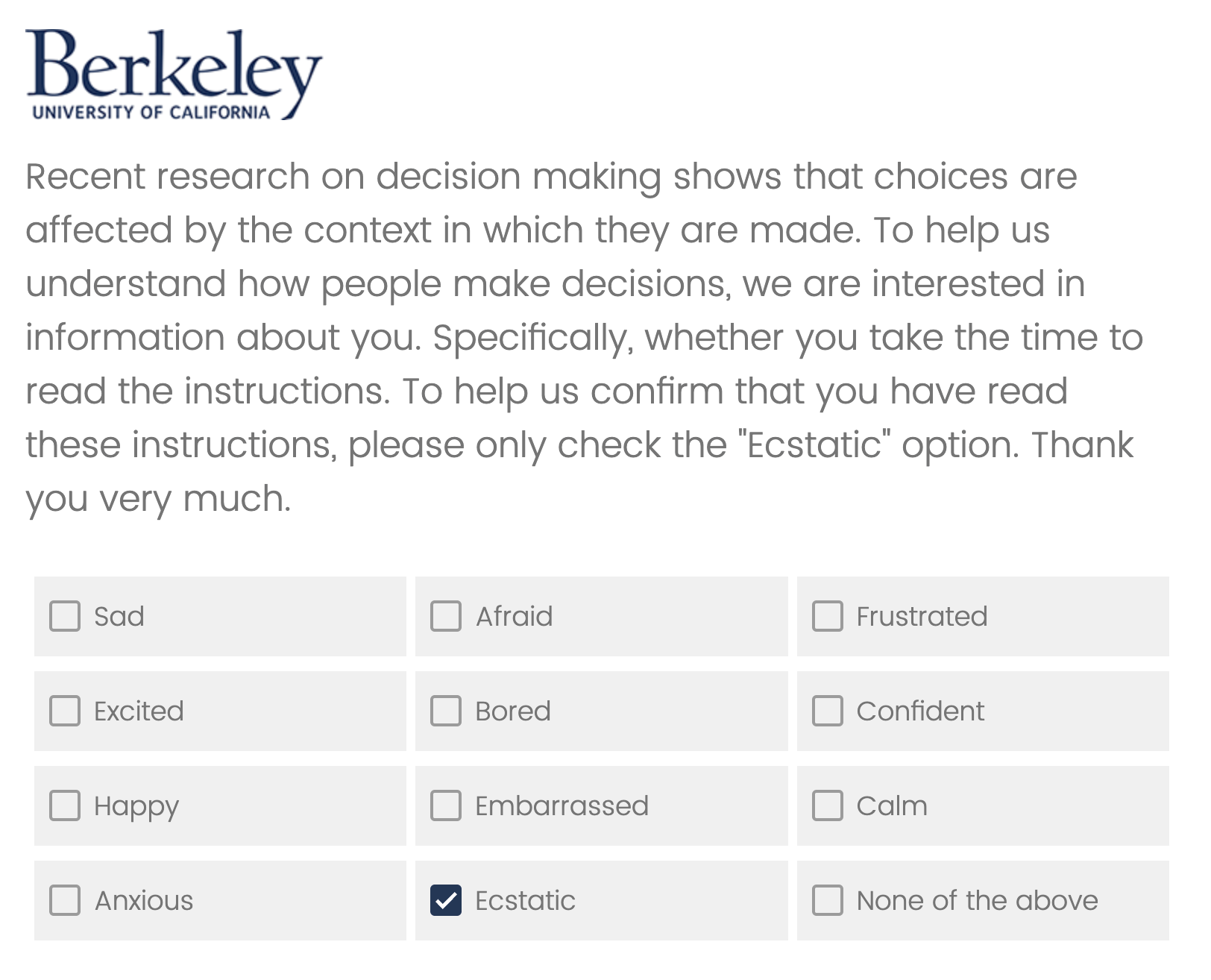
There was an “Anything else you’d like to tell us?” box after this question, and I wrote in that box that I was absolutely going to steal this question for use on a future test or assignment. Because this shit is brilliant.
I’m wearing shorts tomorrow

Forgive me for splattering my horrifying visage across your computer screen or whatever digital thingamabob you’re using to view this, but what I’m wearing is actually kind of important to this story. It was eighty-five degrees in my classroom when I got to work, again. I bought that pullover over the weekend, on clearance, for fourteen bucks. It is wonderfully soft and while it is warm it’s not quite as warm as it looks (that’s a good thing) and I like the pattern and the color. I spent the whole weekend planning to wear it today and looking forward to it.
As I was walking into the building this morning, I thought to myself that it was probably going to be hellishly hot in my classroom and I wasn’t going to get to wear my nice new pullover because it was going to be too hot. And I was exactly right. I didn’t last into second hour, especially since I insisted on drinking my Goddamned coffee, temperature in the room be damned.
We got an email that the Thingamawhosis had broken, and that there was already a guy in the building repairing it, and that classroom temperatures would start coming down soon. By lunchtime it was still 80 degrees, and I sent a cautiously worded follow-up email, which generated a second message to the whole staff that the Thingamawhosis had been fixed but then it promptly broke again. So, just sweat, I guess.
It’s supposed to be in the mid-sixties tomorrow, which is one of those painful things where it’s sort of been winter for a little while and warm weather is going to feel nice but it is also terrifying because it’s fucking February and it’s not supposed to be in the mid-sixties, and the nice weather is a sign of the fucking world ending. One way or another, I’m wearing shorts, because fuck it, that’s why. I strongly suspect that wearing shorts to work will result in the Thingamawhosis not only already being fixed when I arrive, but magically working at higher capacity than normal for the entire day, resulting in the exact same kids who told me it was hot when they walked into my classroom every single class period, as if I didn’t already fucking know, coming in and complaining about being cold.
At least cold 8th graders smell a lot better than hot ones.
Snarl
I am In a Mood tonight, and not especially fit for human company.
Feel free to talk amongst yourselves.
#REVIEW: Against the Loveless World, by Susan Abulhawa
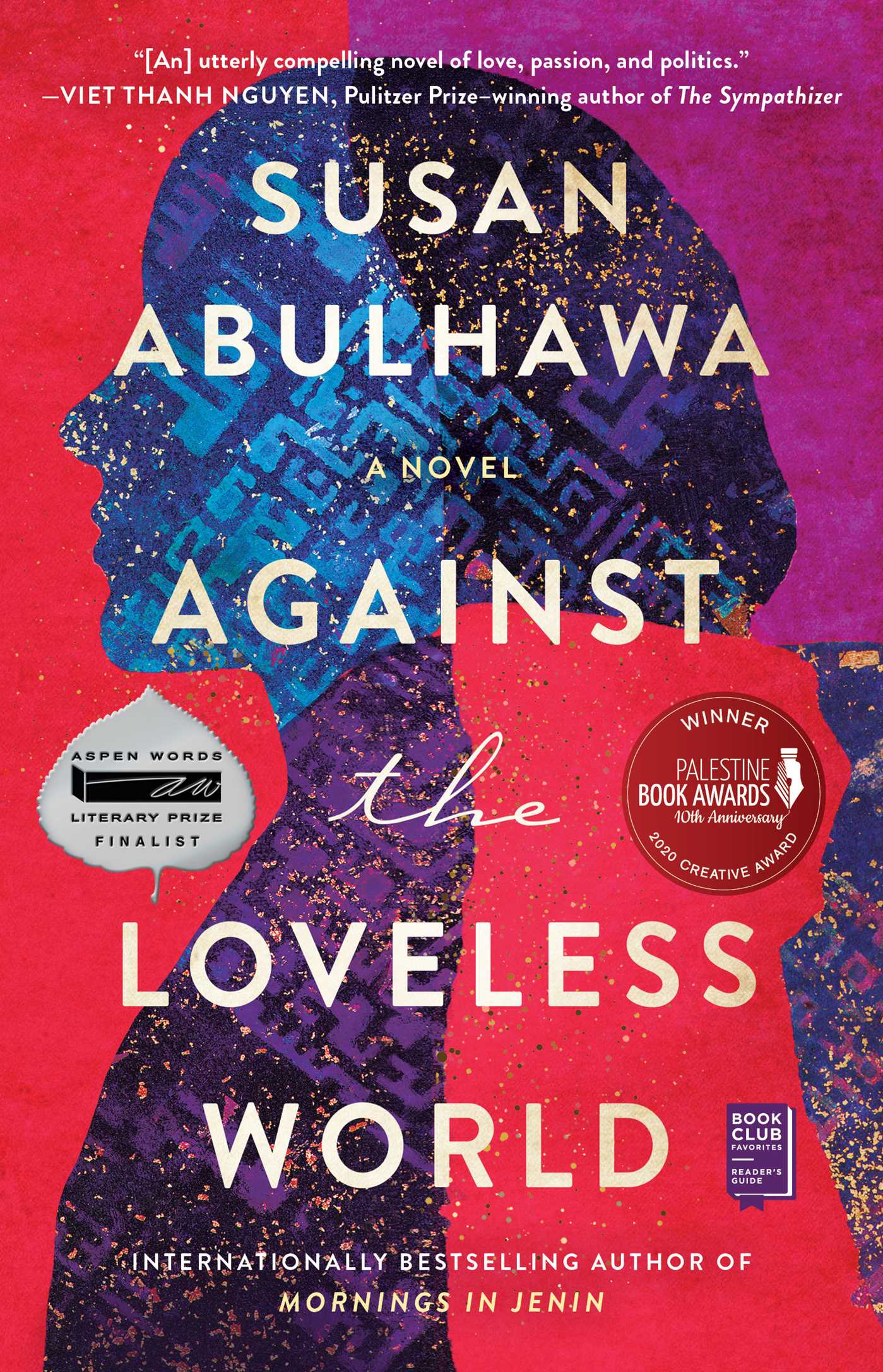
You might remember a few years ago that I did a project called Read Around the World, where I read one book from every US state and from as many countries as I could manage in a year. The final-final-final update never got published, and has a few more countries on it than the “final” 2021 update did, but I never managed to read anything from Israel during that time. I can remember thinking about what to do if I read something from a Palestinian author during the project– would I count that as Israel? Should Gaza and the West Bank count as their own place, and leave, for lack of a better word, Israel Israel untouched? Well, I never had to decide, because I wasn’t about to try rereading the biography of David ben-Gurion I bought when I was in Israel on a dig after college, and nothing else ended up dropping into my lap.
I haven’t really worried about geographical diversity too much since 2021. Or, at least, I didn’t until October 7 happened, and I decided to make a stronger effort to find some books by Palestinian authors to read. I don’t think I talked much, if at all, about Rashid Khalidi’s The Hundred Years’ War on Palestine, which I read in … December? I think? But Susan Abulhawa’s Against the Loveless World has been sitting on my shelf for way too long, and since I wanted something different after three straight Red Rising books, I decided it was time to dig into it.
So, I just wrote a post where I told you to read Red Rising because it was good. I still stand by that post, obviously. But you need to read Against the Loveless World because it is important, which is not quite the same thing. Don’t misunderstand me– it is also good; I would not have, for the second day in a row, read an entire book in less than 24 hours if it was not a good book– but it is a story that Americans in particular need to hear.
Against the Loveless World is a novel, not a memoir, but it is written in the style of a memoir and both Abulhawa and the main character, Nahr, are Kuwaiti-born Palestinian refugees. Abulhawa has lived in America since she was 13 and Nahr narrates her book from solitary confinement inside an Israeli Supermax prison, so this is clearly not a self-insert. It feels a lot like My Government Means to Kill Me in that respect. Nahr grows up more or less happily in Kuwait, but the Iraqi invasion leads to persecution of Palestinians and her family is forced to move to Jordan. She and her family spend the rest of the book moving back and forth between Jordan and Palestine; I don’t know for sure that the word “Israel” is ever used in the book; when it is grammatically necessary to refer to it the phrase “the Zionist entity” is often used. The book takes its time with her radicalization, saving the events that put her in prison for the last fifth or so of the book, but from the moment Saddam invades it becomes clear over and over that by virtue of being a Palestinian and in particular a Palestinian woman she is considered to be less than nothing by everyone with any power around her. When her husband abruptly abandons her and disappears things get even worse and she is forced(*) into prostitution for a while, she manages to provide for her family but at the cost of not being able to admit to anyone how she is doing it.
Her first trip to Palestine is so that she can obtain a divorce, which of course she can’t do without permission of her husband, the guy who abandoned her and prompted the need for a divorce in the first place. He more or less signs power of attorney over to his brother, and it is when the two meet that the book really takes off. She’s able to meet some members of her family for the first time as well, family members who were never able to come visit in Jordan or Kuwait because leaving the country would have led to the Israeli government stealing their homes out from underneath her. At one point she visits her mother’s childhood home, which is occupied by a colonizer at the time. It’s … quite a moment.
At any rate, the book is marvelous, and I don’t want to spoil a lot of it. But I will read more by Susan Abulhawa, and I think I’m going to try to find a few more Palestinian fiction authors to read work by, which I’ll be able to get to in a million years, since I am so far behind. You really, really, really ought to strongly consider picking this one up. It’s cheap. Do it.
(*) It’s more complicated than that word implies, and Nahr’s relationship with her, uh, procuress is incredibly layered and frankly one of the highlights of the book. If you’re thinking you might need a trigger warning about this book, though, you’re right.
Go read RED RISING
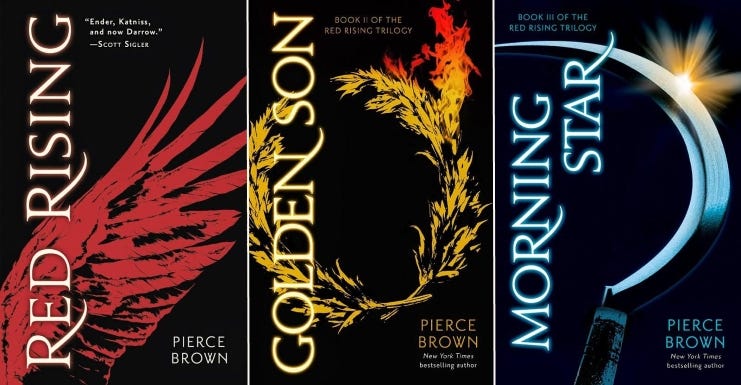
The big new plan for 2024 is to clear my reading backlog before I let myself buy any new books that aren’t part of a series that I already own. Red Rising has been sitting on my bookshelf for months, because it’s Part One of, currently, six, and the series is expected to conclude with a seventh book that has not yet been released. It was clearly originally planned as a trilogy; you can see on those covers that they refer to the “Red Rising Trilogy,” and subsequent books just declare themselves to be “A Red Rising Novel.”
I, uh, just read the entire first trilogy back-to-back-to-back over the course of a week? And it took me less than 24 hours to read the 520-page third book? I had heard from some people that you don’t really have any idea what you’re in for in the rest of the series from the first book, and while I enjoyed it, it didn’t blow me away, but man, Golden Son and especially Morning Star are fucking amazing, and Morning Star in particular moves at such a breakneck(*) pace and is so twisty-turny that I’m not even sure what to compare it with. I don’t want to do a full review right now, so I’m not going to get into the plot at all, but damn. The end of Morning Star is a great stopping point, so I’m going to let the series simmer for a little bit before jumping into books 4, 5, and 6, but if you’re familiar with these books and something was holding you back, go for it. If you need more detail, I’ll probably write in more depth once the series is done.
Anyway, that’s been my Saturday; I read the first half of Morning Star yesterday and then didn’t do much of anything today until I’d finished it. The wife and I are gonna watch John Wick 4 once the boy goes to bed, and in between now and then I can hear my PlayStation crying out for me to stop neglecting it. So it’s video game time, I think.
Y’all doing anything interesting this weekend? Tell me about it.
(*)No pun intended, for those of you who are familiar with the series.
Screw it, let’s give some examples
I pulled this from my post the other day about the conversation quizzes. Remember, the way this works is I get sentences one at a time, spoken by what sure sounds like a native speaker, and some of the words are blanked out. I get a word bank to choose from to fill in those blanks.
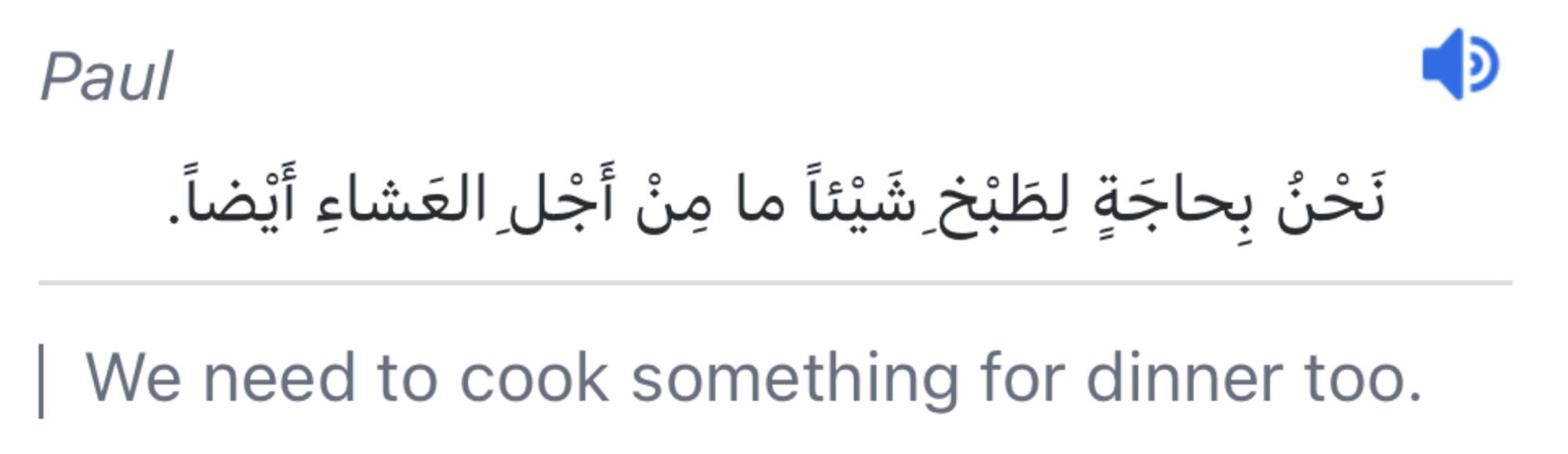
Let’s get into a few explanations, and I’m not looking any of this up right now— I’m typing this on my iPad while watching John Wick 3, so I’m not going to take the time to nail down the details. Basically any of the dots on those letters are for differentiation between different letters. So the difference between a d and a z or an s versus a sh might be how many dots are on the word. Some base letters have as many as three variants. I don’t think there are any with four (no dots, one, two, and three) but I might be wrong.
The little circles that show up here and there indicate a letter that does not have a vowel after it. This was never explained in Duolingo and has never been mentioned in Busuu; I had to look it up.
Dashes indicate short vowels. A dash under a letter indicates a short I, a dash above a letter indicates a short a, and there’s a little curlicue-lookin’ thing that appears above the letters that indicates a short u. I don’t see any of those in this sentence but that might be a font thing.
Here’s the problem: there are a bunch of symbols in those words that haven’t been explained in either of the apps, and I have no idea what they mean. The double-line above the vertical letter on the far left? No idea. The double line underneath the leftmost letter of the second word from the left? No idea. The symbol on the rightmost letter of the leftmost word? No idea.
I can’t read these words if you don’t explain what these symbols mean, guys, and while some of them are vowels, occasionally I feel like maybe some of them represent multiple letters together, or are maybe a contraction of some kind? I can’t just figure this out. Stop fucking with me.
In which I reconsider
I think it’s probably time to admit that if I want to take a serious shot at learning Arabic I’m going to have to 1) spend time with textbooks and 2) probably suck it up and take a class. I was pleased with the way Busuu introduced the alphabet, but it went from that directly to “Okay, you know this now, and you’re ready for entire sentences in this tiny-ass font, right? Plus a bunch of symbols that we never really discussed in the alphabet section? You won’t be able to make half of them out anyway so don’t worry about learning them.”
Like, guys, language learning apps should explain shit, and I don’t understand why they don’t. Busuu’s approach to anything that isn’t the alphabet has been to give a handful of examples that may or may not generalize, not explain them, and then just … move on. Like, my last unit was on comparatives and superlatives? It gave me bad/worse/the worst and, I dunno, maybe good/better/best and that was it. I liked the “pull words out of this conversation” feature the first time I saw it, but I just don’t know enough to be able to do that easily and I can’t read well enough to go from spoken word to one of four different words that may not differ from each other all that much. Especially when, again, I don’t know all of the vowels and diacritics. Every so often it will show me a picture and ask me to say something about it for one of the social media features, and, Christ, I don’t even know where to start.
There also might be a dialect difference between it and Duolingo, and I can’t figure that out either. Lots of the nouns end differently (-atun seems to get added to a lot of them, and sometimes just -a) and I can’t figure out what the ending means, or why Duolingo’s vocabulary never bothered with it, and gendered endings seem inconsistent, and … gah. I’m smart enough to learn this shit, but I’m not smart enough to figure it out, especially given limited examples and the weird fact that that ending doesn’t seem to be properly represented by the actual letters at the end of the word, which is probably a function of one of those symbols I never got an explanation for.
And, for the record, if you happen to understand Arabic, don’t worry about explaining how all of this works. Like, I have access to other sources of information, and to a certain extent this is a function of my own laziness. I want there to be an app that explains this at the depth and quality that a textbook would, because I want to learn Arabic five minutes at a time while sitting in a comfortable chair in my living room or my library, and not hunched over a textbook or sitting in a classroom that I have to pay tuition for. I shouldn’t be surprised when I can’t find that.
 Welcome to infinitefreetime dot com