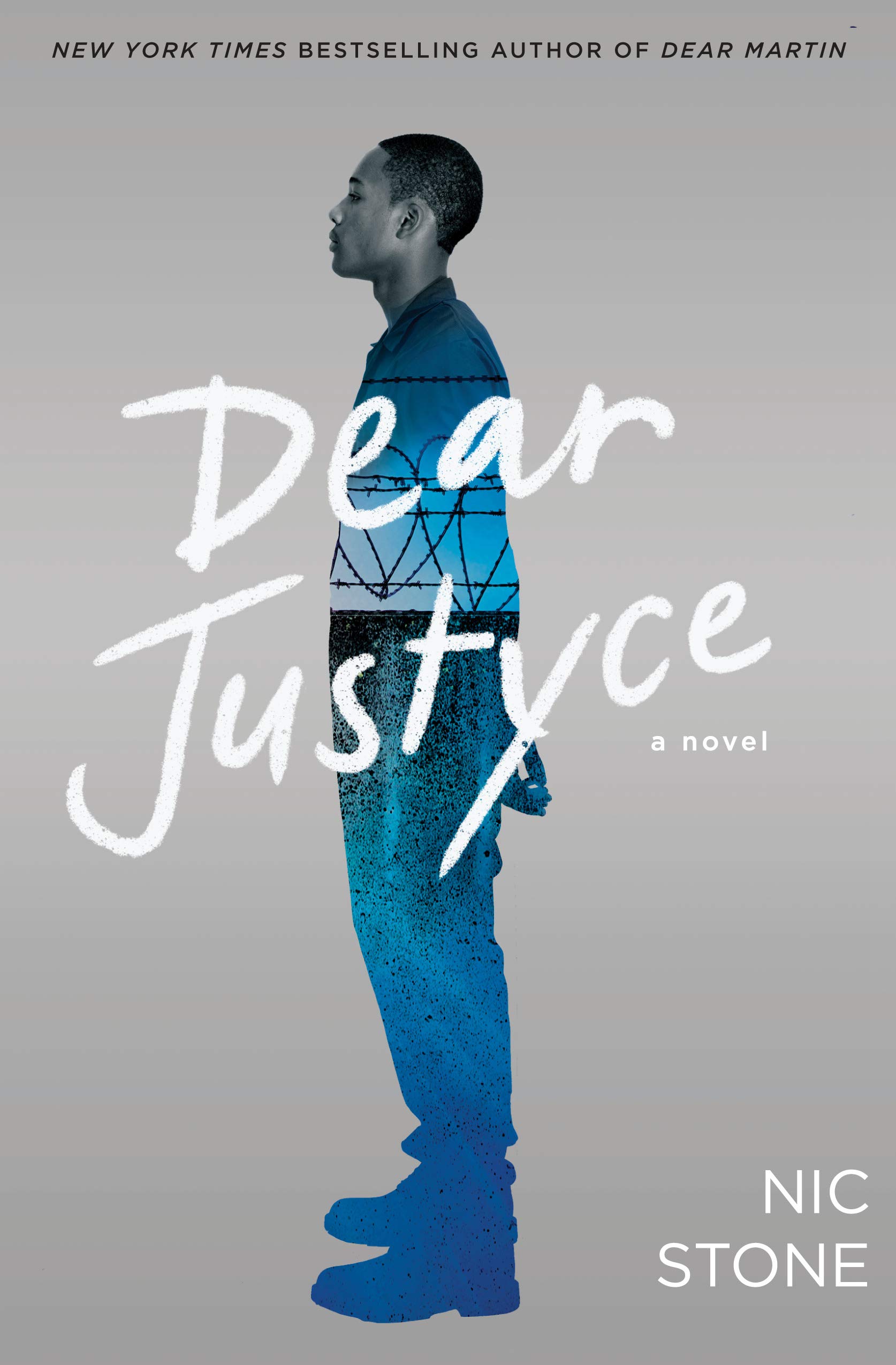
On DEAR JUSTYCE, by Nic Stone

This is another of those posts that is sort of a review of the book, but as I’m currently planning on talking more about what the book isn’t than what it is, I’m not going to tag it that way, at least not in the headline. Here’s the review part: this is a good book, and an important book, and you should read it, and I think it’s probably better than Dear Martin, the book it’s a sequel to, but I’ve said before that Dear Martin suffered for me by being read nearly immediately after The Hate U Give and covering a lot of the same territory. Dear Justyce isn’t suffering from that, so it may just be that I was more able to review the book on its own merits.

Anyway, the story: Dear Justyce is, like Dear Martin, mostly an epistolary novel, or a story told through letters. In Dear Martin, the main character was basically writing journal entries that were framed as letters to Martin Luther King Jr. In Justyce, the main character, a Black teenager named Quan, is actually writing to Justyce, the main character of the first book. I’m pretty sure Quan made some appearances in the first book, but honestly it’s been a few years and I’m not a hundred percent certain, and Justyce is the POV character for occasional bits of this book as well.

And it’s the structure of the book that kind of has me frustrated with it. Justyce is in his first year at Yale as this book begins, and he’s pre-law. He was always presented as an academically oriented, really bright kid, so the notion that the story is being told through his letters is entirely believable. Quan is presented as a kid who could have been Justyce, had he been dealt a fairer hand by society. He could have been the Yale kid, and instead he’s been arrested multiple times (he is incarcerated through the entire novel, although portions are either flashback or him describing times when he was free) and he’s currently imprisoned because he’s accused of killing a cop. And I’m not going to get too far into spoiler territory, but we’re given plenty of other reasons to feel sympathetic toward the kid.

Here’s my thing: I’ve got perhaps half a dozen former students who I know are locked up, at least two for murder and one for aggravated assault and a few other things. And the two kids who are locked up for murder? At least one of them definitely did it. And my kids don’t have good friends who are conveniently in law school and have access to good lawyers, and– and this bit is important– none of them are remotely capable of writing the eight- and ten-page letters that Quan dashes off routinely throughout this book. A lot of the kids who get caught up in the school-to-prison pipeline aren’t as academically talented (I am deliberately not saying “smart”) or as literate as Quan is portrayed in this book, and that’s sort of a problem when you’re trying to write an epistolary novel with a parallel structure to your first book.

This doesn’t make Dear Justyce a bad book, mind you. There are ways in which Nic Stone sets up Quan to be a sympathetic character, and you want your main character to be sympathetic. What I’m wondering is what Dear Rayterrion might have looked like– a book about a kid who might have been every bit as screwed by the system– he says he’s innocent, after all– and no doubt had a very similar upbringing as Quan did, but adds a ton of academic challenges as well and lacks his easy facility with the written word. Can you even write a book like this when the main character can barely read or write? Because I remember this kid from 8th grade, and I’m pretty sure nothing got better between 15 and 17. What’s that book look like?

(I also want a book about Martel Montgomery, who is simultaneously a mentor, a local gang leader, a college-educated social worker, and the reason Quan is in jail. He’s a fascinating character. But that’s a side conversation.)

Anyway, none of this is really Dear Justyce’s fault, it’s just where the book got my head going. I’d recommend you read both of them, if you haven’t, and I may well revisit Dear Martin— it’s short, after all– to see what I think of it after this book and with some distance from The Hate U Give.

In which I lose a day

I woke up at 10 or so, which is a good hour and a half later than I normally sleep on Saturdays, and it was probably 4:00 before I felt human. Dad was going to come over for dinner and I had to push it back to tomorrow because I couldn’t motivate myself to shower, much less clean anything or, God forbid, cook.

Since then it’s been all sitting and staring. I managed to vacuum my office and our bedroom and that’s as close as I’ve gotten to accomplishing anything today. For most of it I felt like I’d taken too many sleeping pills last night. Actual number of sleeping pills taken last night: zero.

Hopefully tomorrow I’ll be more human. I need to figure out what I’m doing with the last two in-person days of school (there will be no 8th grade students in the building on Monday or Tuesday, watch) and I suspect that will be more difficult than usual if my brain is leaking out of my ear.

Well, this sucks

I gotta say, I know a lot of places have been harder-hit than us, and I know good and well we’re far from the first area to have to do this, but … Christ, is that a jarring fucking headline to see on your hometown newspaper’s website.

My district just announced that we’re going back to all virtual instruction starting after school next Tuesday. Which is good; we shouldn’t have been back in the first place. We started off the year with the district telling us “data, not dates,” and keeping us out until a week before the end of the first quarter, which … maybe some attention to dates might have been good, as there’s no real reason to come back right before a quarter ends. It was made clear to us that we’d be following the county’s recommendations for our metrics and for when we’d be closing.

Then shit got a lot worse, and they brought us back, which makes perfect sense, ignoring the county-level data in favor of quietly moving to state metrics. I can tell you everything you need to know about our state numbers by pointing out that nothing has changed on our alert level since school restarted despite the fact that we have something like ten times as many daily infections now than we did then. If that can happen without your alert level changing, your metrics are (deliberately) garbage.

All of our neighboring districts have announced in the last few days that they were going virtual. The word from our district– this is a direct quote– was that school closings would be “reactive, not preventative”– in other words, we’d be closing if we got lots of cases or lots of absences due to quarantines in schools, but only individual schools affected by those cases or absences. We would only close because of people being sick, not to prevent people becoming sick. Then they announced two schools would close. Neither of the two schools appeared to be worse than any others on their covid dashboard; indeed, one of them wasn’t even on there.

(The reliability of our district Covid dashboard is, to put it mildly, in dispute.)

Meanwhile, my school has averaged 10 teachers out a day in the last couple of weeks. I don’t know what they think is going on if a quarter of the teachers being out isn’t enough. My kids have been doubled and tripled up in classrooms, which eliminates any benefit of cutting the number of kids in the building.

And today, they abandoned that policy– granted, it was dumb, but still– and sent us all home. In the hour and a half since announcing we were going back to virtual they have already announced that the day we were going back was wrong and changed it– I had to rewrite a paragraph of this because we got new information. Right now they’re still in school Monday and Tuesday and then out indefinitely after that; Wednesday was going to be the first day of Thanksgiving break anyway.

I suspect I will see virtually none of my kids on Monday and Tuesday. I am seriously considering not bothering to assign anything.

God, I’m glad it’s Friday.

In which he doesn’t like it

Does anyone else out there have, or did you at one point have, a kid that just wouldn’t fucking eat?

I’m not talking about picky eating. This is not a situation where the kid will only eat French fries and chicken nuggets or some shit like that. This is “it is 4:15 PM and my son has not had a meal yet today, because he’s refused every offer of food I’ve made and has not gotten any for himself, and it’s probably the fifteenth time out of the last twenty days that that’s happened.”

Once dinner rolls around, he will eat three or four bites of something and then proclaim himself full. And he’s not filling up on junk food, either; I literally just handed him a bowl of chips to get him to get some kind of calories inside him, and he handed it back to me.

He is not underweight and he is growing like a weed; at nine years old, he is alarmingly close to my wife’s height already. But … shit, if child protective services were to show up at my house and start interrogating my son about how much he eats, I’d end up in jail, and I would understand why. It’s like he lives on air. I don’t have the slightest idea why he’s not incapacitated by hunger right now, but he’s not. He’s completely fine.

Someone, please, explain this to me, or at least reassure me that eventually it’s going to stop.

I got nothing

Have a song:

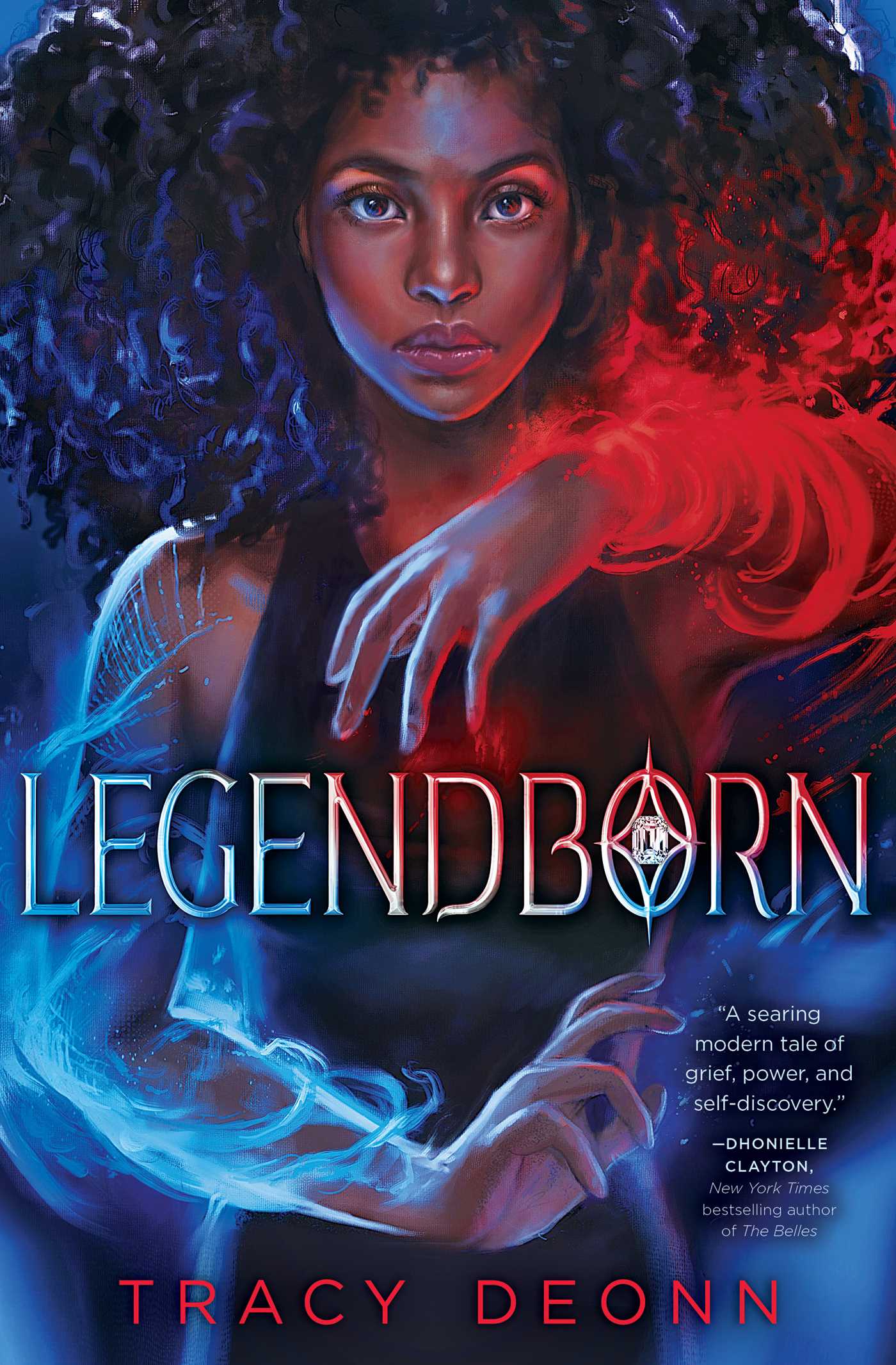
#Review: LEGENDBORN, by Tracy Deonn

Y’all. This book. This book.

I don’t even know where to start. I mean, the cover, obviously, because holy shit that cover, but after that?

This is Book 53 and Author 48 of the #52booksbywomenofcolor project I’m doing this year, and I know I’ve said this before, but this book, all by itself, justifies the existence of that project. Even if I hadn’t liked most of the 52 books I read prior to this one, this would have made it all worth it. Because if I hadn’t been prioritizing books by women of color this year, this one might not have made it onto my radar quite as effectively as I did, and I might have passed on it, and that would be a crime. This is the book that convinced me that my top 10 list at the end of the year is probably going to have to be a top 15 again, because this is about the tenth “Okay, this is gonna be top five at the end of the year” book and about the fifth “this is gonna be top three” that I’ve read so far this year.

(Writing the list in December will kill me.)

Another thing that I’ve done this year that’s different is I’m pretty sure I’ve been reading a lot more YA than I have in previous years. And this is very much a YA book, complete with many of the tropes of urban fantasy, right up to and including Hidden Demons and the need to Keep Special Powers Secret From Friends and Family.

And for a little while you’re rolling along with that, and you know where this is going, and yeah, I’ve read this book before, and that lasts, oh, I dunno, maybe 25 pages until Deonn starts subverting every single trope you’ve ever encountered in one of these damn books. This is an #ownvoices book in its bones, y’all, because there is simply no way anybody white could have written this book, from the little details about the way the main character gets ready for her classes in the morning to the conversations between her and her dad to the big twist at the end that knocked me flat on my ass and I really want to know if a Black reader would have been more likely to see coming.

It’s about a magical secret society involving the descendants of King Arthur and the Knights of the Round Table– there’s a lot of Welsh, be ready for that– right up until the part where it isn’t, and holy hell I just cannot recommend this highly enough. The characters are interesting, the representation is great, the magic system is intriguing and the way different entire systems are butting up against each other throughout the book is just putting a worldbuilding aficionado like myself into spasms because I love how Deonn is doing this so very, very much.

Like, I should talk about the plot, I suppose; here’s part of the synopsis:

After her mother dies in an accident, sixteen-year-old Bree Matthews wants nothing to do with her family memories or childhood home. A residential program for bright high schoolers at UNC–Chapel Hill seems like the perfect escape—until Bree witnesses a magical attack her very first night on campus.

A flying demon feeding on human energies.

A secret society of so called “Legendborn” students that hunt the creatures down.

Goodreads

The problem is that that’s really a very pedestrian description of what sounds like a bog-standard book, and it doesn’t get across at all just how much gleeful fun Tracy Deonn is having stomping on your expectations throughout the book. I mean, yeah, demons, Merlin, smoky-eyed magical boys, blah blah blah blah.

This book isn’t great because of what it’s about. It’s great because of how it’s about what it’s about.

Go read it.

In which hybrid is homogeneous

My students have very clearly figured out that having to wear a mask for eight hours while attending classes in rooms that do not contain their teachers– because we are either at home because we put in paperwork to be or because we are currently in quarantine– is not actually any better than just being at home. I never had big numbers of kids in any given class since we made the switch to hybrid– subtracting out about a third from any given group for kids that are staying at home then divide them again by their last names means that about 10 was as big as any group was going to get, and the vagaries of statistics meant that I had a couple groups as small as three or four. A few weeks later, my biggest group today was four kids, both my partner teacher and my co-teacher are out because they’re close contacts for COVID– one of them has been sick, and is being tested today– and I had two classes with zero in-person students.

Turns out I can probably stop hassling the school board to shut down the schools, because my 8th graders are making that decision all by themselves. I have 142 8th grade students. Twelve showed up to physical school today.

We are spending too much money on buses, class coverage (I keep writing “subs” and having to delete it; there are no subs. Subs make $100 a day. If a teacher has to cover a class, that’s $35 an hour, and teachers are covering every single class) and just fucking keeping the lights on and the buildings heated for an entire grade’s worth of in-person learning to be twelve kids. I bet it will be fewer tomorrow, too; one or two of this group is going to go home and tell Mom that they only had one class with more than one other person in it and that’s gonna be it for them.

But hey, it’s not like my tax dollars pay for this or anything.

In which Twitter goes subcutaneous

I am exceptionally annoyed that I genuinely can’t think of anything that I accomplished this year beyond the raw fact that at least so far I’ve survived the motherfucker. I replied to this on Twitter and said that all I could really think of were some minor social media metrics– the blog is going to get more hits than last year, and I’ve written here more than last year, and I’ve built my TikTok account from zero to nearly 5K in the last few months, but … I feel like calling those accomplishments is giving them more credit than they deserve.

Like, I read a bunch? And as of right now I’m caught up on my grading? That’s what I’ve got to brag on.

Survival’s going to have to be enough this year, I think. I’m putting off trying to achieve anything until at least February.

(Also, it’s a sign of just how tired people are of this year that they’re starting to try and trigger the end-of-year reminiscence and award-season bullshit in November.)