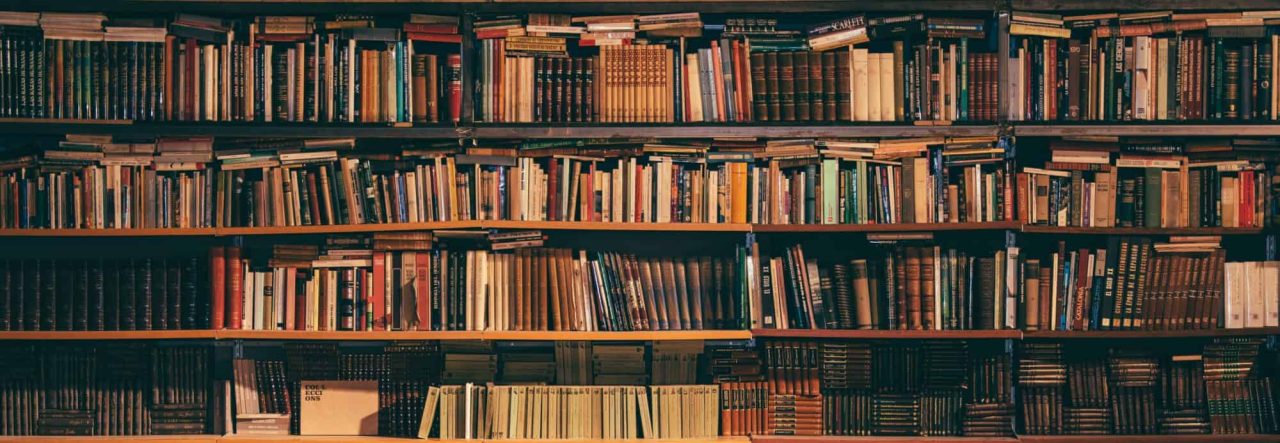
So I’ve got this new project going where I’m not allowed to buy any books in 2024 other than sequels to books I already own until I’ve cleared my Unread Shelf. The only exceptions are books I preordered in 2023; I’m also not allowed to preorder anything new until this is done. You may note that there are more books on this shelf than there were just seven days ago when I posted my December Unread Shelf; those are Christmas’ fault, as I got some cash and some gift cards and the Barnes & Noble box took forever to arrive.
Also, these aren’t my only unread books. I got into the terrible habit last year of ordering entire series at once if I was convinced in advance I’d enjoy them! There are other unread books that you don’t know about!
Let’s review the carnage here, shall we?
King: One book, no sequel. This is the next thing I’m going to read on account of Martin Luther King day being next week. Red Rising: Book One of, currently, six; the series is set for seven but that one’s not coming until 2025. Forged in Blood: Book One of two but the second is TBD. The Will of the Many: One of three, I think but the others aren’t out yet. The Bladed Faith: One of three, the third book comes out Tuesday so the series may as well be finished. A Touch of Light: One of two, both out. The Night and Its Moon: One of three, all out. Light from Uncommon Stars: Stand-alone, I think, and if I’m wrong don’t tell me. Exorcism: Two of three; third isn’t out yet. Silver Under Nightfall: Stand-alone. Nevernight: One of three, all out. Against the Loveless World: Stand-alone. Bookshelves & Bonedust: Prequel to Lattes & Legends; as far as I know, no more planned. Sword of Kaigen: Stand-alone. Mrs. Lincoln: Stand-alone. The Storm Beneath a Midnight Sun: Two of two, I think. The Adrian Tchaikovsky books: Volumes Five, Six and Seven of the completed ten-book Shadows of the Apt series. I don’t own the last three yet, but Volume 4 kicked the legs out from under the plot entirely so it was a good place to stop for a little bit. Sky’s End: Part of a series, I think, but the only one out. Ravensong: Part two of four, all of which are out. The Jasad Heir: Part of a series, but just one out. Kaikeyi: Stand-alone. The Thousand Deaths of Ardor Benn: One of three, all out.
But that’s not all! The following entire series are on the bookshelves in my living room:
The Books of Babel, by Josiah Bancroft. Finished Book 3 of 4 yesterday, will probably finish book 4 by Wednesday. Of Blood and Bone, by John Gwynne. Trilogy. The FarseerTrilogy, by Robin Hobb. Trilogy, but the first trilogy in a cycle of something like sixteen books that I hope to temporarily ignore the existence of.
And if I’m really feeling nuts, I can go back to:
The Stormlight Archive, by Brandon Sanderson, which I have the first four books of but never bothered reading the fourth; The Malazan Book of the Fallen by Steven Erikson; I bought the first three books in a fit of optimism and got halfway through the first one before bailing; and The Fucking Wheel of Fucking Time which I am never ever finishing fuck these books.
That is, ignoring the last section, fifty-one books that I need to read before I can buy more. It is always possible that I’ll decide to bail on some of them (a lot of these are book ones from authors I don’t know anything about) but that’s still a shitton of books.
A confession: I am, for no clear reason, less enthusiastic about writing this post than I usually am. I’ve done this every year that this blog has been in operation, and it’s a post that I look forward to all year long. For most of this year, that has been true! And right now I’m looking at a mostly-blank screen and God, I’m so tired.
The really weird thing: the quality of these books, and my enthusiasm for them, is as high as it usually is and frankly the differential between book #1 and book #11 is lower than it has ever been; most of these books could have been top three, at least, in any other year, and more than ever this is a “don’t pay too much attention to the specific rankings” type of year. I went to 11 this year because I couldn’t leave either of those two books off of the list, and as always there’s an Honorable Mention at the end.
Also, as always, that asterisk up there means “new to me,” a lot of these books did come out in 2023 but not all of them and coming out this year was not a criteria for making the list.
11. Shadows of the Short Days, by Alexander Dan Vilhjálmsson. You’re going to see a little bit of a theme with several of these books, which is spectacular worldbuilding and really cool magic set in places and/or times that I typically don’t see people using for fantasy books. In this case, Shadows of the Short Days is set in Iceland– Reykjavik, specifically– but not remotely an Iceland that matches the real world’s. The book sets you up nicely with a six-page glossary of terms that you cannot pronounce with letters you’ve never seen before, and it is not going to be nice to you with the vocabulary, but the end result– a dark urban fantasy with sorcerers and fascist governments and what looks like a bog-standard “brilliant wizard gets kicked out of school because he’s reckless” subplot that upends itself when the scholarly authorities turn out to have been one hundred percent correct— is just an absolute joy to read. This has a sequel sitting on my TBR shelf right now but I think it’s one of those sequels set in the same world but with unrelated characters; one way or another Shadows stands on its own very well. There are 11 books on this list because it came down to this book and the next one and I couldn’t leave either of them off.
10. The Witch and the Tsar, by Olesya Salnikova Gilmore. Here’s another mini-theme: books that are sort of historical fiction, or at least feel that way, but aren’t. Also, books where I have to double- and triple-check the spelling of the author’s name. In this case, the titular witch is Baba Yaga, and the tsar is Ivan the Terrible. This can’t be historical fiction, because Baba Yaga rather inconveniently isn’t real, but it does its damnedest to feel like it; there’s a lot of Madeline Miller’s DNA in here, if that comparison helps any. At any rate, the book is from Baba Yaga’s perspective, but there’s a lot of real or at least real-feeling Russian history in here, and Russia during the sixteenth century is something I’m happy to read about to begin with, and once you throw in magic and the slow waning of Russian pagan gods in favor of Christianity (and, oh, those pagan gods are real, and they’re pissed) it ends up becoming a really interesting story. It does sort of fill the same niche as Shadows of the Short Days, but again, I just couldn’t convince myself it was okay to leave either of them off of the list.
9. The Spear Cuts Through Water, by Simon Jimenez. Did I mention pagan gods? Well, okay, maybe not pagan, because this is a second-world fantasy and Christianity isn’t a thing, but this is probably the weirdest book on the list, and I absolutely mean that as a compliment. I didn’t mean pagan, I meant edible. Sorry about that.
What?
No, seriously, there are multiple places in this book where gods are eaten, and the book veers between first person, third person, and second person narrative, and apparently it’s all a play? Until it’s not? And the story is at least outwardly about a pair of warriors escorting the body of a goddess to her final burial place while alternately dodging and defeating her sons, who are known as the Three Terrors, only I’m pretty sure it’s about a few dozen things the than that. It’s inventive as hell and I loved it, and the interesting thing about it is you twist it a little bit and I’m talking about my least favorite book of the year, because this book makes a lot of choices that most of the time will kill my interest in reading something, but man, this was amazing.
8. Dark Tide: The Great Boston Molasses Flood of 1919, by Stephen Puleo. There’s always a couple of nonfiction pieces on the list, and this is the first of two and a half (you’ll see when I get there) and I think perhaps the most broadly interesting of the three, if not specifically the most interesting to me. I only learned that Boston had had a molasses flood this year, and ordered this book within about ten minutes of making that discovery, because how can you not want to know more about that? It can be very tricky to write a micro-history like this of a very specific event, because if you just write about the event the book is ten pages long, and it’s really important to pick starting and ending points that make sense and stay interesting to the reader. This book does an exceptional job of that, and ends up being a history not only of the flood itself but of capitalism and manufacturing in New England, as well as being a half-decent courtroom drama as well. It also managed to add a brand new way that I really don’t want to die to what was already a long list; there are probably less pleasant ways to die than drowning in a literal tidal wave of molasses, but I could do without the bit where once the flood is over it hardens and everyone has to be literally chipped out of the sea of frozen sugar left behind. No thank you. Read the book, though.
7. Determined: A Science of Life Without Free Will, by Robert M. Sapolsky. I said when I first wrote about this book that I really wanted someone else I knew to read it so that I would. have someone to discuss it with, and thus far, unfortunately, that hasn’t happened yet, although I convinced one friend to pick it up and bought it for my brother as a Christmas present, so hopefully it’ll happen soon enough.
At any rate: Sapolsky is a neuroscientist, or maybe a neurobiologist, or maybe both; I have to admit I’m not a hundred percent clear on the distinction between the two, and he’s convinced there is no such thing as free will. Entertainingly, he’s not happy about this conclusion, and his hangdog insistence that everyone is going to hate him for the arguments he’s making echo through every page of this book, which wouldn’t be half as much fun to read were it not for Sapolsky’s sense of humor. Now, I am no kind of neuro-anything, and have no especially relevant expertise to this book, so all I can say is that I read the first half without ever going “Wait, what about …” at any point and without spotting anything that felt like an obvious hole in his reasoning, and he’s exceptionally talented at making complex scientific concepts feel understandable. The second half of the book, about the societal implications of free will’s nonexistence, are not as airtight but that’s why I want to talk to somebody about the book. Please go read it and get back to me?
6. The Warden, by Daniel M. Ford. I always feel the need whenever I talk about Dan’s books to mention that I know him in the sort of parasocial “he let me into his Discord and knows my real name but we’ve never met” way that the Internet allows, but it’s also fair to point out that this is the sixth of his books that I’ve read and the first time one of them has shown up on my end-of-year list.
One way or another, though, The Warden is delightful, one of only two books on this list I’d apply that word to, and it is strongest in its worldbuilding and its characters. Aelis de Lenti, the titular Warden, is an absolute slam dunk of a character and one of the best arrogant assholes I’ve encountered in print in a long time. A Warden is a sort of combination of a cop, a governor, and an ombudsman, and Aelis graduates fresh from her training and gets more or less banished to a little village in the middle of nowhere with a crumbling tower to live in and a very persistent goat as a roommate. The book has a very old-school D&D feel to it without feeling like an adaptation of someone’s campaign, and there are at least two more in the series coming. I will also say that if you’re going to read one book from this list, I actually want you to pick this one up, as Tor kinda fumbled the rollout of the book and I feel like it needs more attention. Another reviewer called it “the most underrated book of the year,” and I really feel like it deserves a look.
5. My Government Means to Kill Me, by Rasheed Newson. Another book from the “sorta historical fiction, I guess,” genre, Government has the words “a novel” right there on the cover in big letters and I still had to look into the author to confirm that he wasn’t old enough to have lived through the AIDS epidemic in New York in the 1980s. I get into more details in my initial write-up for the book, but this really feels like a personal memoir, and the inclusion of a number of actual historical figures as characters does nothing at all to diminish that feeling. The main character, Trey, moves to New York from Indiana and more or less immerses himself in gay bathhouse culture for the first half of the book, doing what he can to get by from day to day and filling his nights with anonymous sex, and then the epidemic hits and he begins working in an unlicensed AIDS hospice, caring for men who have fallen victim to the disease. It’s a hard book to read on a lot of levels, and there are trigger warnings galore for it, but it feels important in a way that a lot of other books I read this year didn’t, and Newson is an author I’m going to be keeping a close eye on in the future. Honestly, this book is perhaps the best example of “don’t let the rankings matter too much,” as it and basically everything that comes afterward could easily have been #1 on a different day. I’d particularly recommend it if you’re in your mid- to late forties or older and remember at least some of what was going on during that time.
4. Siren Queen, by Nghi Vo. Third of the “Historical fiction, but …” genre, this is the second year in a row that a book by Nghi Vo has made the top 10, and in a lot of ways Siren Queen feels like it could be a loose sequel to The Chosen and the Beautiful. It’s set in the Golden Age of Hollywood, during the transition between silent films and “talkies,” and the main character is a Chinese-American actress named Luli Wei, who is willing to do nearly anything in order to break into acting, and this is a book where selling your soul for fame and fortune is literal. Much like The Chosen and the Beautiful, Siren Queen puts you into a world absolutely pregnant with magic without going to any real lengths to explain any of it– at one point in Wei’s youth a ticket-teller lets her and her sister in to a movie without paying for tickets in exchange for an inch of her hair, and the book gives you nothing to help you figure out why that might be important– and, again, much like TC&TB, the big selling point of this book is Vo’s incredibly atmospheric and immersive writing. She can do a million of these books and I’ll read all of them. I loved it.
This is where it got really, really hard to rank the books, by the way, and if you want to just call all three of them #1, I won’t bet mad about it.
3. Yellowface, by R.F. Kuang. Speaking of selling your soul to the devil, R.F. Kuang has now written five books across three very different genres, all five of which were absolutely fucking spectacular, and she is somehow still only eight years old. Yellowface might be my least favorite of her books and it’s the third-best book I read this year! How the fuck is that even possible? I don’t know. She’s clearly a deity of some sort, and as soon as I finish this post I’m going to start working on getting the cult started.
At any rate, after writing a three-book fantasy reimagining of the war between China and Japan and a work of dark academia set at Oxford, Kuang has now written a brutal work of satire about the publishing industry, set in the modern world, with not a trace of magic or fantasy to be found, because that’s fair and one author should definitely be talented enough to be magnificently fucking good at all three of those things. It’s about a white woman who literally steals a manuscript from a dead friend and publishes it under her own name to immense acclaim and success, and even as someone who doesn’t really have a dog in this particular fight I was wincing at some of the events in this book. It’s so, so good, and Kuang is so, so good, and the notion that she’s still in her 20s and has decades of work still to come actually gives me a little bit of hope for the future.
2. Legends & Lattes, by Travis Baldree. Okay, I’ll be honest: on a technical level and even on a lot of non technical levels, Legends & Lattes isn’t necessarily as good as a lot of the other books on this list, particularly after the amount of praise I just directed toward Yellowface. But for a large chunk of the year I was thinking of this as the best book I’ve read all year, or at the very least my favorite book of the year, and the reason for that is how I felt while I was reading this. Remember a thousand words ago when I said that The Warden was one of two books I’d apply the word “delightful” to on this list? This is the other one. This book is delightful. It delights. And if you’re reading that and thinking “Didn’t he say that about TJ Klune at some point?” you’re right, and yes, I mean it as that high level of praise.
Legends & Lattes is about an orc named Viv who puts down her sword and opens up a coffee shop. She hires a succubus as her barista and some sort of nonverbal rat-thing bakes scones and cinnamon rolls for her. And I loved it. The sequel is on my shelf right now and I haven’t read it yet because it’s set before Viv opened the shop and I’m not sure I’m nearly as interested in her as an adventurer. I want more of the coffee shop. I will read about Viv and Tandri making delicious coffee and being quietly and happily in love for a hundred years, and I will love every second of it. I mean, stuff happens, there’s some conflict, it gets resolved, blah blah blah. This book’s strength is in evoking emotion, and it does so magnificently, and I loved it.
1. To Shape a Dragon’s Breath, by Moniquill Blackgoose. I really wasn’t sure, when I wrote my initial review of this book, if it was going to hold up against the initial high I was on after I read it. I used the phrase “book-drunk” in the review, and I’ll stand by that; this book is intoxicating in the best way and it is the best book I read this year. It also fits into a few of the sub-themes I had going on this list; it feels like historical fiction, as it’s set in Canada during the … 1700s, I’ll say? Colonial era? Only the English are the Ainglish, and while it doesn’t get into a ton of detail that I hope is coming later in the series, because I love nothing more than I love thorough worldbuilding, but it feels like the real world, only the Norsemen took over the world instead of the English, and also there are dragons. And dragon school. The main character is Anequs, a young First Nations girl who more-or-less accidentally bonds herself to a dragon egg early in the book, and then gets swept off to an Ainglish dragon school to legitimize her connection to her dragon in the eyes of the government.
Did you read Fourth Wing and Iron Flame? I did, and I liked them both. In a lot of ways To Shape a Dragon’s Breath is a very similar book to both of those, and if you read and liked them you absolutely need to read this book, as it’s better in nearly every imaginable way, from the characters (I compared Anequs to Rey Skywalker, and now that I’m thinking about it she has a lot of Aelis in her as well) to the nature of the school to the actual writing itself. Oh, and there’s chemistry. No, not between the main characters– actual chemistry, only magic-tinged, and at the end of the book the author manages to connect magic and chemistry and dancing in a way that is absolutely inventive as hell and when does the sequel come out again because I want it right now.
This was a great year for reading, and To Shape a Dragon’s Breath is the best book I read this year. Go buy it.
HONORABLE MENTION, in NO PARTICULAR ORDER: Ocean’s Echo by Everina Maxwell, Hell Followed With Them by Andrew Joseph White, Gender Queer by Maia Kobabe, Untethered Sky by Fonda Lee, The Daughters of Izdihar by Hadeer Elsbai, In the Lives of Puppets by TJ Klune, Into the Light by Mark Oshiro, the entire The Faithful and the Fallen series by John Gwynne, Cage of Souls by Adrian Tchaikovsky, The Dead Take The A Train by Cassandra Khaw and Richard Kadrey, and Black River Orchard by Chuck Wendig.
WHAT THE FUCK WAS THAT AWARD: Hospital, by Han Song.
I am running out of days in which to write pithy retrospectives or overly detailed nerd epics about blog stats, and I’m starting to think that I’m going to spend all of New Year’s Eve writing and generate a dozen of them. I just put together my top 11 books of the year (I couldn’t fit it into 10, but 15 felt like pushing it this year) and I’ll probably write that tomorrow, but we’ll see how energetic I’m feeling.
But let’s talk about what I read this year anyway. I read more this year than any year since 2015, I think, which I believe was the year where I read 200 books just to prove I could, and I’m probably not done– I started Adrian Tchaikovsky’s Blood of the Mantis today, and I can easily imagine a world where I read both that and the fourth book in his Shadows of the Apt series before the calendar year rolls over. So 140 books this year and it might end up being 141. Goodreads tells me that I’m at 52,188 pages for the year, with an average book being 372 pages long– and that’s in a year where I read all 25 volumes of Invincible, at about 160 pages each. I was about to type a sentence about how I wasn’t going to do the math to figure out what a difference the graphic novels made, but then I went and did it anyway. Without those, it’s 419 pages per book.
Which, uh, can you tell I focused on fantasy/sci-fi series fiction this year? Because holy shit. I am trying my damnedest to clear my TBR right now, and I’m seriously thinking about making a rule that I can’t buy anything other than sequels to series I’ve started until the damn shelf is either clear for the first time in several years or really close to it. I’ve got a few books on preorder that I’m not about to cancel but if I don’t make any discretionary purchases in 2024 until I’ve got it cleared … hell, that’s still probably three months, easy. Sigh.
I read 48 books this year by authors who were new to me, and read more than one book by fifteen different authors. The big winner there was Robert Kirkman, who wrote the Invincible series (25 books), but beyond him there was Adrian Tchaikovsky (10, possibly 11), John Gwynne (4), Neal Shusterman (3), Matthew Ward (3), Josiah Bancroft, Kevin Eastman & Peter Laird, Cassandra Khaw, TJ Klune, Fonda Lee, Seanan McGuire, Suyi Davies Okungbowa, Christopher Ruocchio, Nghi Vo, and Rebecca Yarros, all with 2.
And my TBR has even more books from, like, half of those authors. Whee!
The total number of authors represented was 92, of which at least 37– 40%– are women or nonbinary and at least 27– 29%– were people of color. The 40% isn’t bad, although I’d like it to be higher, but the 29% is. At least 40 (43%) were white males. (Why “at least”? I can’t find a picture of every author, and I’m not going to spend a million years digging so there are a couple of assumptions in there. There are a couple of trans men in the mix as well, I think.) I’m not going to cross-reference that with the number of books because of the number of series I read; Tchaikovsky and Kirkman alone are going to skew the hell out of that and a clear majority of the books I read were by white men. I’m not going to make an explicit goal of it but I’d like to see the numbers higher next year for people who aren’t straight white men in general.
Take a moment and soak in that cover, which is amazing, because it is absolutely and undeniably the best thing about Han Song’s Hospital. I do not write a lot of negative book reviews around here– there are definitely some from time to time, and usually if I take the time to shit on a book it’s because I found it specificially offensive in some way or another. This is not that. This is, I think, a very bad book, and I don’t want you to read it, but I need someone else to read it so I can be sure I’m not crazy, so basically what I’m looking for here is someone to take a hit for the team, possibly literally steal this book from somewhere, and read it.
I’m not going to spend much time talking about the plot because frankly it doesn’t matter, but basically the main character gets sick from drinking some mineral water while on a business trip, ends up in the hospital, and then everything, including the narrative, goes directly to hell, and by the end of the book the entire universe is a hospital and just roll with it because it’s not gonna make any sense. The book starts off with a prologue where a Buddhist astronaut is going to colonize Mars; it sounds really interesting at first, but once the prologue is over that storyline will never be referred to again and the book very definitely takes place in China and on Earth.
That’s not a joke, and it’s not something I missed. The prologue appears to belong to an entirely different book.
The narrator is unreliable, the narrative is unclear, internally incoherent, and inconsistent, people die and then are not dead any longer for no reason, there are some of the worst sex scenes I have ever encountered, no one anywhere talks like they do in this book, and despite huge chunks of the book being devoted to people holding forth on philosophy the book has no overall point that I was able to decipher. It is translated from Chinese; while it is definitely not a good translation of a good book, I cannot tell you if it is 1) a good translation of a bad book, 2) a bad translation of a good book, or 3) a bad translation of a bad book. It’s entirely possible that things flew over my head that would be clear to Chinese readers. It’s also possible that the whole book is bullshit.
Here’s the problem: it’s unimaginable to me that this book is actually as bad as I think it is, because I still have some shred of belief that publication is not just purely luck, and someone somewhere had to find some literary merit in this thing and I’m completely missing it. There are two sequels in Chinese and the second one in English is coming out in a couple of months. The whole series is being translated, and if the translator’s note at the end of the book can be trusted, Han Song himself prefers the English edition of the book. So this isn’t just one book, like, slipping through quality control somewhere, or an insane editor’s pet project. That’s six books, plus the added cost of the translator!
Please, someone, take the hit for me, read this Goddamned thing, and help me figure out what’s going on.
The headline to this post is a lie; this is not going to be a review, not even by my standards. This is just, like, me waving this thick-ass paperback around and squeeing at people. I love Adrian “Spiders” Tchaikovsky a hell of a lot, and he approaches if not exceeds Brandon Sanderson levels of prolific, so there is an awful lot of him out there to read, only I don’t feel like I talk about him in this space all that often.
The reason for that is simple: his books are batshit insane, from start to finish, all of them, and it makes him kind of hard to write about, because when you try to describe what happened in a Tchaikovsky book the tendency is to wave your hands around and, like, make gurgling noises and say “trust me” an awful lot. I actually fooled myself on this one; it actually starts off in the real world, and for the first hundred pages or so you could be fooled into thinking it was either a book about cryptids or a murder mystery, and while I enjoy both of those kinds of books they would end up feeling awfully pedestrian coming from Tchaikovsky.
Yeah, by the end of the book there are sentient, human-sized rats in plague doctor costumes, a computer the size of a planet made entirely from ice, giant spacefaring trilobites that communicate via manipulating piles of centipedes into an approximation of a human face, technologically advanced Neanderthals, and something like a dozen timelines all collapsing into each other including a part where you get section one of chapter seventeen something like eight times in a row only it makes sense and it’s cool, and oh okay it’s a fucking Adrian Tchaikovsky book after all.
Note that, despite looking like a perfect match to Children of Time and Children of Ruin, this book is not connected with those books in any way that I was able to figure out. I’ve got it on the shelf next to them because it looks like Volume 3 of a trilogy, but it’s not. And, looking on Google to see if I can find an image of the three books next to each other, I just discovered that there actually is a third book from that series coming in November, called Children of Memory, and I’ve already got another book by him in a different series on my unread shelf, meaning that by the end of the year it’s not unreasonable to believe I’ll have read four Adrian Tchaikovsky books, which will probably easily top 2000 pages between the four of them. He’s also got a (completed) seven-book fantasy series out there that I haven’t even touched yet, and he also writes three hundred novellas every year.
Christ, dude. I love you, but … slow the fuck down.
Before getting into talking about the book, I want to point out that this is one of several books that I either have on deck or have read recently that I discovered through TikTok. My main location for book discovery right now is Twitter and. has been for a while; I follow so many writers and agents on there that anything interesting is inevitably going to cross my radar sooner or later. But #BookTok is becoming a bigger force as time goes on, and I still don’t think I’ve heard about this one on Twitter anywhere, so it’s good that I was paying attention, because Ciel Pierlot’s Bluebird is a hell of a book.
Also, it’s been a running joke around here for years that my book “reviews” are often about anything but the book, and … well, this one isn’t going to be an exception? So let me say the words Lesbian gunslinger fights spies in space and just walk away after that, because I know my people, and that sentence got a certain number of you opening up Amazon already. It was certainly all I needed to order the book, and I got exactly what I wanted, and while I once criticized a book whose tagline was lesbian necromancers in space on the grounds that there was not quite as much lesbian necromancy or space as that sentence implied, this is well and truly a book about a lesbian gunslinger fighting spies in space and it is absolutely everything I want from life right now.
It is also– and here we go with the review being more about me than the book, so brace yourself– about 75% of the way to being a great Benevolence Archives book, with most of that remaining 25% being simple matters of renaming a few characters and slightly altering the villains. Because the main character of this book reminds me so much of my Rhundi that it’s scary, and I kind of want to hand my entire universe over to Ciel Pierlot and let her run wild in it to see what happens. I mean, Rhundi isn’t a lesbian, and Pierlot’s main character Rig’s relationship with her girlfriend June is one of the best parts of the book, but the personality and the attitude and the swagger are all there, and I feel like my writing style and Pierlot’s are similar enough that matching the tone of the BA books wouldn’t be a challenge for her at all.
So obviously I really liked the characters. The worldbuilding here is pretty cool too, with the galaxy divided up among three warring factions more or less separated by religious beliefs about the same original set of facts; blah blah blah God did this, and all three factions are convinced that this was done for their benefit and not that of the other two. I’d love to see more; we get enough into the weeds to tell this story but there aren’t any places where I felt like the book was info dumping just for the hell of it. That said, I think the one place where the book does fall down a bit is related to the worldbuilding: Rig is a Kashrini, an alien race that may as well be an ethnic minority given how the book treats them, and there’s a subplot going throughout the book about how the Kashrini are treated (poorly) by their faction that I felt could be explored a little bit more. Rig in particular makes a habit of reclaiming Kashrini artifacts whenever she finds them in the possession of non-Kashrini– think Killmonger in Black Panther for a close analog– and I would like to have learned a little bit more about her actual people. She spends most of the book trying to rescue her sister, and found family is definitely a theme, but I’d like to have seen a bit more detail on this one story thread.
Bluebird is a standalone, tying everything up with a nice bow at the end, and I don’t know right now what Pierlot is working on next. I’d love to see more done with this world and these characters, but one way or another she’s on The List now, and I’ll be keeping my eyes out for her next book. Check it out.
I’m going to be honest, here: if I had written this post a couple of days ago, closer to when I actually watched the show, it would have been much longer and, frankly, more interesting. All of my brain space for the last couple of days has been taken up by working my way through my To Do list and trying to rewrite the Constitution, which I wish was a fucking joke and isn’t.
Here’s the non-spoiler review of this show: It was pretty good until the final episode, but only pretty good, and the final episode was fucking stellar. Lemme toss a little separation line here, so that those of you who don’t want to read the spoilery parts have adequate time to dip out and come back later:
In some ways, the show’s most amazing trick happened in the first episode. I wasn’t exactly digging around for spoilers on this show, but I wouldn’t have bothered avoiding them, and the fact that I’d not even seen a rumor that Lil’ Leia was going to be a major character? Is fucking unbelievable. I have been a frequent and noisy proponent of casting Millie Bobby Brown as Leia and giving her a movie or two (and there are rumors flying recently about that finally happening) but she’s too old to have been in this show and, my God, Vivien Lyra Blair was amazing. I was entertained at the idea that people were complaining about her looking too young, as the actress is the exact same age that Leia was supposed to be; I can only assume that these people haven’t seen children in a while. Sometimes they are small! It happens. I promise.
And this gets right to the crux of the weirdness of the show: at first glance, everything about it seems to utterly screw up the continuity that A New Hope set up, or at least screws up all the assumptions that absolutely everyone made, but are never actually specifically stated in the film.
Because Leia never says she and Obi-Wan have never met.(***) And Vader’s line about “when I left you, I was but the learner” does not actually mean that the last time they met was the battle on Mustafar. In fact, and I’m literally just realizing this right now as I’m typing this sentence, it’s really hard to reconcile the words “when I left you” with what happened there, since Obi-Wan left him for dead. And knowing that Obi-Wan already knew Leia adds a nice resonance to his last moments during the fight in ANH with Vader; just before he dies he looks to his left and sees both of them, at which point he recognizes that his job is done and sacrifices himself. I’d always assumed before that he was just looking at Luke, y’know?
So this show is, in a lot of ways, the best kind of retcon: never (that I’ve noticed, at least) does it explicitly contradict anything that came before, but it recontextualizes some moments in ways that are really interesting. The whole “from a certain point of view” conversation with Luke, where Obi-Wan says that Darth Vader betrayed and murdered Anakin? Vader literally told him that, and it’s interesting to think about that (outstanding) sequence in the final episode where Vader’s voice synthesizer is flipping back and forth between Anakin’s voice and Vader’s, because I genuinely don’t know if that’s Anakin talking and he’s trying to assuage Obi-Wan’s guilt or if it’s Vader talking and he’s bragging.(*) And what happens next? Obi-Wan calls him “Darth” for the first time.
Again: we all know that the real reason that Obi-Wan Kenobi called Darth Vader “Darth” on the Death Star is because at the time George Lucas hadn’t really decided that “Darth” was a title and not Vader’s first name. But from within the story? It’s kind of awesome, because to my recollection Obi-Wan never once uses the word “Vader.” Once whoever that is tells him that Vader is responsible for Anakin Skywalker’s death, Obi-Wan reverts to calling him “Darth,” because as far as he’s concerned there’s no person there anymore. There’s just the Sith. And in context, it makes perfect sense. Frankly, it’s disrespectful, and in a way I really enjoy.
You could probably criticize the show for setting up yet another situation where Kenobi leaves Vader for dead. At this point, he’s absolutely convinced his friend is gone, and they don’t give him any kind of out for not killing him; Vader’s incapacitated and he’s right there. I get why Obi-Wan leaves him on Mustafar. I don’t get why he doesn’t end Vader here, on whatever (very cool, by the way) planet that was.
(Oh, one criticism, just for the hell of it: the show leans a bit too hard into the idea that every Star Wars planet is two or three square kilometers in size and exactly the same climate everywhere. I generally liked Reva as a character but that bit where she just shows up to some random-ass spot on Tatooine and asks the first random-ass moisture farmer she meets where to find “Owen?” Come the fuck on. Also, I absolutely hate the post-sequels decision that anyone can get from anywhere in the galaxy to anywhere in the galaxy in seconds. It’s lightspeed, Goddammit, not, like, Warp Ninety.)(**)
Anyway. This is another place where the overarching story constrains what Kenobi was able to do. Obviously he can’t kill Darth Vader nine years before A New Hope, because Vader’s got three movies left. But they should have given us a reason Vader survived, and they didn’t. Obi-Wan just didn’t kill him, because reasons.
I also really liked Vader’s final conversation with Palpatine. The last thing he does before (he thinks) leaving Kenobi buried and dead is call him “Master,” and while I don’t remember the precise line of dialogue in the conversation, he has to tell Palpatine that he is his only Master who matters during that last conversation. Nicely done, and again, gives Vader a reason not to spend the next nine years constantly chasing Obi-Wan like we all felt like he ought to be doing.
So yeah, this is in Definitely Watch territory for me. Better than either season of The Mandalorian, and infinitely better than Book of Boba Fett. I’ll watch Andor, I suppose, but I don’t have especially high hopes for it, as Cassian Andor was one of the few characters in Rogue One that I didn’t feel like I wanted to know more about. Give me the Goddamn Baze Malbus/Chirrut Imwe show that I want! Give it to me now!
(*) It’s not clear at all how much actual work Hayden Christensen had to do in this show. Obviously Young Anakin shows up a few times, and guys, if there was ever a time to use your creepy de-aging magic, this was it, because Hayden’s got some serious crow’s feet– but a robot imitating James Earl Jones does the voice, there’s someone else in the suit doing the fighting, and I think there was even another person involved in the costume somewhere– but I’m pretty sure that’s him under all that makeup during this scene, and for what it’s worth, for a guy who’s trying to convey a whole lot of complex emotions with, effectively, one eye, and that eye covered by a contact lens nonetheless, it’s a really impressive little bit of acting.
(**) Last gripe: way too many people survive getting stabbed with lightsabers in this movie show. Okay, granted, it’s a self-cauterizing wound, so I suspect getting stabbed with a lightsaber is actually a little better than getting stabbed with a blade, but in general lightsabers are surprisingly nonlethal in this series– Reva survives getting stabbed twice!– and the bit with the Grand Inquisitor felt especially unnecessary.
(***) This is the third postscript because I didn’t realize it until after hitting publish, so this is a late edit: this also recontextualizes Han and Leia’s otherwise completely inexplicable decision to name their son Ben, which you might now was the name of Luke’s son in the pre-Disney Expanded Universe books. Han thought Kenobi was nuts, and Leia, as far as anyone knew, barely even laid eyes on him. It even makes “Ben” a better name choice than “Obi-Wan” might have been, because Ben Kenobi was the guy who Leia was saved by. I don’t know if they even thought about this when they were writing the show, but it fixes one of the more nitpicky problems I had with the sequel trilogy in a way I really like.
It seems like an awfully daunting task to actually review James S.A. Corey’s The Expanse series, so I’m just going to write a brief post about it and hopefully that will be enough to convince literally every single one of you to pick it up. I finally finished the 9th book last night after sitting on it for a little while (beginning it at the same time I was starting Elden Ring wasn’t a great decision) and now that I’m done with the series, I’m just kind of stunned at what an amazing accomplishment the entire series is.
I was kind of irritated to discover that Leviathan Falls, the final book of the series, was compared to A Song of Ice and Fire on the back cover, as if ASoIaF is the superior product that Expanse ought to be compared to. I’ve said this about other series before, but The Expanse is markedly better than ASoIaF, not the least because it’s actually finished, and we all know George is never, ever finishing that series. It is also better than That Other fantasy maxi-series you might have in mind, if for no other reason than the series, unbelievably, is nine books and, oh, 4500 pages long or so, and features almost no bloat. That’s kind of astounding, considering what has happened with nearly all of the long-term fantasy series on the market right now.
(Why am I not comparing it to other SF series? Because in a lot of ways there’s nothing to compare it to. Scalzi has done a bunch of books in his Old Man’s War series, but they’ve all been pitched as standalone, more or less, as opposed to having been deliberately structured as a nine-book series from the start. Kevin J. Anderson has his two Saga of Seven Suns series, the first of which was seven books and the second a trilogy, but I’m the only person I know who has read those and I never see anyone talking about them, plus the Corey collective is simply a better writer than Anderson. The closest SF analog may actually be Iain M. Banks’ Culture books, but … uh, I haven’t read those.)
But yeah: one way or another, this series feels like it was planned out, at least in the broad strokes, from the beginning, and while the scope of the series ends up enormous, the author(s) have been smart enough to keep the characters a fairly tight group, with a core of four main characters who are in every single book. Is this a plot armor situation? Maybe, but it never really feels like it, and frankly my two favorite characters in the series both died, so they’re entirely willing to kill characters when they feel like they need to. The status quo keeps sliding around, too; there’s a thirty-year time jump at one point, and there are at least two points in the series where they basically kick the legs out from under everything you thought you knew and remap the board from scratch. Alex, Naomi, Amos and Jim are the constants; everything else is up for grabs.
I know it’s a hell of a thing to tell everybody to go read a nine-book series, but if you’re a sci-fi fan at all and you haven’t picked these up yet, you really owe it to yourself, and the series is done(*) so there’s no longer any excuse. Go get ’em.
(*) There have been several novellas as well, which are going to be collected into a 10th book sometime next year, I think, but this story is definitely finished as of the last few pages of Leviathan Falls. The universe is still out there if they want to come back to it, but it’ll be something very, very different if they do.