I called this “deliciously, delightfully fucked-up” in my Goodreads review, and … really, isn’t that enough?
I am tempted to say it is, because it has been a long day, and I am tired, and I don’t have a ton of stamina at how the hell is it almost 8:00 already to write a complete review, so I’ll just say this: Monika Kim’s debut about a college-aged Korean-American girl named Ji-Won is equal parts horrifying and rage-inducing, which is an interesting combination. Ji-Won’s father leaves her mother at the very beginning of the book after an extramarital affair, leaving Ji-Won’s mother an emotional wreck and upending their family entirely. Ji-Won has to take on trying to keep her family stable while negotiating her first semester at college, and when her mom takes up with a white guy who is pretty clearly a narcissistic, womanizing scam artist and she catches the attention of a second white guy who is horrible for a whole different set of reasons, keeping her family stable starts to take a backseat to keeping herself stable.
Because she’s growing obsessed with eyes– eating them, specifically– and the more her mother’s beau pulls the wool over her eyes, the easier simply murdering him to get him out of their lives becomes to consider. And we’re off to the races, as Ji-Won both grows (descends?) into becoming a budding serial killer and definitely descends into some pretty interesting types of what I think is technically referred to as The Crazy. She has bad dreams and occasional hallucinations and for a minute at the end there you think the book is going to take the easy way out and then it doesn’t, and … yeah, I’m sticking with “deliciously, delightfully fucked-up,” here. Not for everybody, either, in case that’s not perfectly obvious, but I loved it.
A quick word on the white guys, as I feel like I just opened the book up to a certain set of accusations: the book is not anti-white so much as it is anti-a couple of specific kinds of white guys, and in particular it takes aim at Asian fetishization, which, at least as far as I’m familiar with it, pretty much is a white guy thing. The college guy is unbearable in a few other kinda white-specific ways too, but at least at first he pales(*) in comparison to the mother’s new boyfriend, who is immediately and clearly awful to everyone except her. Anyway, if you’re the type to get het up when you think white people are being criticized you’ve probably bailed on my blog years ago, so I doubt this will be a real problem for anyone who might take my recommendation seriously anyway. If not? We can take it, I promise.
One way or another, there’s a great build-up here, a brief moment where you might be worried that the end is about to get away from the author, and then she nails the landing anyway. I really liked this one, and I’ll be keeping an eye out for future work from Monika Kim in the future. (I also picked up a second copy from Illumicrate, because … my god, that cover!)
(*) I swear I didn’t do that on purpose, and I’m sorry, but not sorry enough to remove it.
My wife genuinely suggested to me, half an hour ago, as I was telling her that I had to write this and that I was not looking forward to it, that I just make the entire post a single word:
“Don’t.”
And … well, no. Perhaps the most frustrating thing about this series is how close to being remarkable it is. Most of the reviewers certainly seem to think it’s amazing; the lowest-ranked of the main Archives books is at 4.51 on Goodreads, which is hardly a failure.
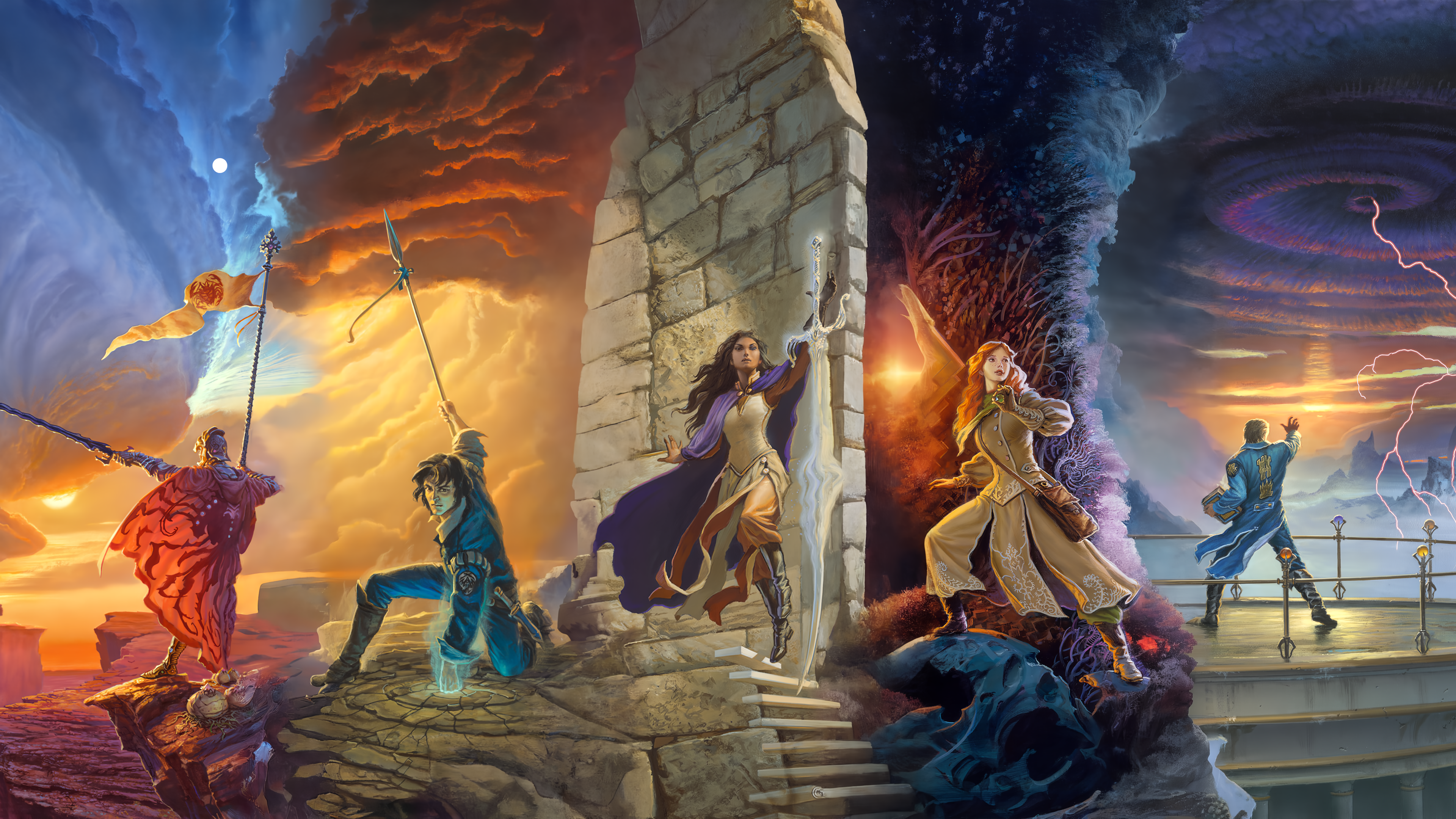
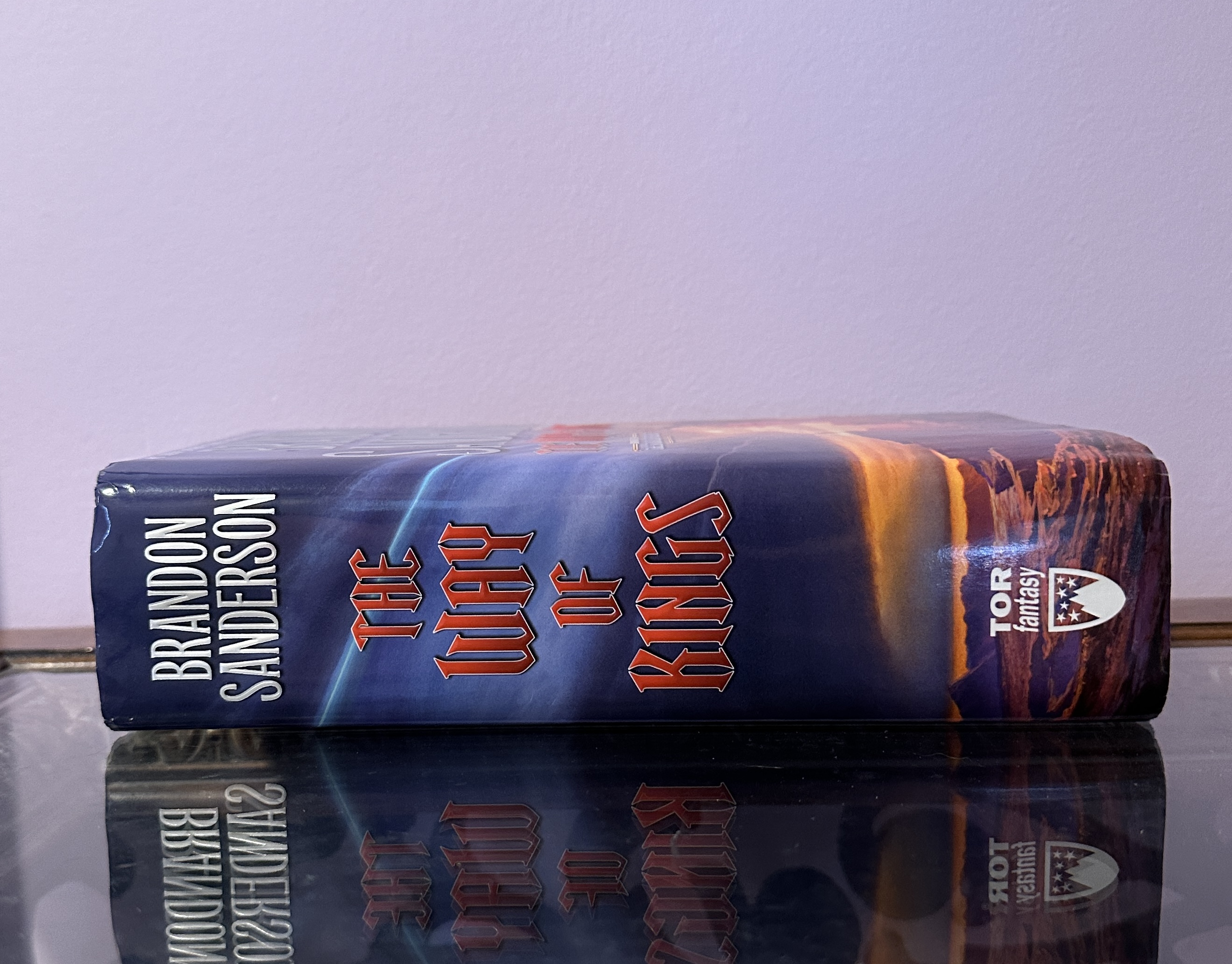
And in many ways it really is remarkable. I stand by my repeated assertion that The Way of Kings is an amazing fucking book. But unfortunately the series follows what has become a sadly typical trajectory of the fantasy megaseries, that being that each book is worse than the book before it. And much like the best example of this phenomenon, A Song of Ice and Fire, the first book is so good that there’s plenty of room for the books to get worse before they even begin to approach being bad.
So let’s start off with some good stuff. The books are clearly carefully planned out. George R.R. Martin and Patrick Rothfuss are never releasing the next books in their series because they have written themselves into corners. I believe completely that Sanderson is going to deliver on books six through ten if he lives long enough, and I may even buy them if only to have them on the shelf. He’s going somewhere with this and he knows what he’s doing. And while I have some serious issues with his worldbuilding– more on that later– there is no doubt that it is both deliberate and meticulous. It’s not easy to write a five-book series in the first place! I certainly couldn’t do it! It’s even harder when each book is over a thousand pages long and all five of them come out in a fifteen-year period of time where you also write and release seven hundred other books.
By all rights, these books should be much, much crappier than they are. It’s amazing that they’re even readable, to be honest.
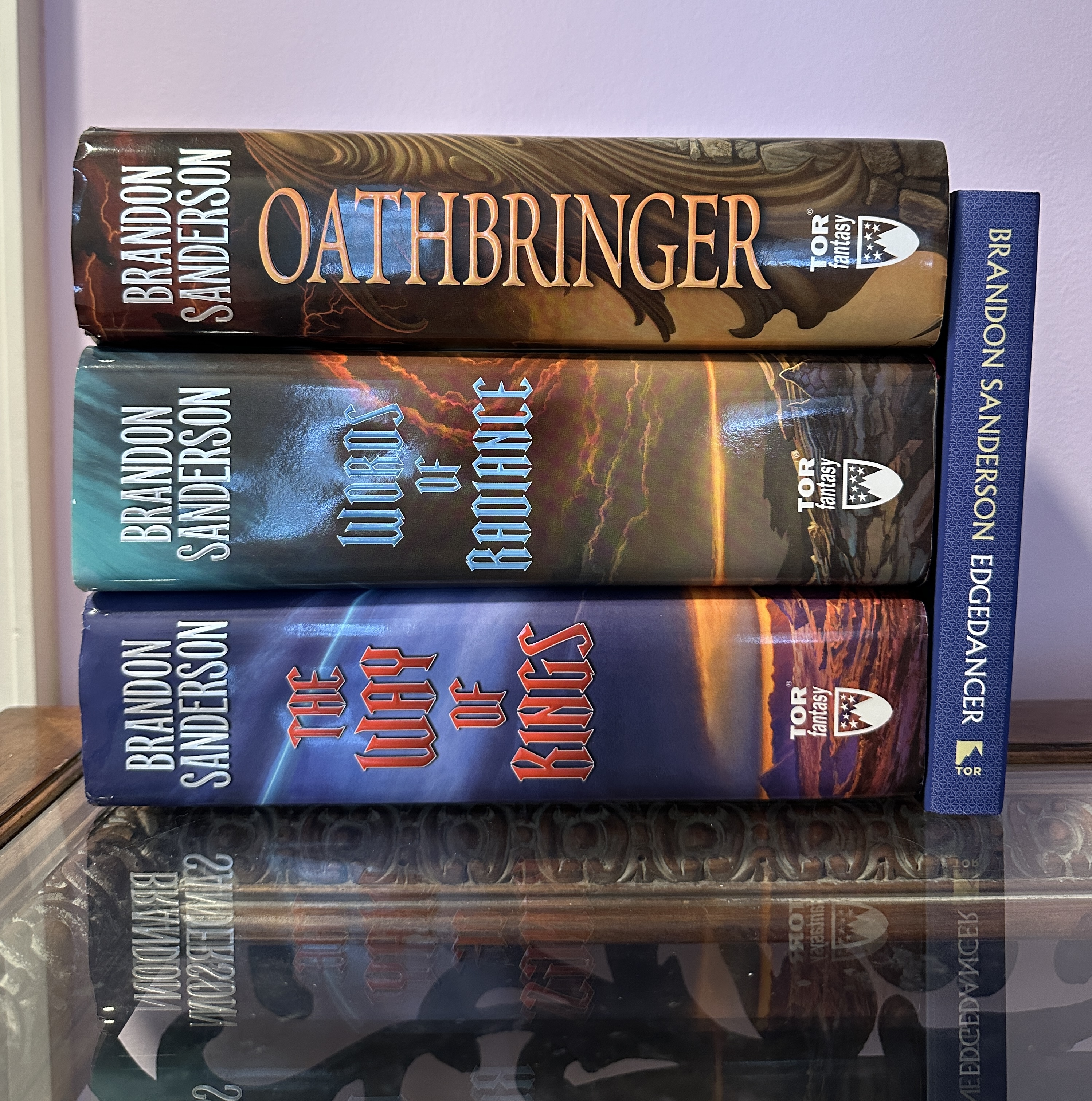
But about halfway through Oathbringer, a book that I abandoned early the first time I tried to read it, the books took a turn that I wasn’t expecting.
Unfortunately, that turn was directly up Brandon Sanderson’s ass.
The Cosmere has its fans, I am aware of this. I am very very much not one of them. For those of you unaware of the meaning of that term, all (perhaps most? Let’s go with most) of Brandon Sanderson’s books exist in the same universe. During the time where I was reading his work regularly, he hadn’t really revealed this little detail of his work, and any connections between different series either went unnoticed or were dismissed as Easter eggs of no particular real significance.
You can imagine my dismay when the fucking annoying talking sword from Warbreaker, by far my least favorite of Sanderson’s books, showed up in Oathbringer, and you will have to take my word for it that said dismay increased significantly when it became clear that not only was the sword not going away but it was far from the last intrusion his other books were going to make into Stormlight. It was never really explained why the sword was there. It just was. Other characters from his books showed up too, one with a pretty prominent role, others in cameos. Other planets were frequently discussed, and travel between them became a sub-theme. And after a while, every time I encountered a character I didn’t immediately recognize, I had to play this stupid game where I was wondering if it was just a minor character that after thousands and thousands of pages of narrative I simply didn’t remember, or if it was someone from another book and I was supposed to realize something about it.
Again, you may like the Cosmere. More power to you. Enjoy the wikis. It damn near destroyed the books for me.
I nearly started talking about his characters when discussing the positives of the series, and stopped; most of his characters are assassinated over the course of the series. Kaladin is amazing in The Way of Kings; he has the following exchange in Wind and Truth, which is treated like a mic drop:
“How?” Ishar repeated. “What are you?” He gestured toward Szeth. “Are you… are you his spren? His god?”
“No,” Kaladin said. “I’m his therapist.”
…
Shut up, Brandon Sanderson. Mental illness is a theme of at least three if not four of the books, but it’s handled so, so poorly that I don’t even want to talk about it. Everybody’s fucked up somehow, and it becomes annoying after a while. The final book, one thousand three hundred and twenty-nine pages long, is 70% flashbacks, and the other 30% is mostly self-affirmations.
Which. Yeah. Bloat. I’m not joking about Wind and Truth being 70% flashbacks. Nearly all of the book is presented in a series of visions. What happens in Book Four? At the beginning of the book the bad guys take over a place, and at the end of the book they are driven out of that place again. The actual changes to the status quo over Rhythm of War’s 1200 pages or so could be done and dusted in 250 pages. Whole subplots just never gelled with me at all. Shallan spent two books chasing around something called the … Dustbloods? Ghostbloods! It’s Ghostbloods. They’re from Mistborn, apparently? They’re completely irrelevant to anything, as far as I was able to tell, and the entire subplot could have been cut with no damage. And it takes her away from characters who her interactions with are actually interesting. I don’t think she has a single scene with Jasnah after the third book. It’s fucking ridiculous.
The books are so thoroughly up Brandon Sanderson’s ass that it may be better to stop comparing the series to A Song of Ice and Fire and compare them instead to another megaseries written by an author so famous that he could shit on a napkin and sell a million copies: The Dark Tower.
What I’m saying is that were I to discover that Brandon Sanderson self-inserts into Book Seven, I would not be the least bit surprised.
Gah. I could keep going; I don’t want to. Like I said, I’ll probably buy the rest of the books if only because having half of the series on my shelf will annoy the shit out of me. Will I read them? Okay, I’ll probably read Book Six, because it’ll be interesting to see where he goes with what he’s calling the “second major arc” of the series. I make no promises after that, and I am absolutely not dragging myself through another reread of this monstrosity.
They aren’t terrible. They really genuinely aren’t. But there is six and a half thousand pages of this, and “not terrible” is not good enough motivation to read six and a half thousand pages, and it certainly isn’t enough to get me to recommend them. I won’t stop you, but … God, go read twenty books by other people instead.
I don’t have a ton to say about Dawnshard, the second of the two-so-far novellas in the Stormlight Archives. It’s a fun little story and gives a lot of screen time to Lopen, one of my favorite characters, although it introduces yet another set of adversaries and uses the word “Cosmere” too much. I’m finding that I don’t have a ton of patience for BrandySandy’s desire to knit each and every one of his books together into the same universe, particularly since the most obvious transfer so far has been the sword from Warbreaker and that was my least favorite of his books. I’m sure I’ve missed other bits here and there; it’s been forever since I read any of the Mistborn books and I don’t think I ever finished the second trilogy, but … blech. There’s no reason for it to be here and much like Lift and her constant use of the word “awesome,” It really doesn’t fit the tone of the rest of the series. Hell, it didn’t fit the tone of its own book, if I remember right, although I may not.
I made it 450 pages into Oathbringer when it first came out back in 2017. I was pissed when I decided I had to DNF it– but it had taken me a rather astonishing twelve days to make it those 450 pages (for comparison’s sake, on this reread, during a week where I was working, I finished the entire 1240-page thing in a week) and not only was I not having any fun with it I was finding myself slowly convinced that the book was on the side of the bad guys, and I wasn’t in the right headspace for it one way or another.
Well.
Oathbringer is boring as hell for 900 pages.
I mean, that’s really all there is to it. I can’t recommend reading this book to anyone. I can’t tell anybody to endure nine fucking hundred pages of wheel-spinning and navel-gazing and characters that desperately need to invent antidepressants and irrelevant subplots that could be excised in their entirety without affecting the overall structure of the book. It is exactly the type of bloat that so frequently settles into this type of megaseries, especially when the author has already proven themselves to be someone who could shit on a series of napkins, bind them between two covers, and sell a million copies. Sanderson’s untouchable, and I mean that as a compliment. He doesn’t need to write good books anymore. He can do whatever he wants.
I do not feel bad about abandoning this book on the first pass. I damn near didn’t make it on the second.
And, if anything, the most frustrating thing about this miserable slog of a novel is that the last, oh, 300 pages of the book are some of the most exciting shit he’s ever written. Somewhere toward the end of Part Four or the beginning of Part Five, this motherfucker steps on the gas and he absolutely does not let off until the book is done.
Which meant I was really Goddamned irritated when one of my fucking cats jumped on my chest while I was reading– not in itself a surprising event– and, with about 80 pages left, pissed on my fucking book.
It was a splat, not, like, a full-blast stream, and she somehow managed to not get a single drop on me or on the chair I was sitting in, but my cat fucking pissed on my book while I was reading the fucking thing and I somehow did not immediately kill her or throw her outside in retaliation.
And then, upon discovering Amazon can’t get me another hardcover copy for a couple of weeks and the only other new bookstore in town didn’t have any copies, I had to fucking finish the book after doing everything I could to, more or less unsuccessfully, soak everything up and banish the cat piss smell from my book.
The cat? Seems to be fine. I would immediately suspect a UTI, right? But I’ve had cats get UTIs in the past, and it generally involves lots of little pee accidents and a general feeling that maybe they’re struggling when they do pee, and this little asshole seems completely fine. We’re keeping an eye on her, obviously, and they were all due for vet appointments anyway, but right now I’m assuming this is some deeply weird and unexpected bit of shitheadery and not a sign of something more alarming.
This marks the second pet I’ve had that has ruined one or more of my books by pissing on them, but Hector at least did it while they were on the shelf and close to the floor and not in my Goddamned hands.
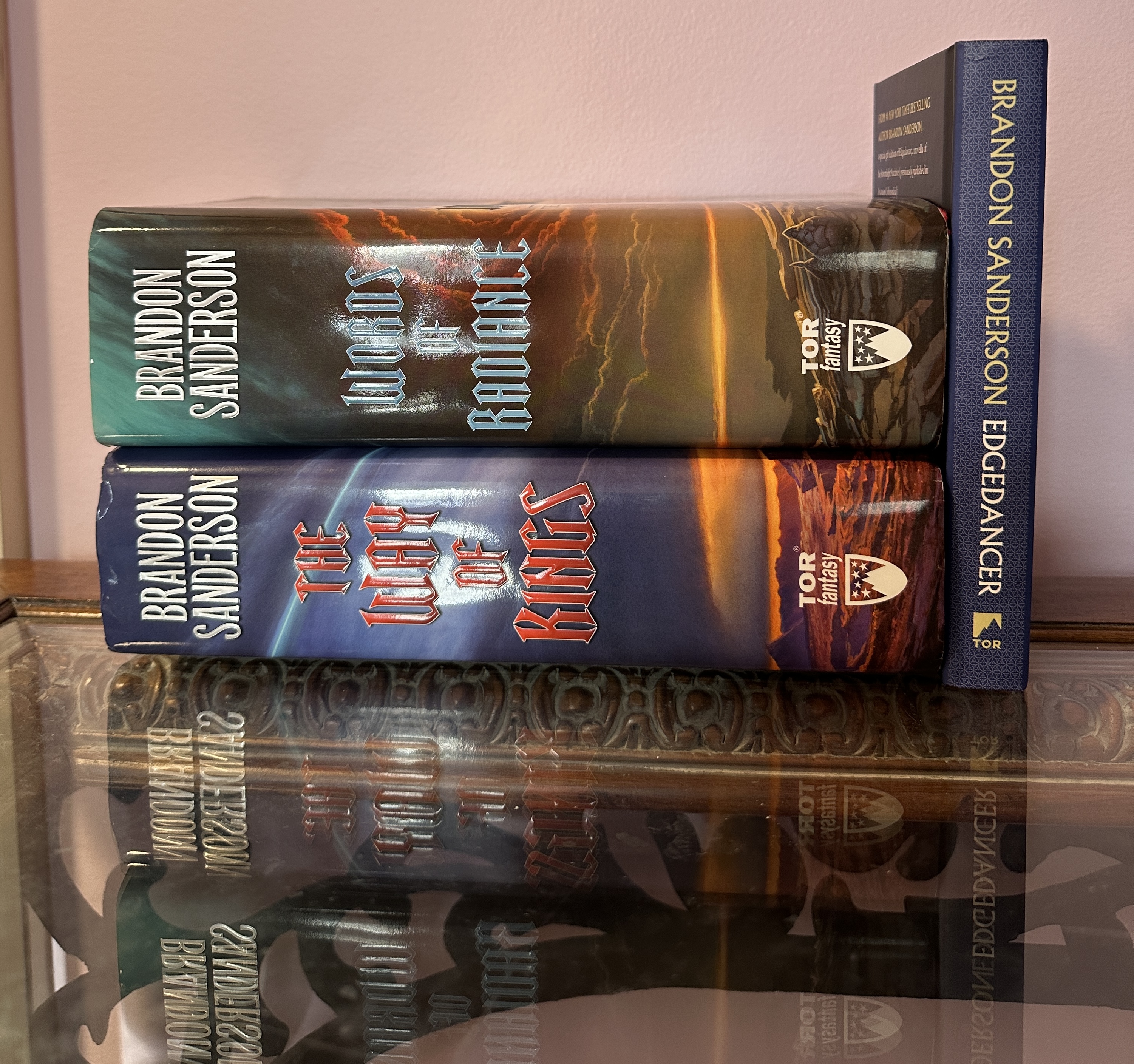
Not much to brag about, I know— the Edgedancer novella is only around 40,000 words and the “prologue” is actually a chapter from Words of Radiance, so this took a couple of hours at most to get through today. I didn’t really love it; Sanderson says in the afterword that Lift is one of his favorite characters in the series, but the word “awesome” really doesn’t fit the tone of the first three books, and while it was okay to see it in that one interlude chapter, seeing it over and over and over again in this book gets kind of jarring.(*)
As far as Words of Radiance goes, I would compare it to A Clash of Kings; when you’re following up on one of the best fantasy novels out there, you can have a pretty serious drop off in quality and still be a really good book, and that’s what happens here. You start seeing the world really opening up in this book and a whole lot of different characters and organizations (there are at least three different groups, I think, who are trying to kill Elhokar? Four, if you count the Parshendi?) and I think you can be forgiven if your head is spinning a bit at the end of the book, particularly since a whole lot of major stuff happens in the last hundred and fifty pages (out of, remember, 1080) of the book. Even with all of that we’re still seeing some bloat; despite being the focus character in the book, Shallan doesn’t have nearly as much to do in this book as she did in the first one, and Kaladin kind of spends a lot of time spinning his wheels as well. There are also issues with plot armor; Kaladin being near-unkillable is a plot point so that’s not as big of a deal, but two other major characters are killed and then resurrected in this book. It still retains the propulsive energy and readability of the first book, though; I’ve read 2353 pages in five days, not counting whatever I manage from Oathbringer today, and I didn’t mean to finish Words of Radiance until today but chose to finish it instead of sleeping last night. And, again, it’s not a bad book, it just suffers in comparison to the first one.
This week will be the pivotal one. I don’t remember how far exactly I got into Oathbringer the first time but it wasn’t very far. If I finish it this week I think I’m probably good with finishing everything that’s been released. If I hit a brick wall again … we’ll see, I suppose.
(*) I’m also real real worried about that thing that that other thing says to Szeth at the very end of the book. And the thing itself also worries me. WordPress doesn’t support spoiler text AFAIK or I’d say more.
1001 pages read as of about 10:00 last night; as I’m typing this I’m just over a quarter of the way through the second book. Goal is to have that done by Sunday night, and then a couple of days for the first novella, and then I’m back to Oathbringer, which I haven’t finished yet.
This was my third read-through of The Way of Kings; I last read it when Words of Radiance came out in 2014. I had genuinely forgotten how good of a book it is; Sanderson gets lots of credit for his magic systems but the worldbuilding throughout this book is just superb, and the characters are some of my favorites in his canon. The Way of Kings does a tremendous job of lining up its mysteries; some things are absolutely not going to be explained in the first book, but just enough is revealed that you don’t feel like the whole book is a pointless mystery box. The book feels carefully planned in a way that first books of series often don’t, and that’s a hard thing to pull off.
I remain concerned about the Parshendi as an element of the series; it didn’t really sink in that the series felt like the “good guys” were the wrong side until Oathbringer came out, and that was definitely a major contributing factor to me abandoning it. The whole book just feels way too comfortable with “Hey, this entire species is our slaves, except for the ones we’re massacring, and those are constantly referred to as savages and monsters” for me, and I know full well it’s going to get worse. The thing is, in the years since Oathbringer I’ve literally never heard anyone make that criticism other than me, and it’s not like I have some sort of special insight. Like, people figured out that slavery was bad in the Harry Potter books, so … either they just didn’t apply that level of analysis to this book or maybe it gets resolved after I stopped reading. We’ll see, I guess.
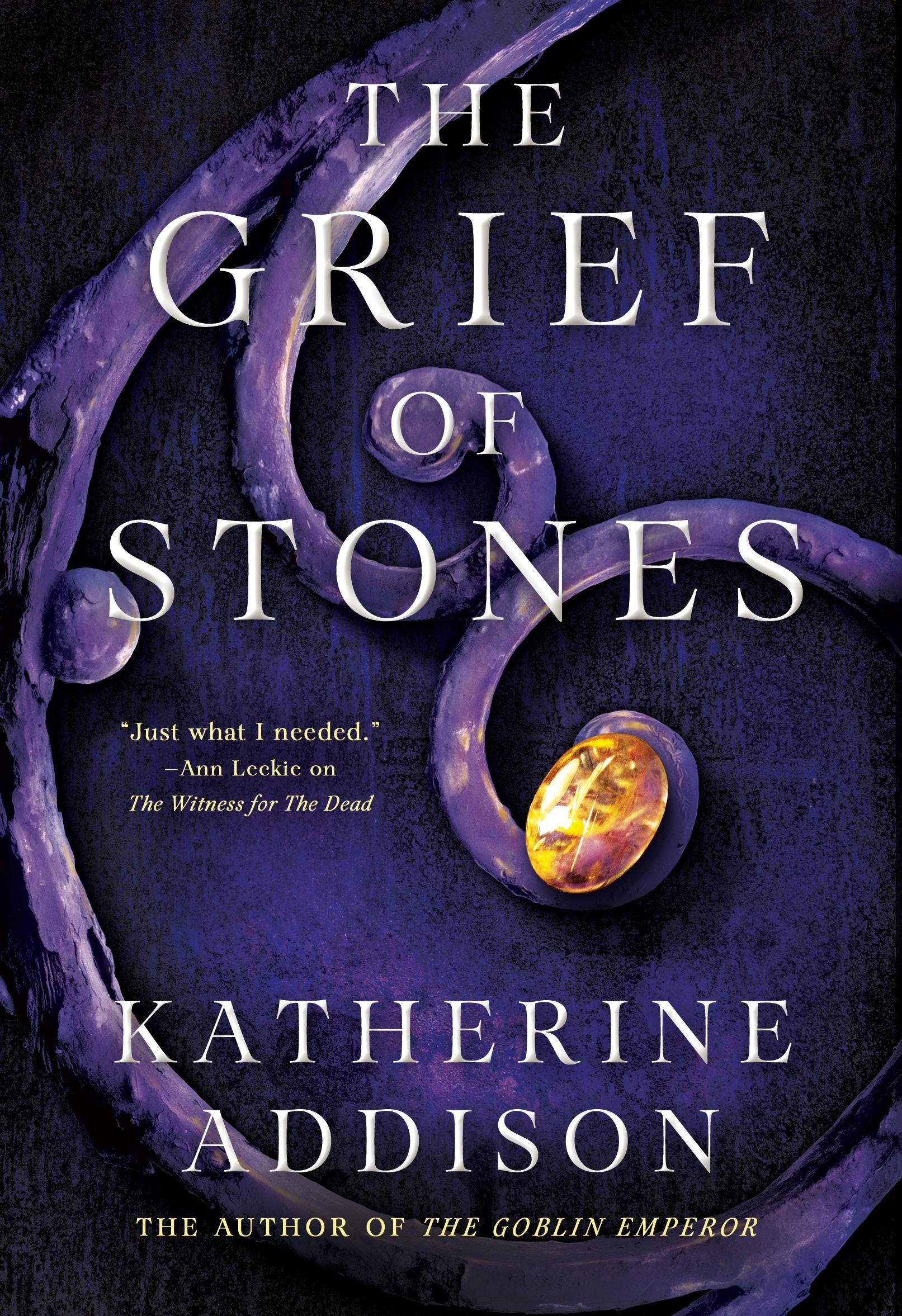
According to Goodreads, I read 185 books in 2024, comprising a grand total of 81,191 pages, or 221.83 pages per day. That’s assuming I finish Katherine Addison’s The Grief of Stones tonight, which I’m going to, because I have to start reading The Way of Kings tomorrow and I want to be halfway through that big bastard by the end of the day.
(It’s my dad’s birthday tomorrow and we will have family in town. That’s not gonna happen. I’m going to shoot for it regardless.)
With the exception of video games, I went full hermit this year, abandoning nearly all of my hobbies or media consumption except for reading. I have read for half an hour before going to bed at the end of the night for my entire life, and I think I stretched that to an hour this year, and I started reading with my morning coffee on Saturday and Sundays, meaning that my “morning coffee” would regularly last from whenever I got up to lunchtime. So yes, I read a lot faster than most people, but I also spend a whole damn lot of time with a book in my hand. Estimating an eleven-hour-a-week minimum would not be unreasonable at all, and I strongly suspect if I were to ever calculate any such thing it would be more than that.
My average book, by the way, was 439 pages. I actually did hit 200 books one year because I decided to; this year I genuinely wasn’t aiming at any particular number. I bet I could have done 250 if I had selected for shorter books, but I didn’t want to. Only 13 of those 185 books were nonfiction, which is shockingly low even knowing how hard I focused on series fiction this year– I’m shooting for 20% of my books next year being nonfiction, if you didn’t see the update to my reading goals in my previous post.
I read books by 124 authors this year, of which 86 were new to me, which is surprisingly high, especially once we get to how many books by each author I read. Without even looking, I’ll tell you right now that the author I read the most books by is Adrian Tchaikovsky, totaling …
… (looks at Goodreads list) …
Jesus, ten books. Other authors showing up more than once:
Six books: Pierce Brown
Five books: J.R.R. Tolkien, James Tynion IV
Four books: John Gwynne, TJ Klune
Three books: Thiago Abdalla, R.J. Barker, David Dalglish, J.S. Dewes, Robin Hobb, Jay Kristoff, Josh Malerman, Andrea Stewart, Richard Swan
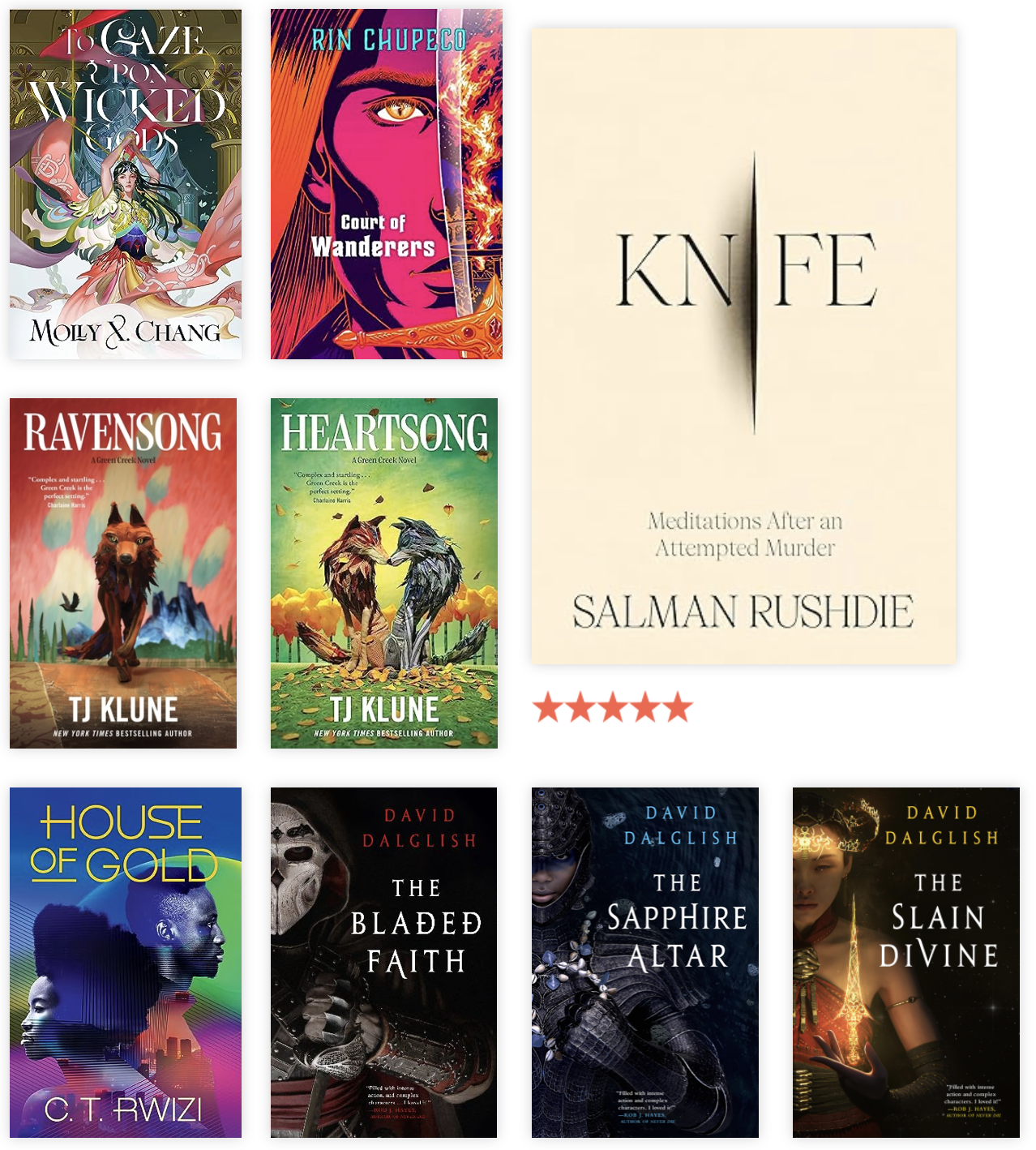
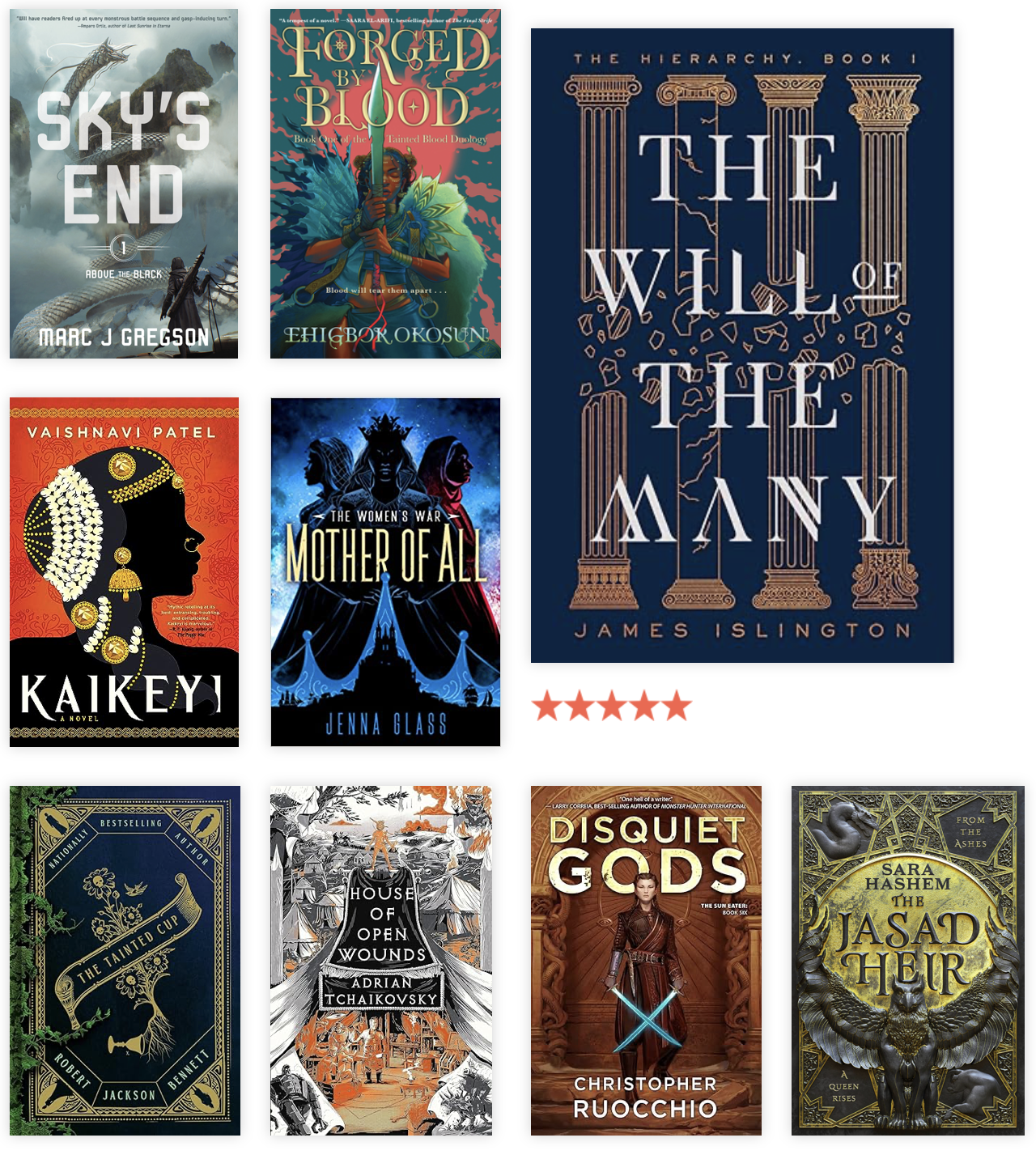
Two books: Susan Abulhawa, Josiah Bancroft, Carissa Broadbent, Shannon Chakraborty, Rin Chupeco, Piper CJ, Rachel Gillig, John Keay, Judy Lin, Vaishnavi Patel, Ava Reid, Samantha Shannon, M.L. Wang
I thought about doing a gender breakdown, but it broke my brain. I have a bunch of authors with initials for first names, and a lot of the time I don’t immediately know those folks’ gender, and then you throw in the enbies and that’s more research than I really want to do. I’m about to show you the whole list anyway, so you can look for yourself if you want. :-). Of the 29 authors I read more than one book by, I’m certain 14 are men and 13 are women and yes, I know that doesn’t add up to 29 and I still might be wrong on a couple of them. For whatever that might be worth.
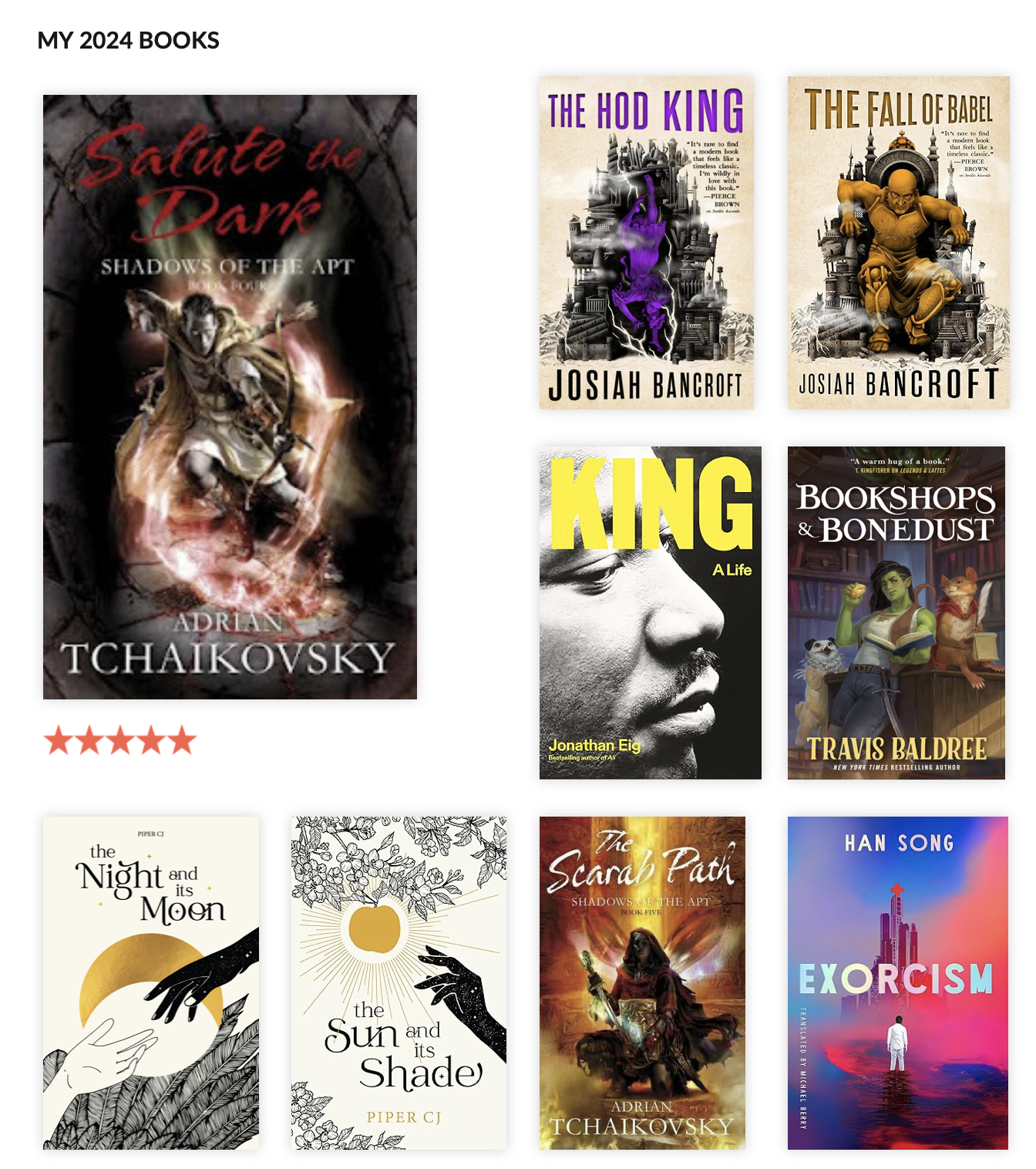
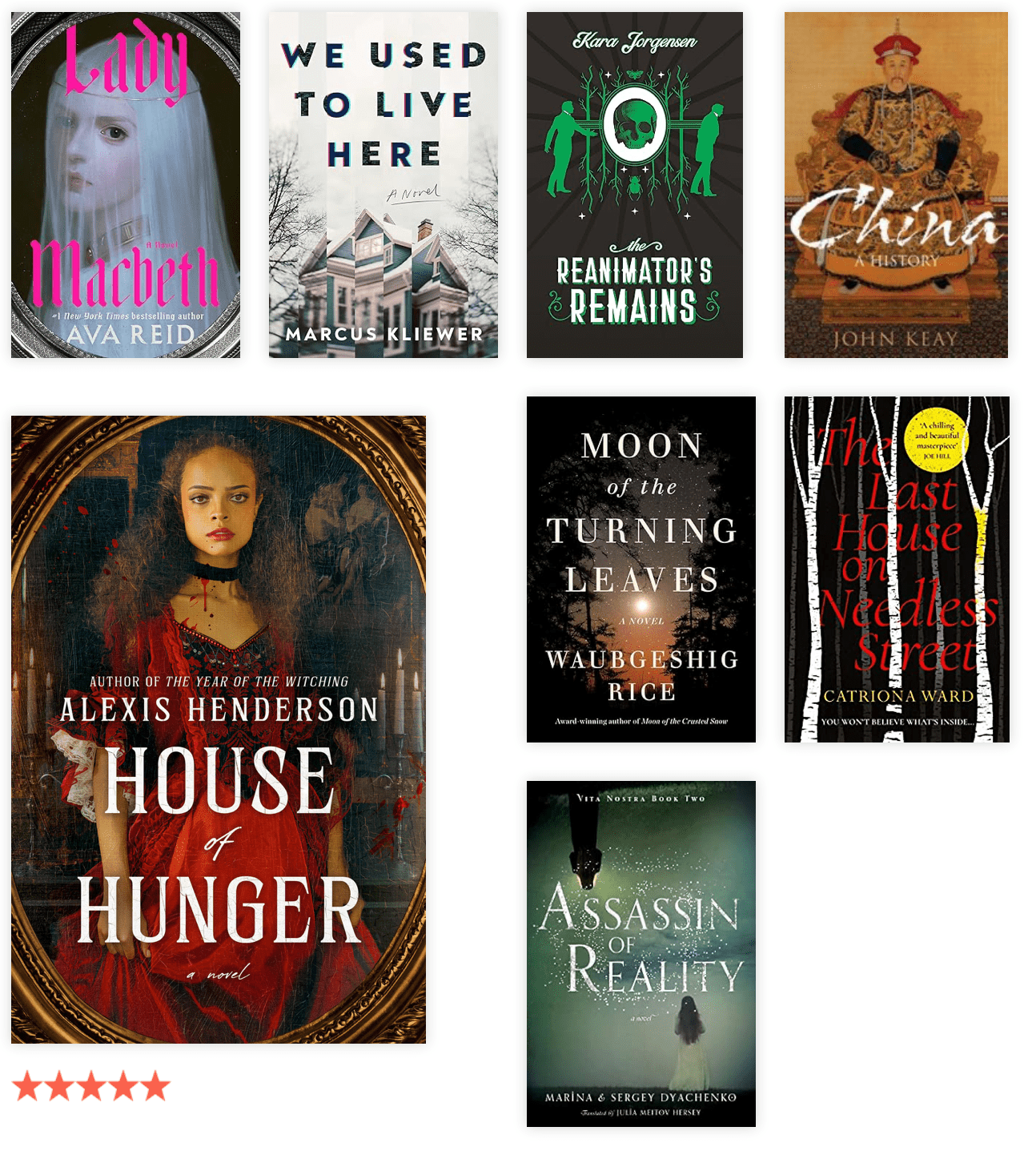
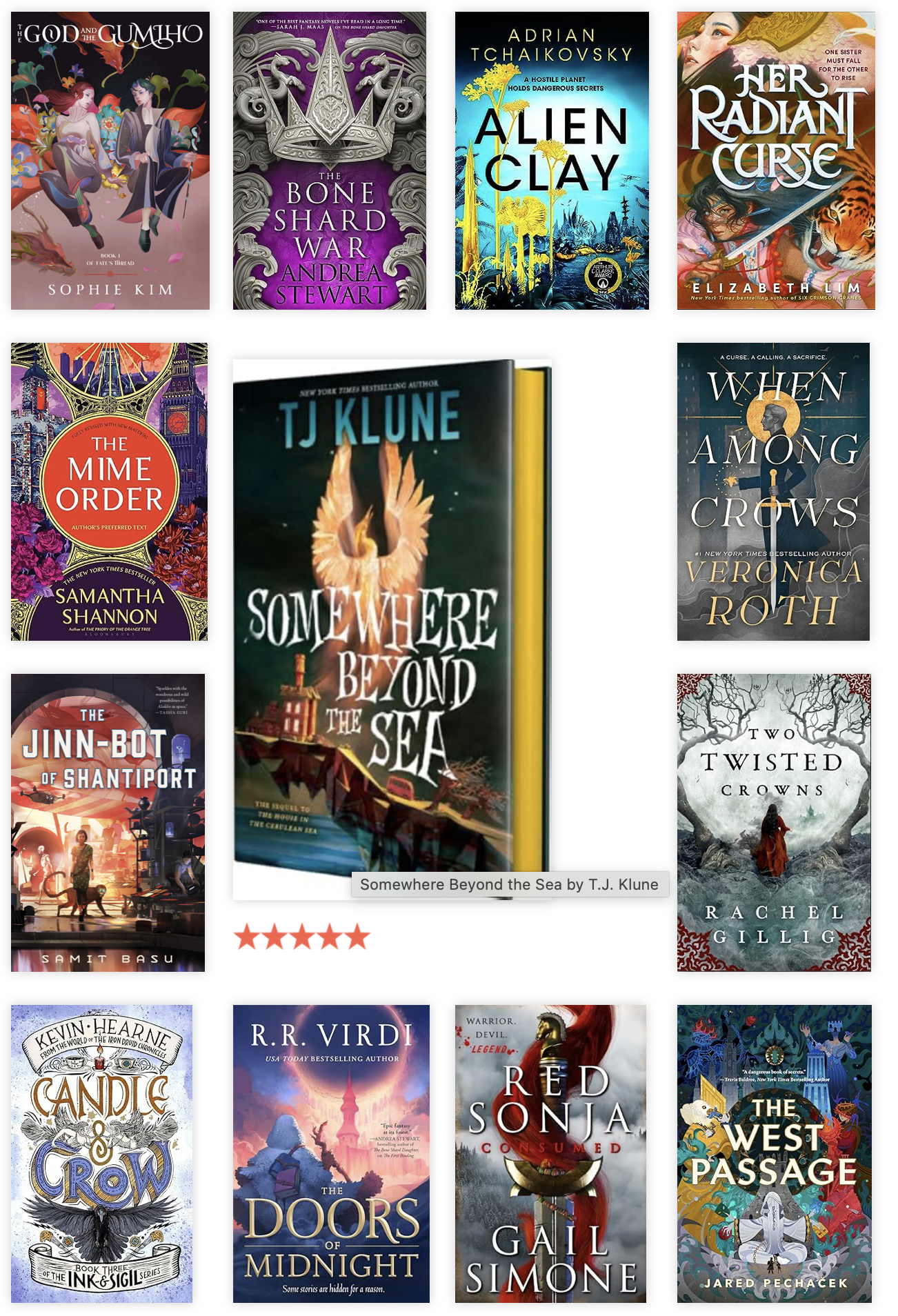
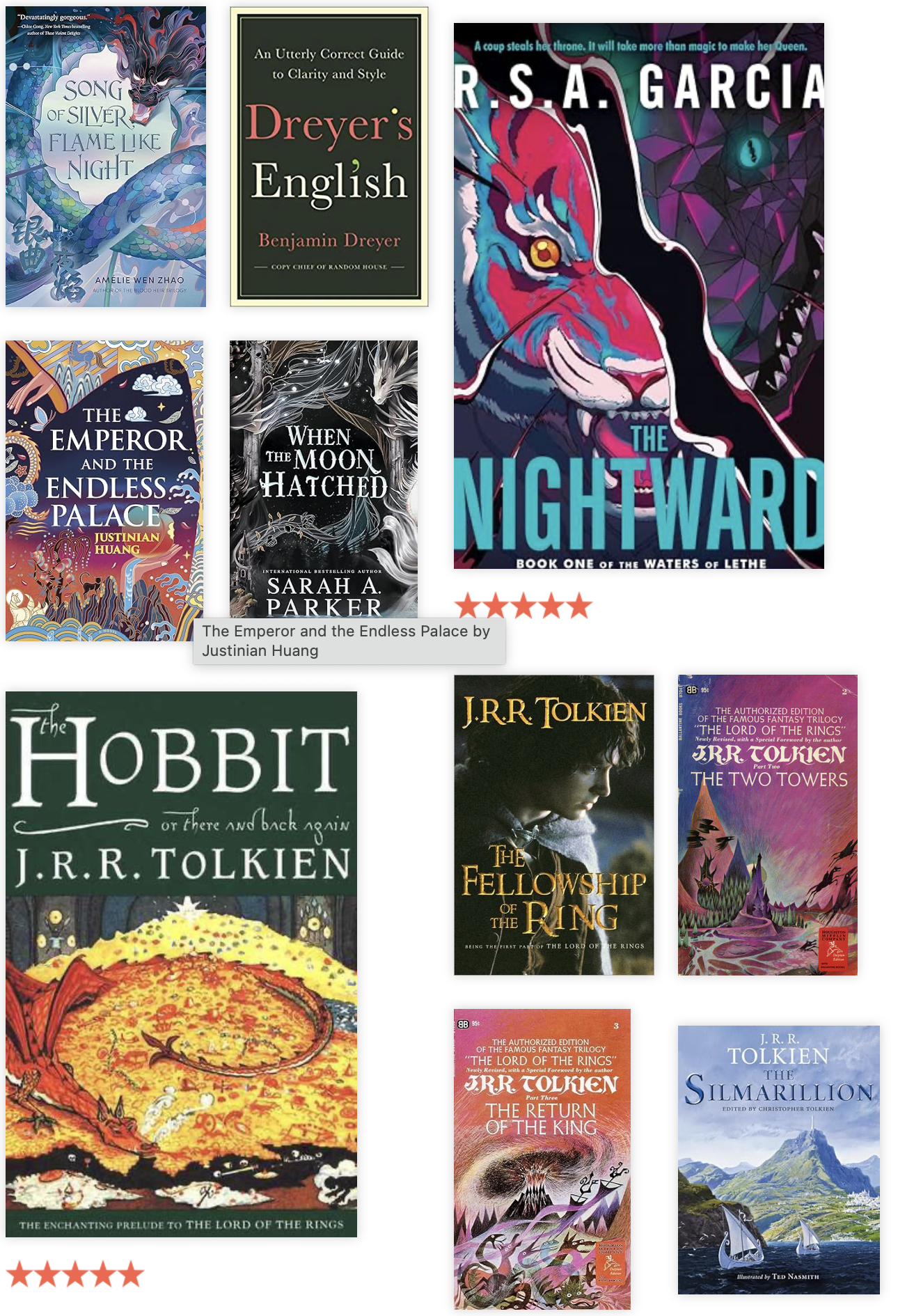
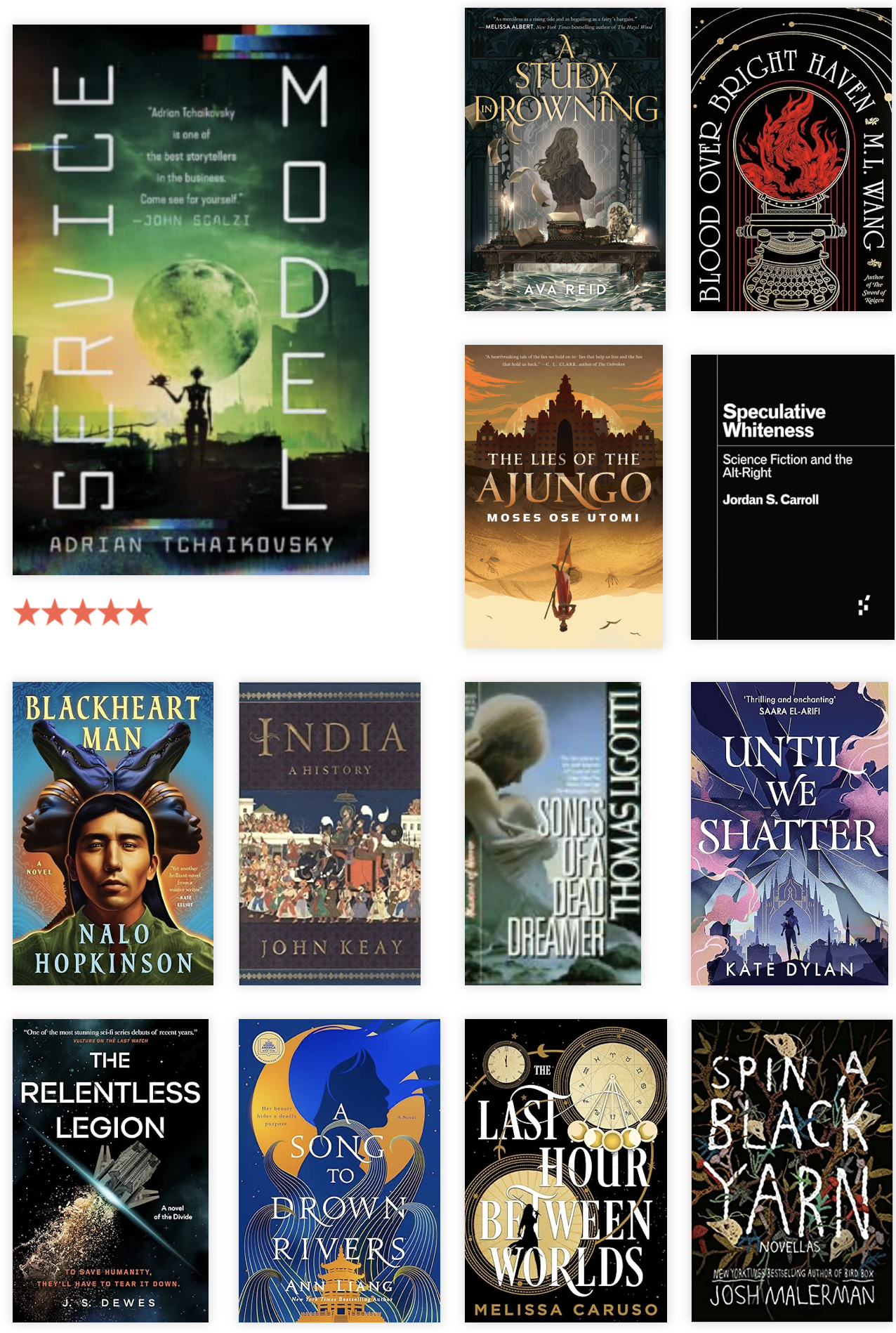
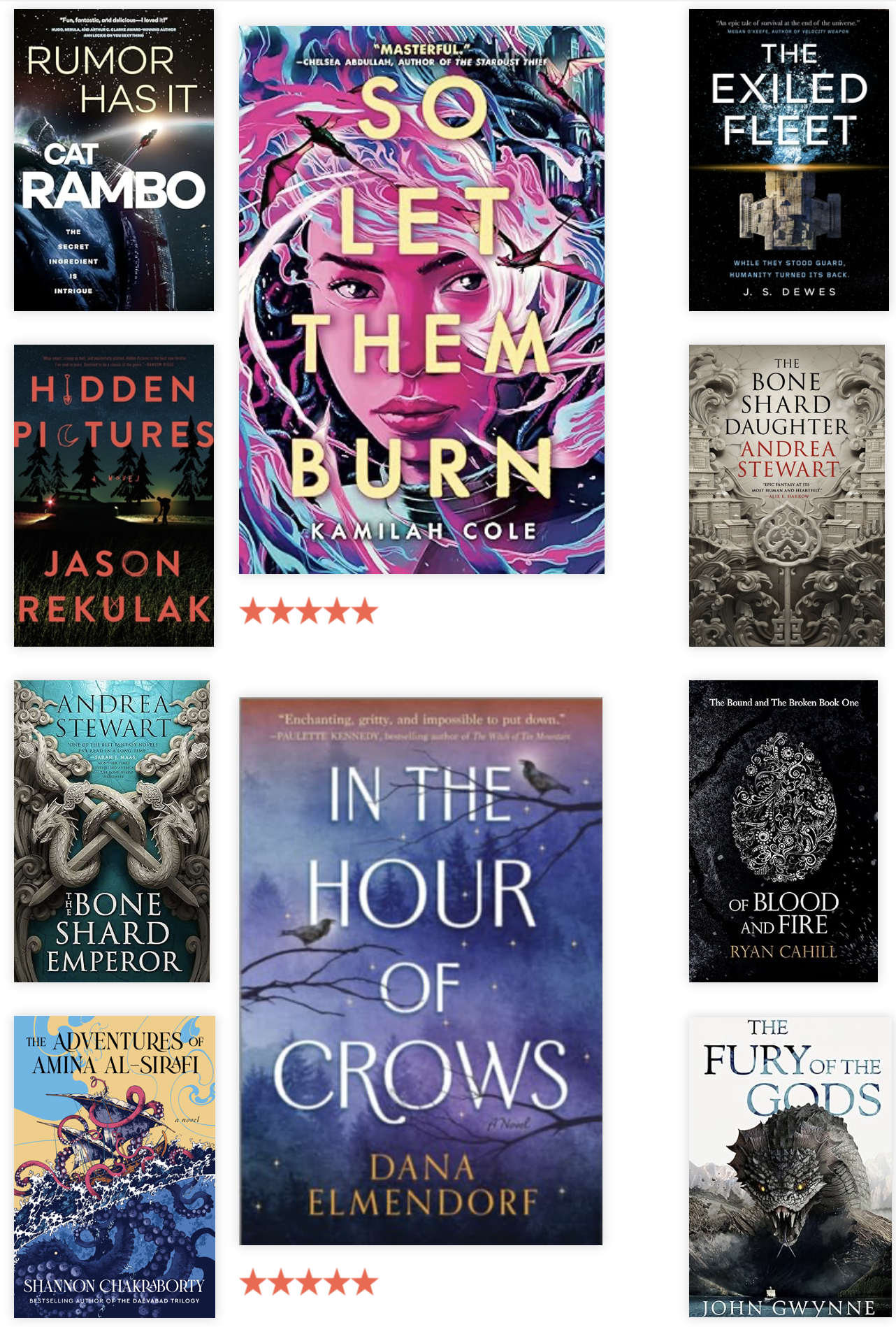
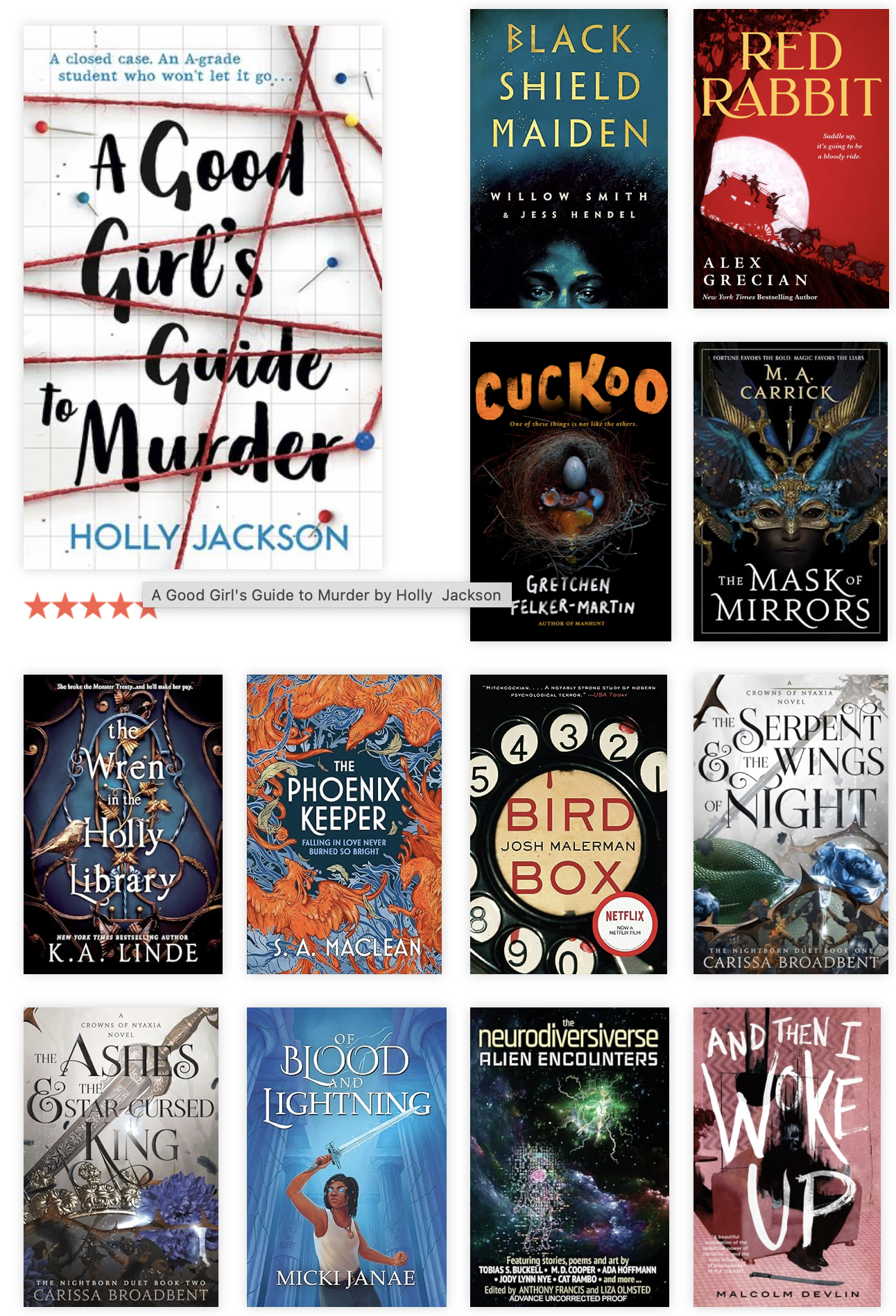
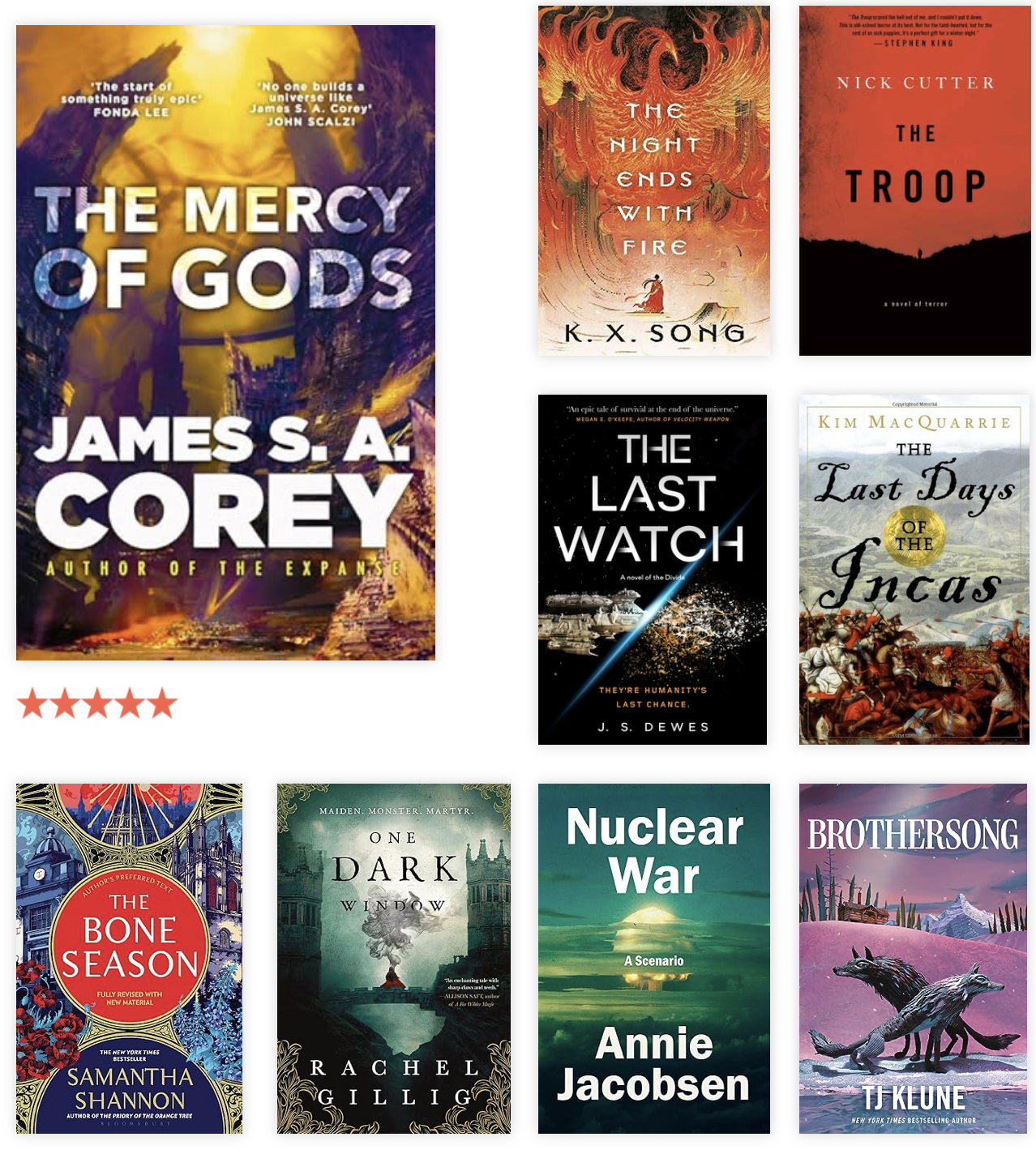
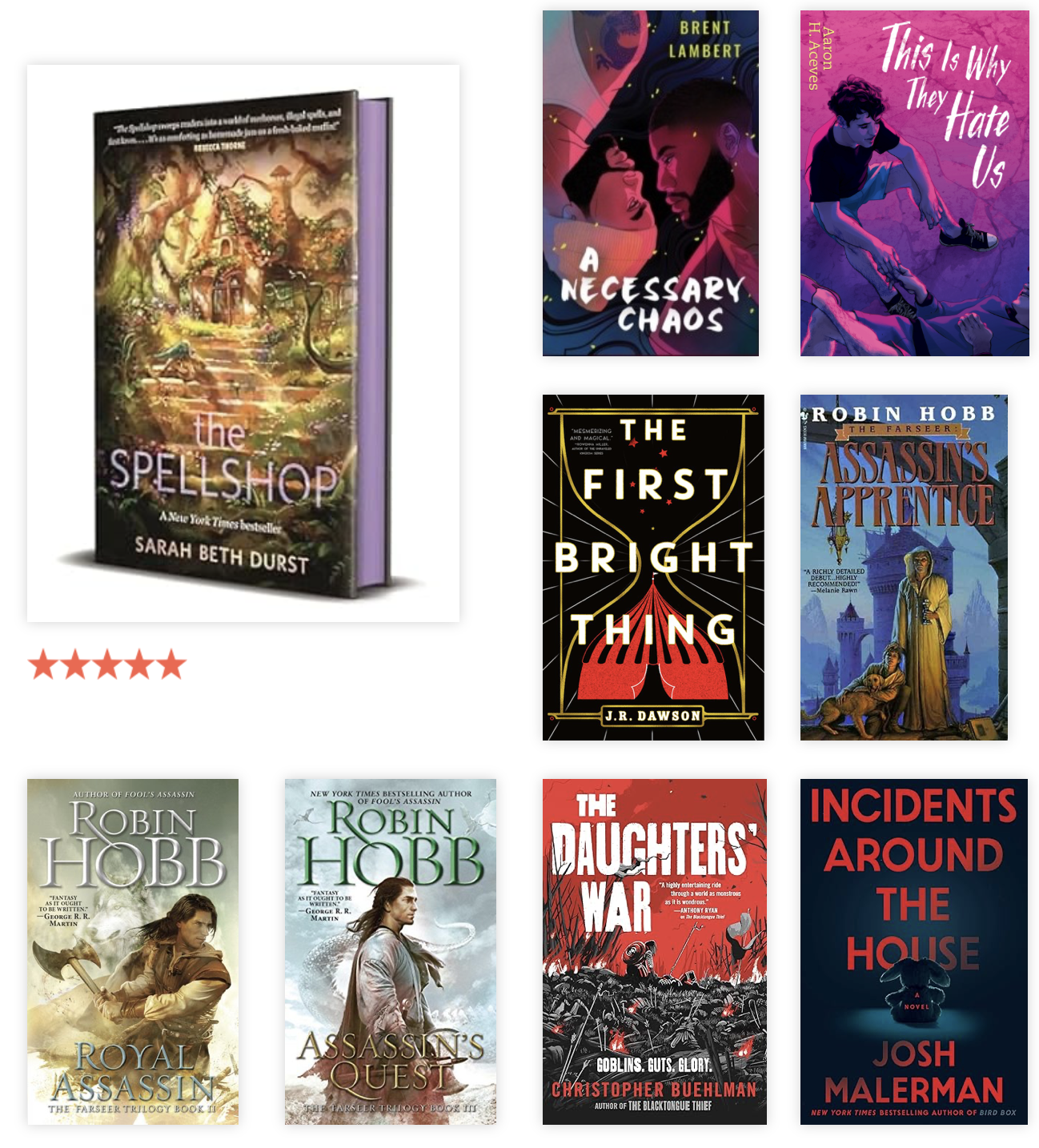
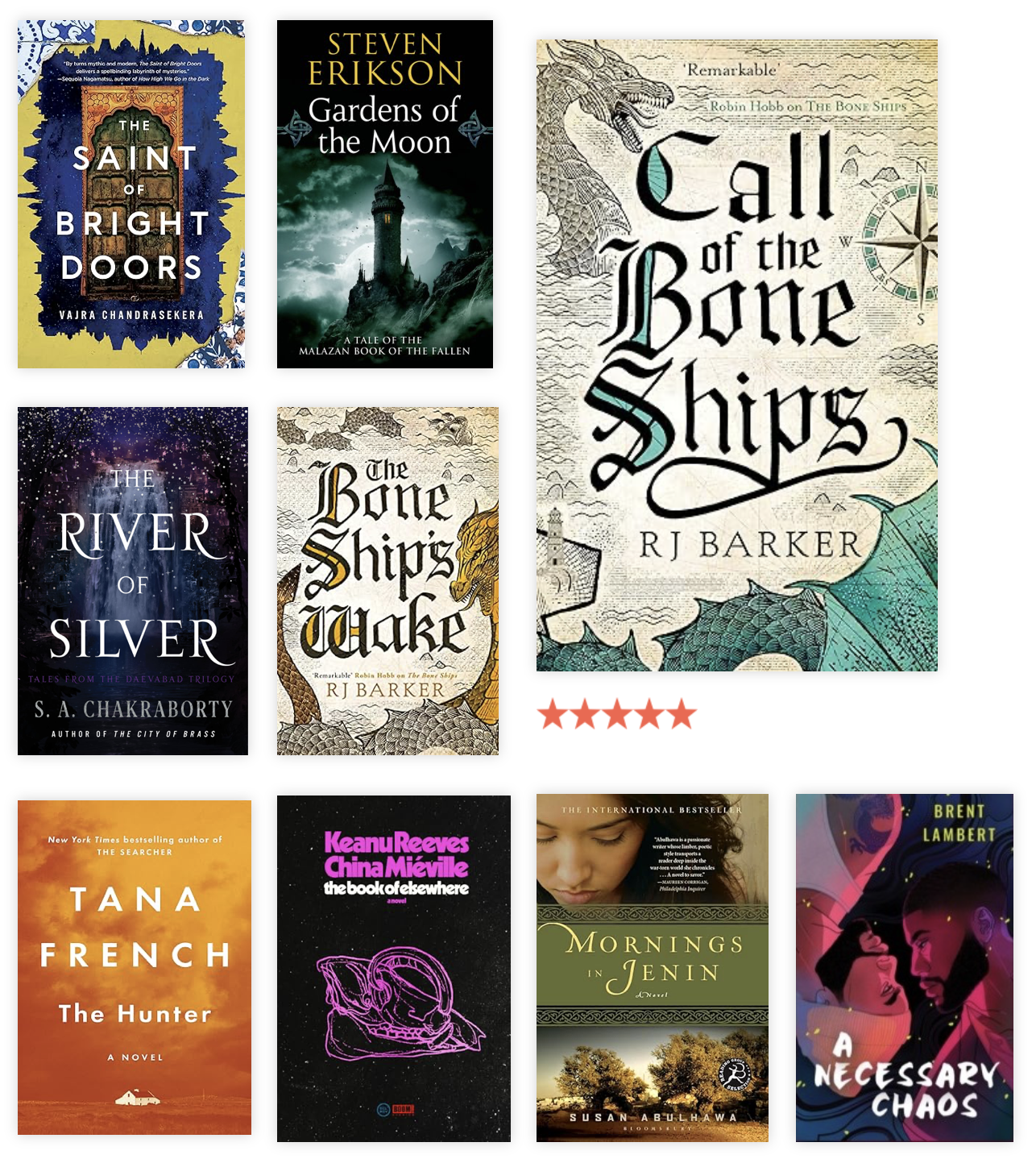
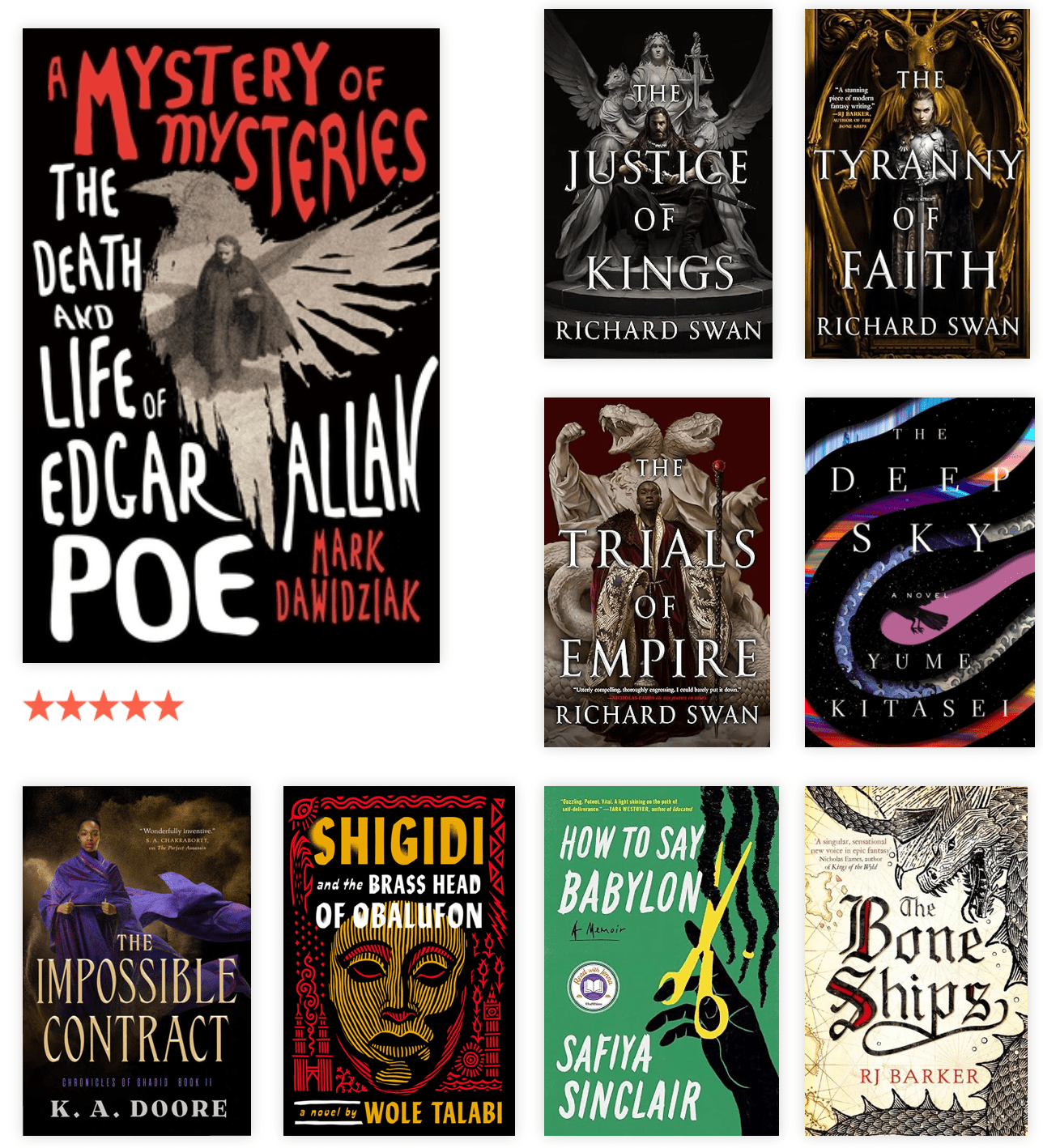
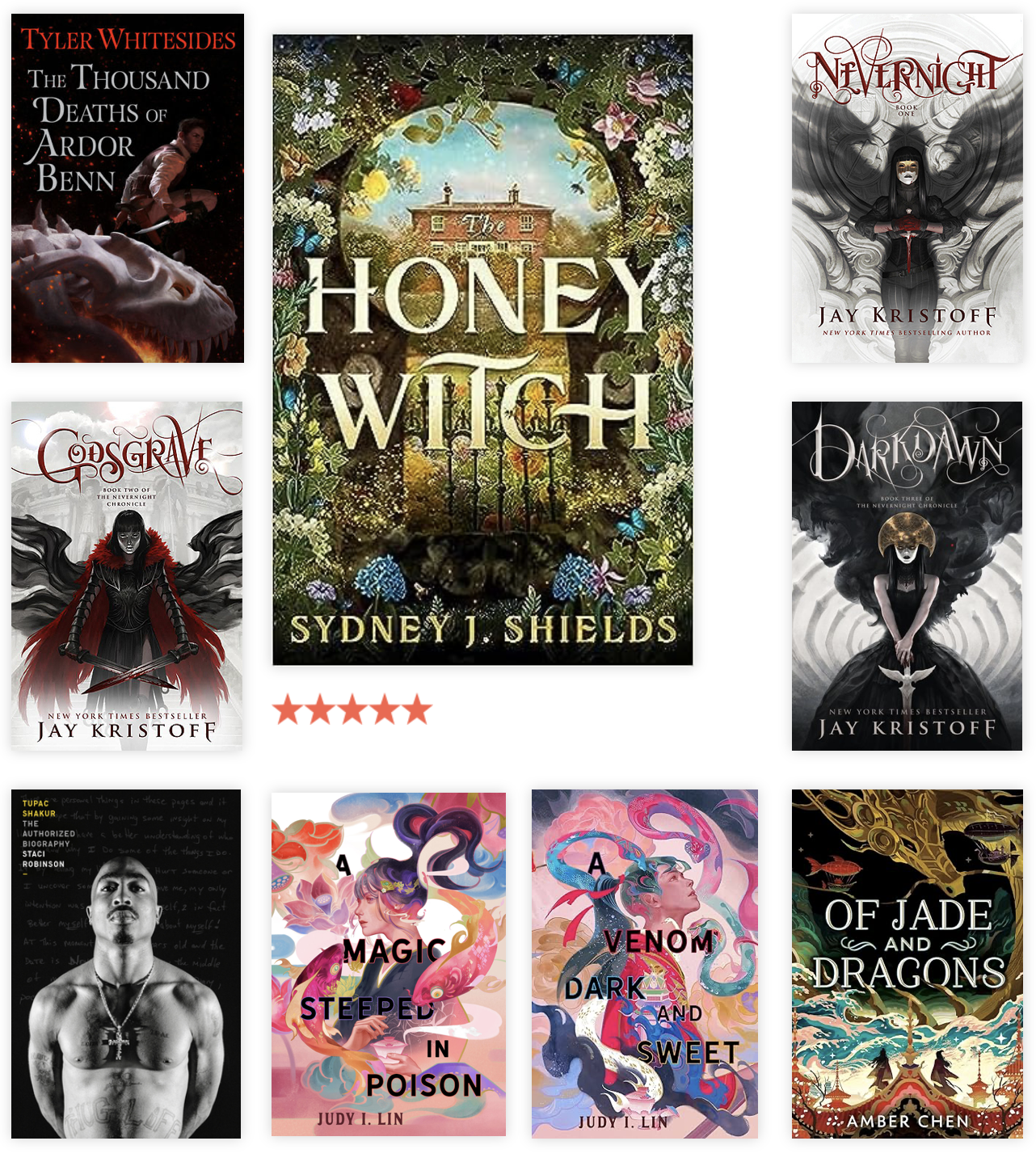
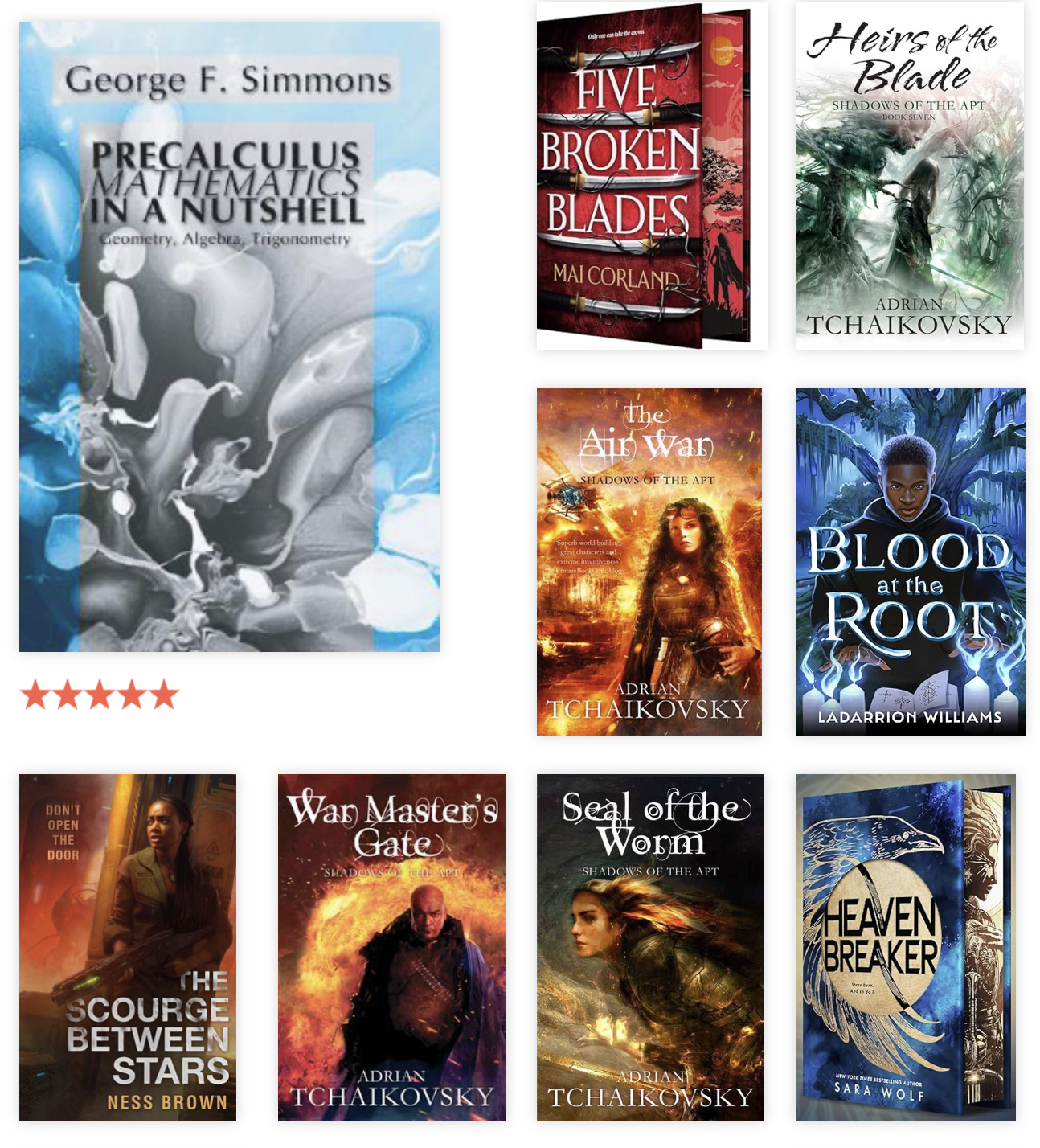
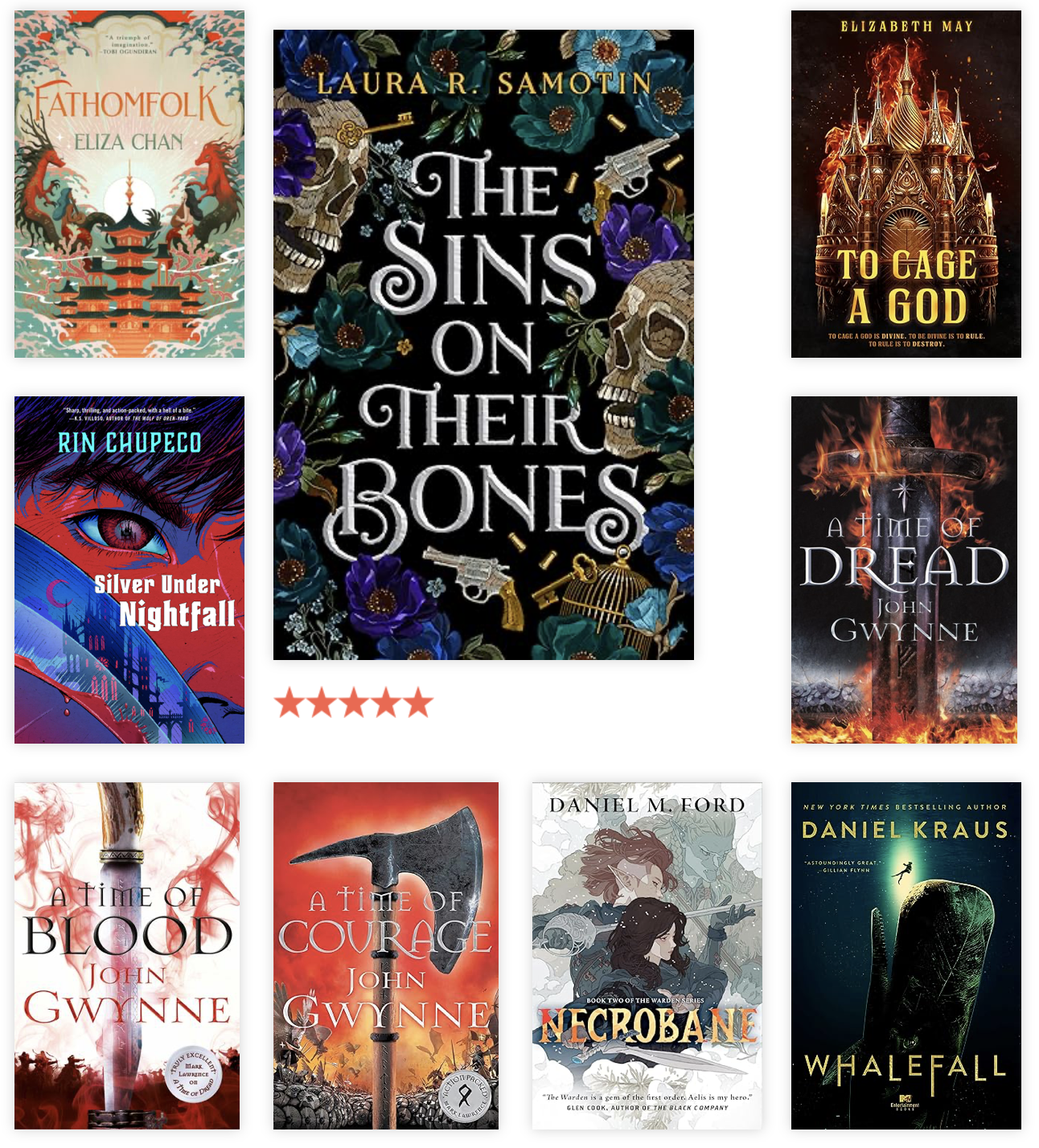
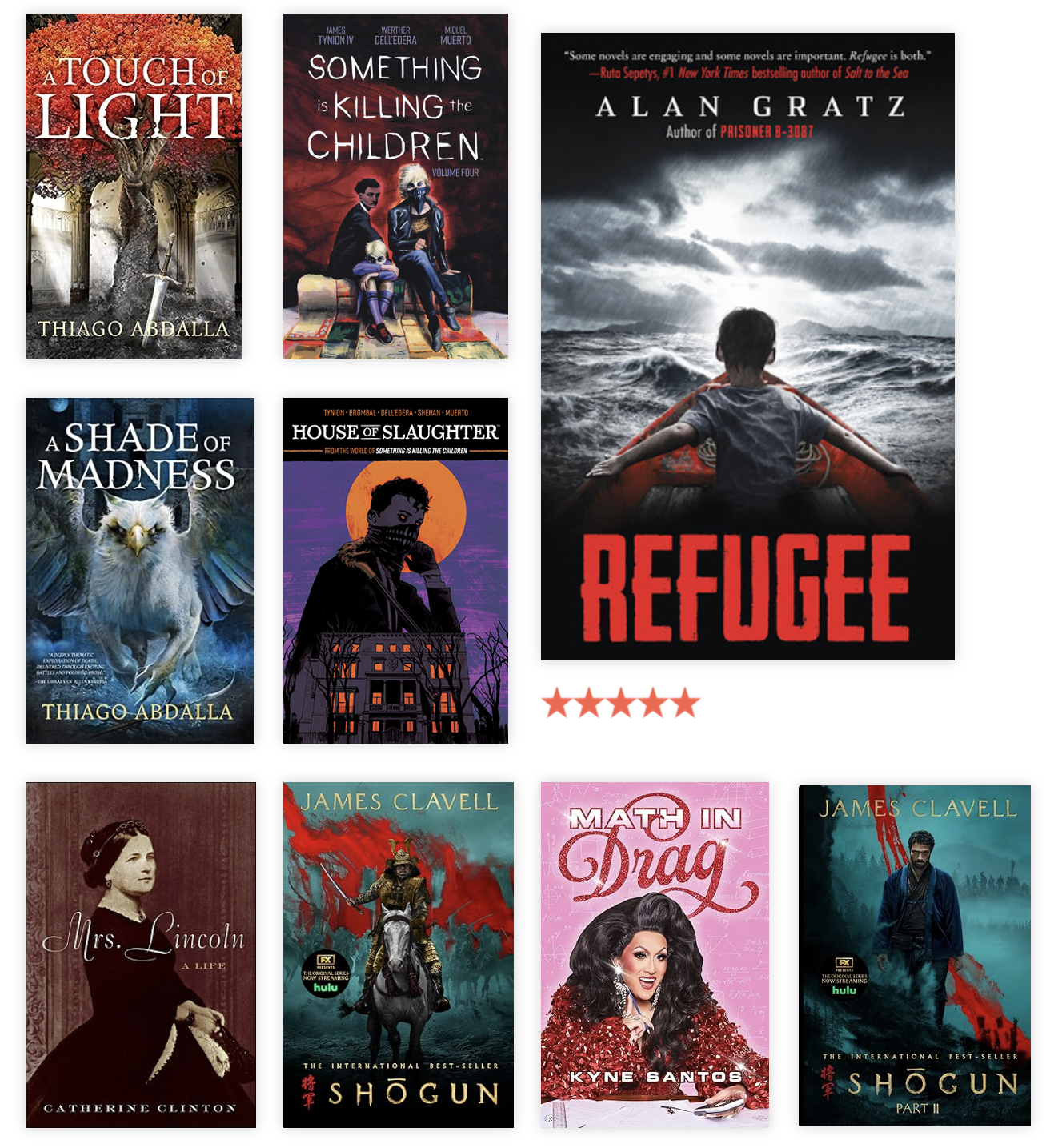
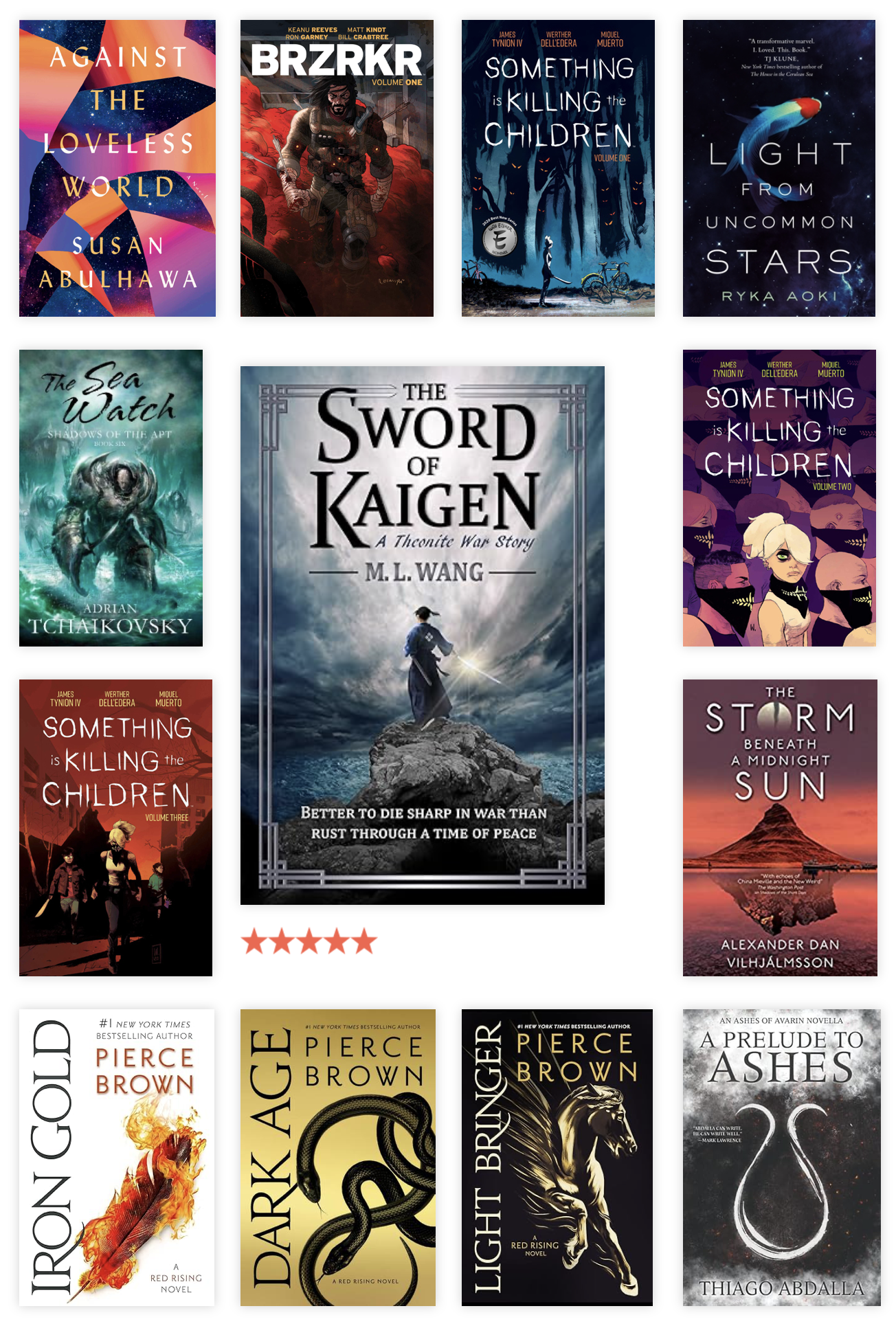
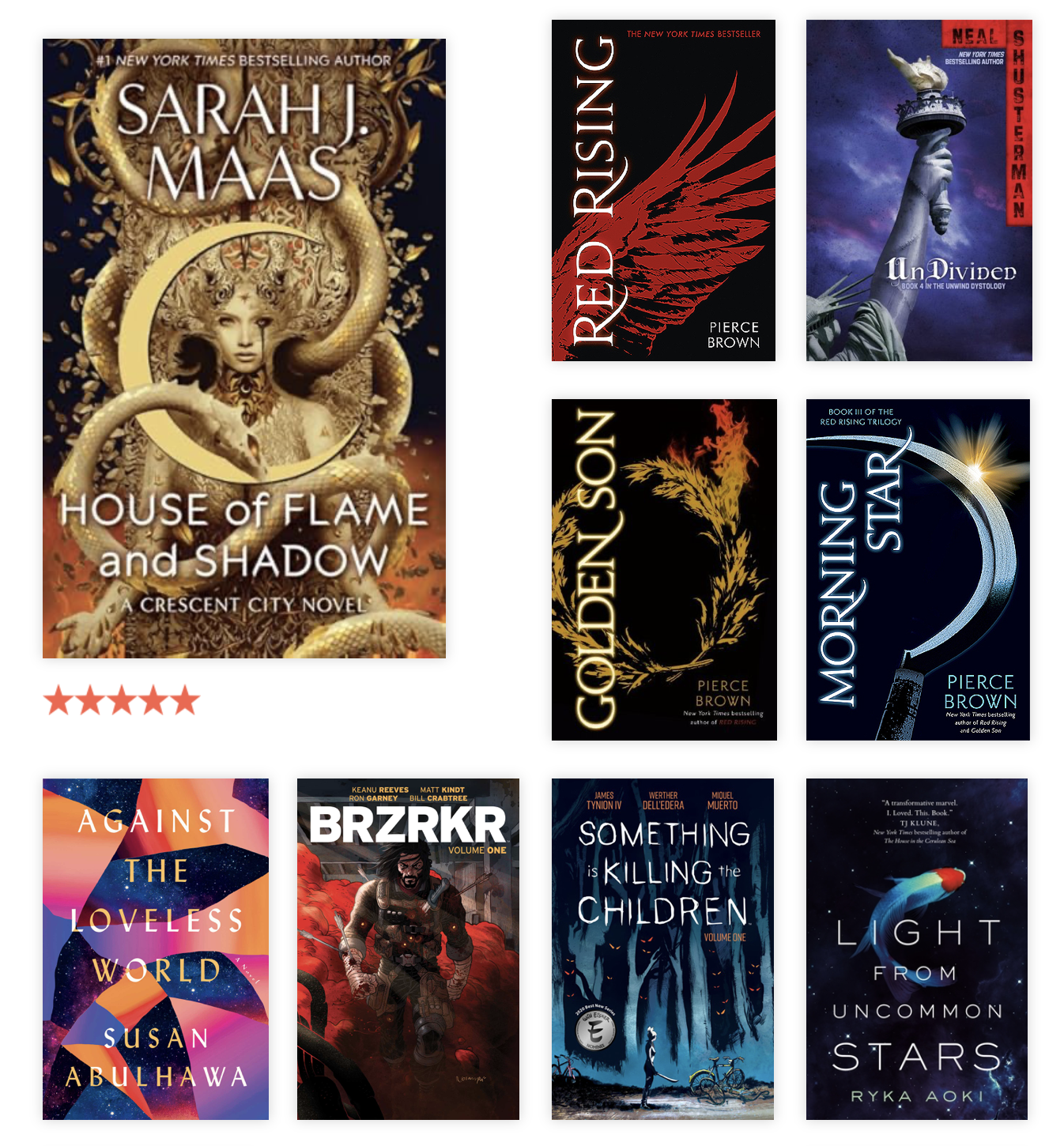
Pretty covers time? Pretty covers time. Click on ’em for gallery view:
This is the twelfth post in this series that I have written; I spent some time thinking about doing a Best of the Best list and when I realized how many rereads that would require– believe it or not, when you read 100+ books a year it tends to hurt your recall a little bit, like, I’ve literally read well over a thousand books since writing the 2013 list– I abandoned the idea. I am back to 15 books this year because right now I’m at 181 books read for the year and since it is only the 29th I may very well be at 184 by New Year’s Eve; hopefully I don’t read anything too brilliant in the next couple of days because it’s gonna have to wait until next year.
As always, don’t take specific rankings all too seriously– this started as a shortlist of 31, then got cut down to 17, and going from 17 to 15 was really hard, and honestly anything in the top seven or so could have ended up at number one if I’d woken up in a different mood. Also, the asterisk up there means that these books were new to me in 2024; the oldest book on the list is from 1975. I’m pretty sure a majority of them are 2024 releases but it’s definitely not all of them.
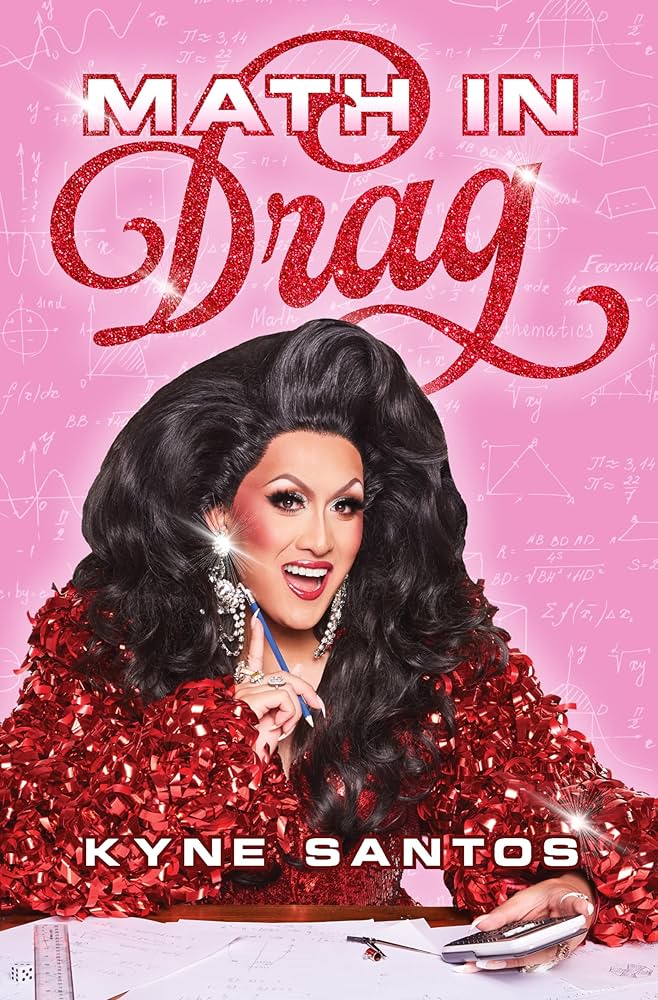
15: Math in Drag, by Kyne Santos. One of my reading goals for 2025 is to read six books about math and/or teaching math, right? And one of the reasons it’s only six books is that books about teaching and books about math tend to be dry as hell, and despite wanting to improve my craft as a math teacher I like to enjoy what I’m reading.
Kyne Santos needs to write a lot more books about math, is what I’m saying here. Drag queens who post mostly about mathematics is somehow a subgenre on social media, and Santos is the most visible of the group (if you’re on TikTok, check out Carrie the One) and this book is a whole bunch of things at once– a memoir, a history of math, a math textbook, and a history of the drag movement– and it’s tremendous on all levels. I actually took one of the chapters about negative square roots and turned it into a warm-up activity for my 8th graders, and then ensured that they would all look up the book on their own by telling them that I could give them the author’s name but not the actual name of the book. Which, for the record, probably wasn’t true, but I teach in Indiana.
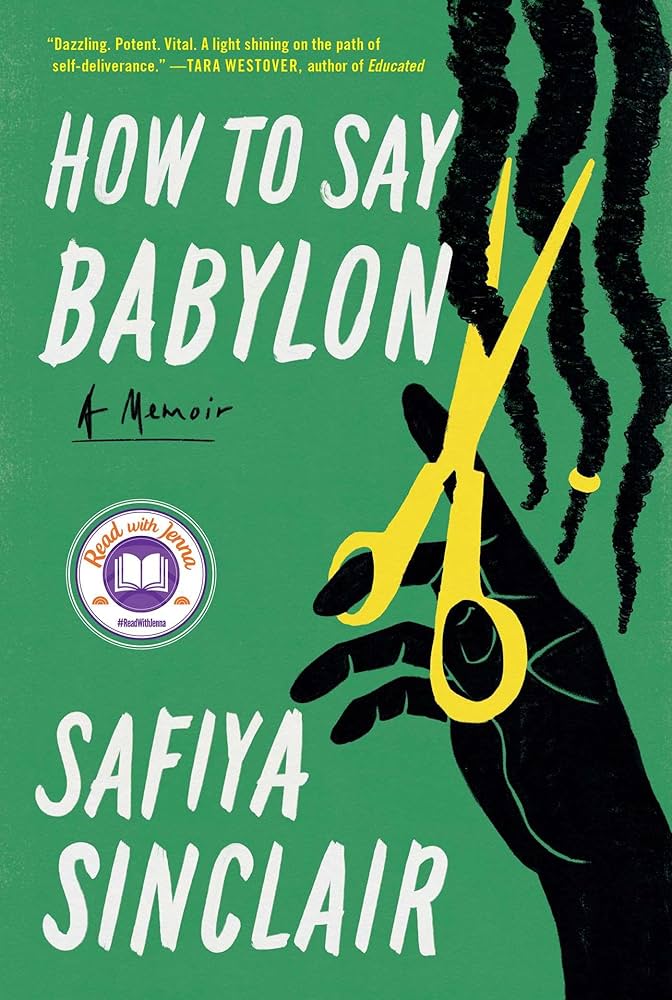
14. How to Say Babylon, by Safiya Sinclair. It’s at this point where I realize there’s more nonfiction or at least nonfiction-adjacent (you’ll see) books on this list than usual, as Sinclair’s book is also a memoir about growing up in Jamaica in the eighties and nineties. Her father was a hard-core Rastafarian and a reggae musician, and growing up smart and female in a very patriarchal religious structure is a big part of the book.
The other fascinating thing about this one is the language; the dialogue is mostly in Jamaican English, which isn’t quite far enough from American English to qualify as a patois (which is a whole other thing, to my understanding) but it means that things like pronouns aren’t going to work quite like you’re used to, and you are going to hear every word her father says whether you normally hear dialogue or not. Sinclair is an award-winning poet, and while I’m not likely to check out her poetry, if she writes any more prose works in the future I’ll be in line for them.
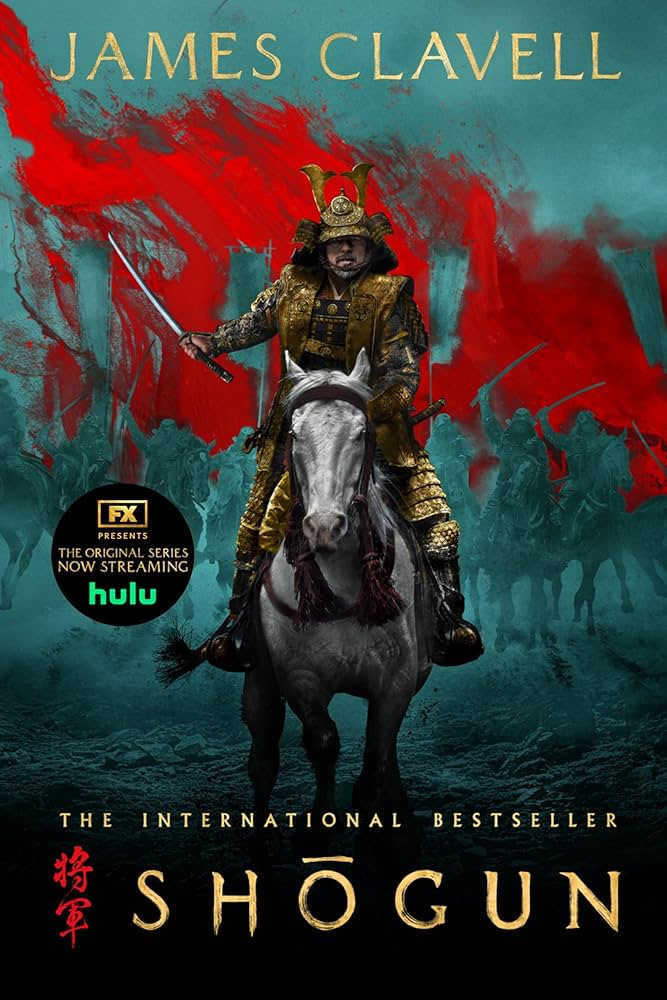
13. Shōgun, by James Clavell. I have never seen either of the miniseries that were based on this book, either the original one from the 1980s or the apparently far superior one Hulu did this year, but I swear that if I ever start watching television again, I’m gonna, dammit. I picked this up (for the record, it’s printed in two volumes because it’s 1500 pages long, but it’s one book) based on a bunch of people being very enthusiastic about the miniseries and the strength of the cover.
Okay, that’s a lie, I picked this up because of the precise shade of blue-green used on the new covers, which sounds ridiculous and I don’t care, it’s true. Luckily for me the book is really good, and a lot less racist than you might guess “book written in the 1970s by a white guy about Japan” might be. The main character, a navigator named Blackthorne, is just open-minded enough of a character to make it possible to get into his head, and the late sixteenth and early seventeenth century were a fascinating period of history both in Japan specifically and the world in general. This book is a heavy damn lift in more ways than one, but I really enjoyed it and I’m glad they didn’t reprint it with a boring cover.
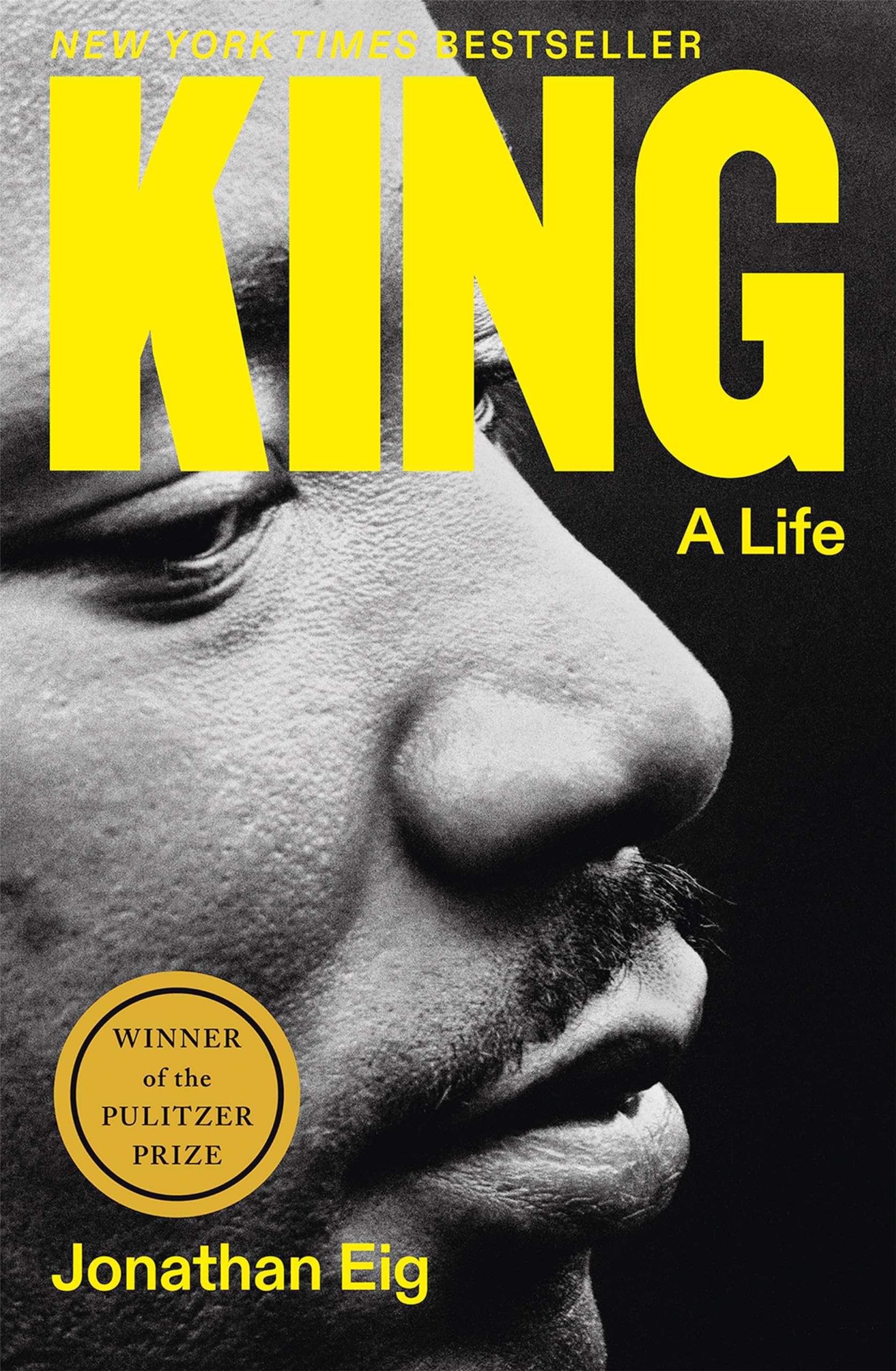
12. King: A Life, by Jonathan Eig. The Civil Rights movement is my favorite period of American history, and easily the one I know the most about, so you can probably imagine that I have a bunch of books specifically about Martin Luther King, Jr. on my shelf, as well as a couple that aren’t officially about him but may as well be. What sets Eig’s version of his life apart from the rest is his focus on King as a human being and not as a man whose face would eventually be carved into marble as a national memorial. It isn’t quite a psychological biography, if that’s even a real thing, but it may not surprise you to learn that King struggled with depression and anxiety for his entire life as well as a healthy dose of imposter syndrome (the man was in his twenties during the Montgomery bus boycott, and was only 39 when he was murdered) and he doesn’t come out and say it, but it’s strongly suggested that his mental health struggles led to his well-known issues with adultery, drugs and alcohol.
What, you didn’t know Martin Luther King dabbled in drugs? Yeah. Sorry about that. But unlike, say, Ralph Abernathy’s book, there’s no sense of score-settling in King: A Life; Eig talks about these things because they were important, and he’s not trying to knock King off his pillar so much as talk about a guy who would have been deeply uncomfortable up there in the first place. When you’ve read as much about King as I have it takes a lot to write something new and impressive, and Eig has certainly delivered here.
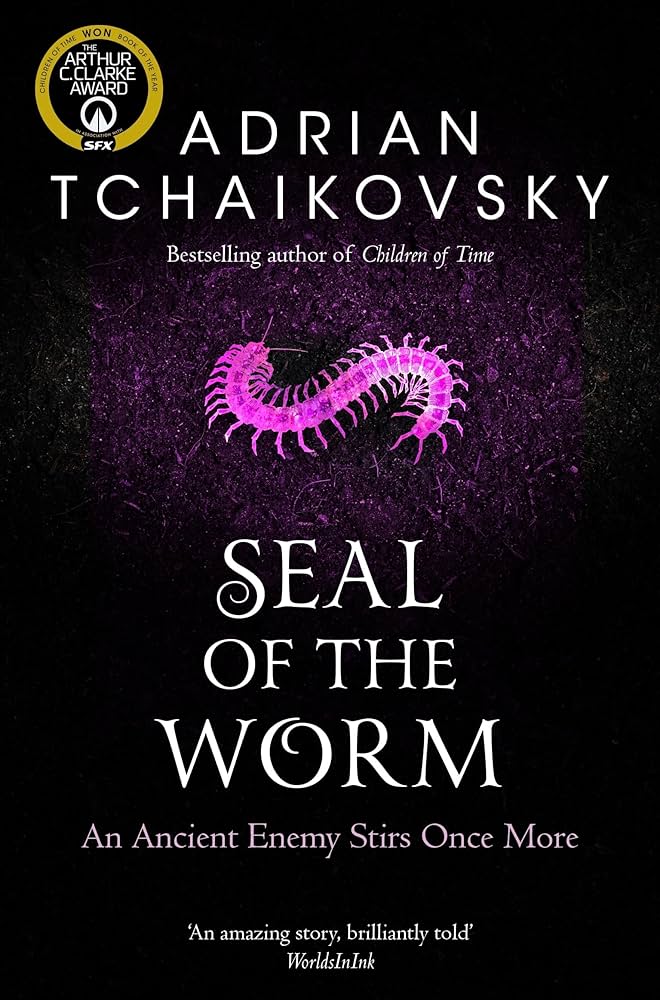
11. Seal of the Worm, by Adrian Tchaikovsky. This is the first of two books on this list that should be understood as endorsements of the entire series rather than the individual books I’m writing about, and in the case of Seal of the Worm I’m talking about his Shadows of the Apt books, a ten-book, 6000-page series, most of which I read in 2024.
That isn’t to say that Seal of the Worm isn’t the best book of the series, as even just from a technical level capping off that massive of a work in a satisfactory manner is an impressive achievement all on its own, but what if I told you that Seal of the Worm manages to introduce an entire new antagonist and kicks the legs out from underneath all nine previous books, something that has already happened once in the series? Tchaikovsky may be science fiction and fantasy’s most underrated author, and I still don’t know anyone else who has read this series, which is a Goddamned crime. They’re right there, and you can buy them. What are you waiting for, other than the time to read six thousand pages? Please, somebody, read this.
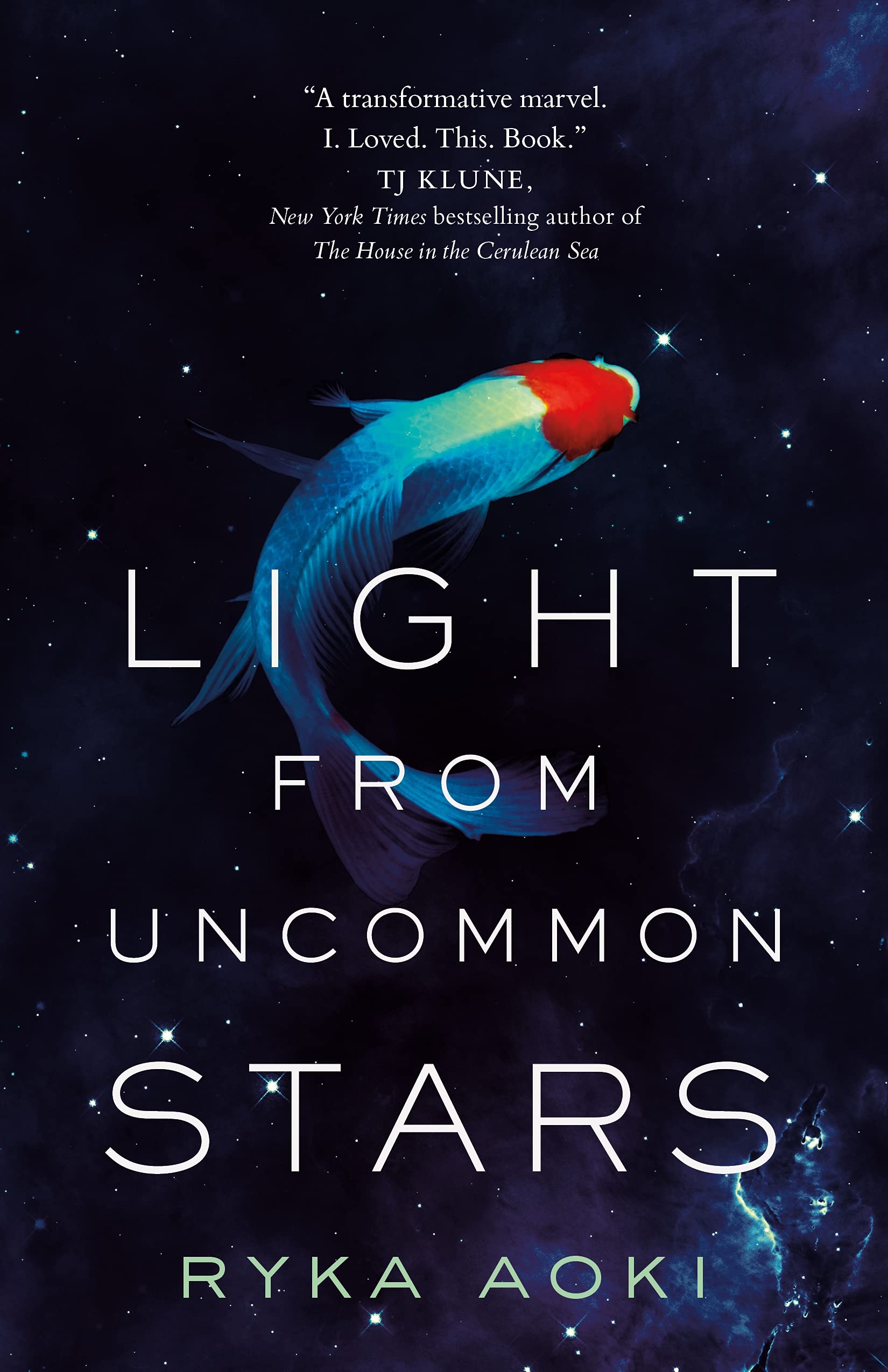
10. Light from Uncommon Stars, by Ryka Aoki. Another mini-theme of this list that is going to start becoming more apparent is books that are batshit nuts, and … man, this book has a little bit of everything in it, and I think would wear a “batshit nuts” badge with absolute and undeniable pride.
I mean, check out how many whole entire books are superglued together here: Light from Uncommon Stars features 1) a young, transgender runaway who is 2) a world-class violinist who 3) meets a mentor who has made a deal with the Devil to 4) corrupt seven young violinists into also selling their souls to the devil and 5) is looking for number 7, and meanwhile 8) there are aliens who 9) are stuck on Earth and 10) running a donut shop while they’re stuck here. It is complete madness from the first page to the last, and I recommended it to one of my trans orchestra students during the last school year and I should really find out if they ever read it or not. Meanwhile, you should read it too.
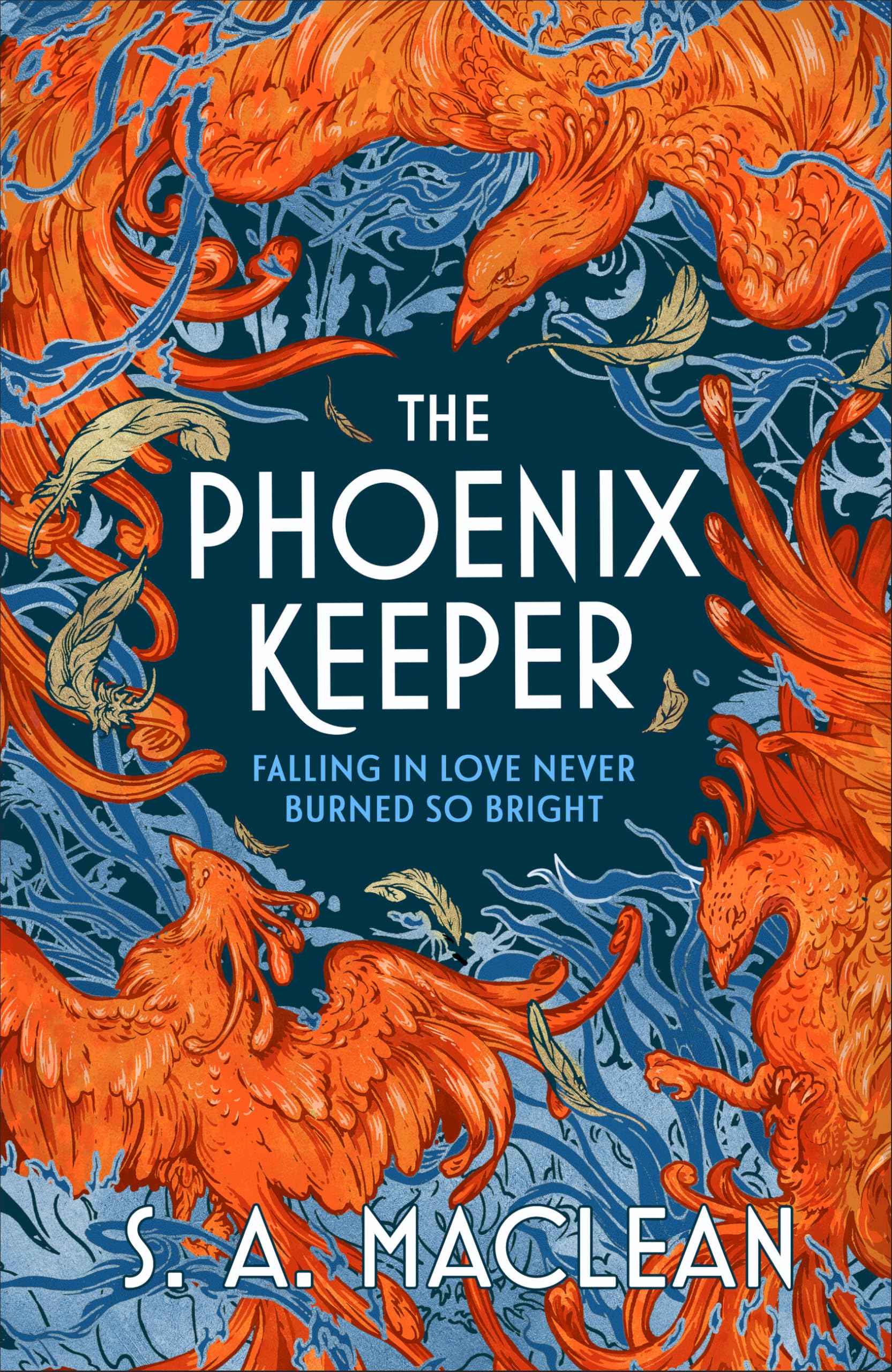
9. The Phoenix Keeper, by S. A. MacLean. Slightly less nutty (but still pretty nutty) is this book about an autistic, anxiety-riddled zookeeper in a zoo filled with fantasy animals, the first and sole representative of what the kids are calling cozy fantasy on this list. I got sent this one by Illumicrate and it wouldn’t have really crossed my radar otherwise, but I read it more or less cover-to-cover during a car trip and it was exactly the book I needed at the time. I have read more romance books than I ever expected to this year, and am reaching the point where I am heartily tired of romantasy, which is a thing, but this isn’t that; there is a bit of a romance subplot but it’s not about that, so don’t pay attention to the blurb on the cover. No, this book is about a nerd who really really wants to be the best zookeeper in the world and wants to raise phoenixes, and it’s really obviously based on the efforts zoos went to to keep the California condor from going extinct, and I absolutely loved it. There are setbacks and obstacles to be overcome but, again, this is cozy fantasy and you know everything is going to work out just fine, and this book is more about relaxing into the details and the characters than the conflict. I like zoos. I like books set at zoos. Zoos with phoenixes are better than regular zoos. This is a great book.
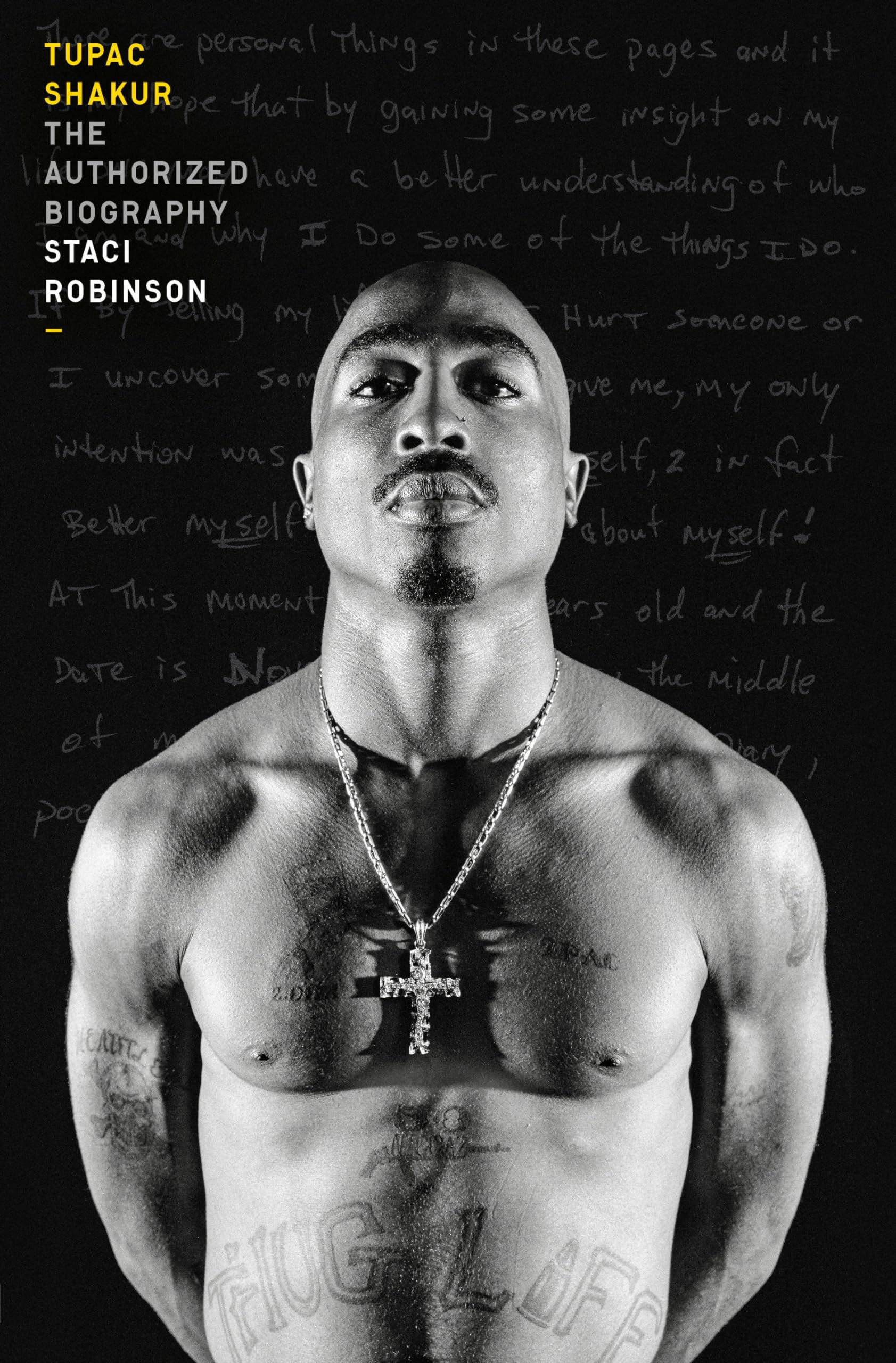
8. Tupac Shakur: The Authorized Biography, by Staci Robinson. I am tempted to say “this exists and therefore you should read it,” but that’s kind of unfair to both the book and the author even if it’s more or less completely true. I’m listening to Kendrick Lamar while I write this post, and Kendrick is one of Pac’s more obvious spiritual successors in hiphop nowadays, but it’s impossible to overstate the impact this guy had on rap music and on two or three generations of kids and still counting. I think it’s probably fair to say that there’s not another musician from the nineties (or a whole bunch of other decades, for whatever that’s worth) that still has as much influence as Tupac does, and reading a book written by someone who knew him well and was handpicked by his mother to write the book was an absolute pleasure. The guy’s life was fascinating, and while books about musicians can sometimes become formulaic (“he released this, and then he released this, and then there were the drug problems, and then he released this,”) this manages to keep away from that. The one weakness is that it literally ends with the moment of his death; I feel like another chapter about the LAPD’s investigation reaction to his murder was probably warranted and we didn’t get it. Still, I’m glad to have read this.
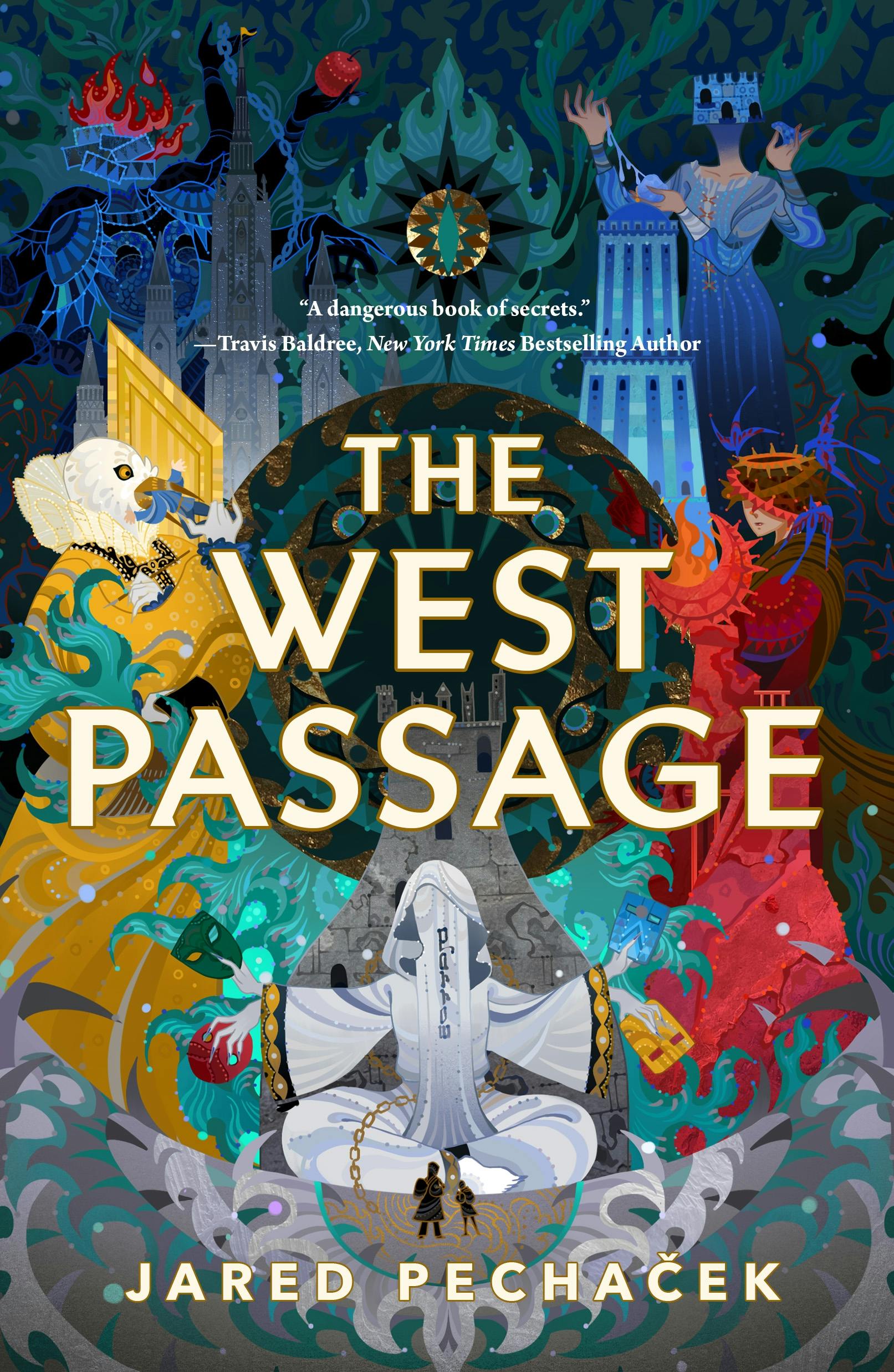
7. The West Passage, by Jared Pechaček. I still don’t know how the hell to pronounce his last name, but this book is the first one on the list that, on a different day, I easily could have called the best book of the year, and if you want to draw a line between the first eight books and the last seven and ignore the ratings completely after that, it’s entirely reasonable. The West Passage is also the second representative of the Batshit Nuts genre, drawing inspiration from Gormenghast and Shadow of the Torturer and Through the Looking-Glass and China Miéville’s Bas-Lag series and coming up with something where characters will be talking about a beehive, and you’ll think to yourself okay, I know what bees are, and I know what a beehive is, and then the beehive will walk over to the characters on its legs and extend a urethra and piss out some honey for them. The crumbling castle this book is set in is one of the wildest settings I’ve ever encountered in fantasy literature, and God damn it did I seriously read six more books this year that I thought were better than this one? That shouldn’t be possible, because this book is incredible, but … well, keep reading.
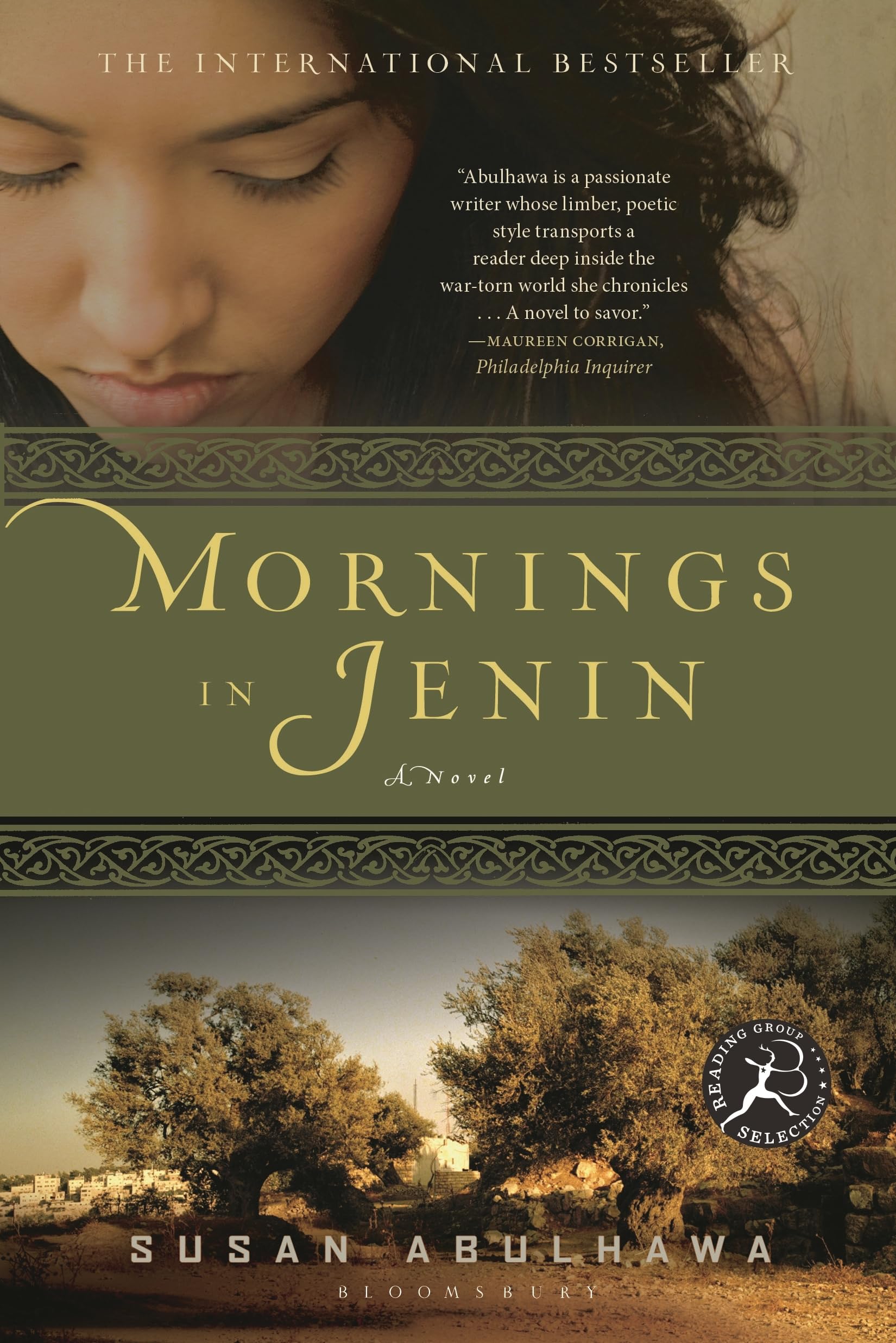
6. Mornings in Jenin, by Susan Abulhawa. I read several books this year by Palestinian authors, and two specifically by Abulhawa, whose Against the Loveless World was also on my shortlist, but Mornings in Jenin is the superior of those two books. This is not a memoir but feels like it (Abulhawa herself is Palestinian, but was born in 1970 in Kuwait, so she’s narrating events from before she was born, although I’m sure her own life experiences made their way into the book), and it begins with the creation of Israel and runs up to more or less the modern day, as it ends in 2002 or so, a few years before its release in 2006. This is easily the most important book on the list, and the main character, Amal, is a young girl at the beginning of the book and an old woman at the end of it, so you more or less get the entire history of the Palestine-Israeli conflict through her eyes. Go right ahead and make a list of all the content warnings you can think of, as this is a really hard book to read if you’re possessed of even a modicum of human empathy, but it’s something that I think most people and certainly most Americans definitely need to pick up.
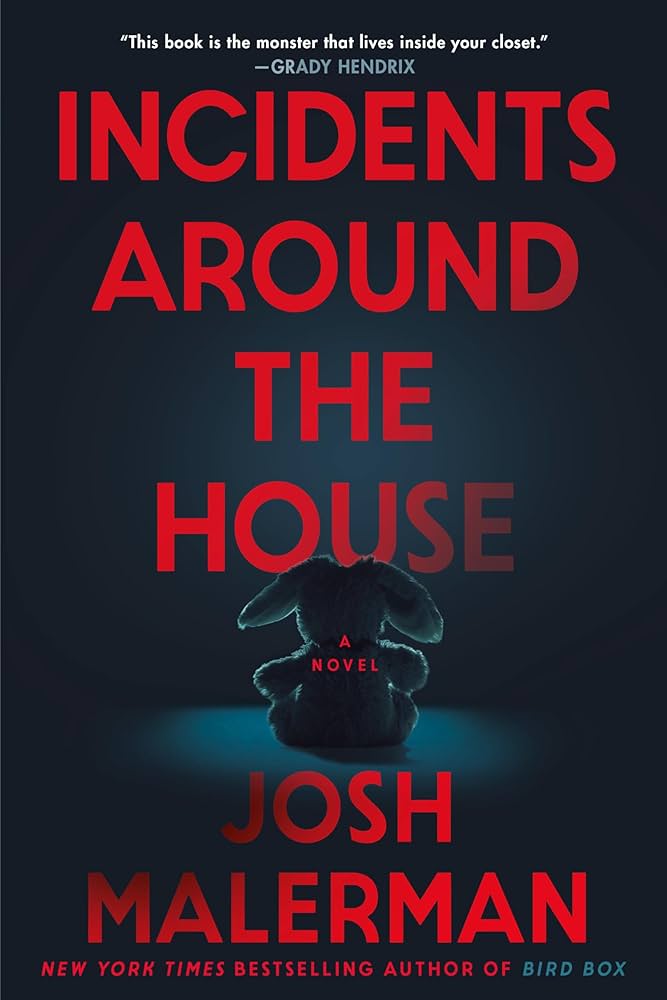
5. Incidents Around the House, by Josh Malerman. I called this the scariest book I’d ever read when I wrote about it the first time (my post cannot, in any meaningful way, be called a “review”) and while I wasn’t able to stick by that– you’ll see in a minute, and frankly parts of Mornings in Jenin are horrifying in their own way as well– it’s certainly the scariest horror novel I have read, at least in a long, long time, time having worn the edges off of some of the other books that might belong on that list.
Incidents is about Bela, an eight-year-old, who lives with her mother and father in a nice, comfortable house. But there’s also Other Mommy, who no one else in the house can see, and who asks Bela every day if she can “go inside her heart.” Bela is smart enough to realize that this is probably a Bad Idea, possibly one of the Badder Ideas in the entire history of Bad Ideas, and … well, Other Mommy isn’t very happy about that.
Don’t read this book. You don’t need it in your head. I didn’t need it in mine, but it’s there now, and the book is still in the freezer, and I have to reward how fucking effective this book is in scaring the absolute shit out of a grown man who himself lives in a nice comfortable house even if I am never letting it out of the freezer ever again.
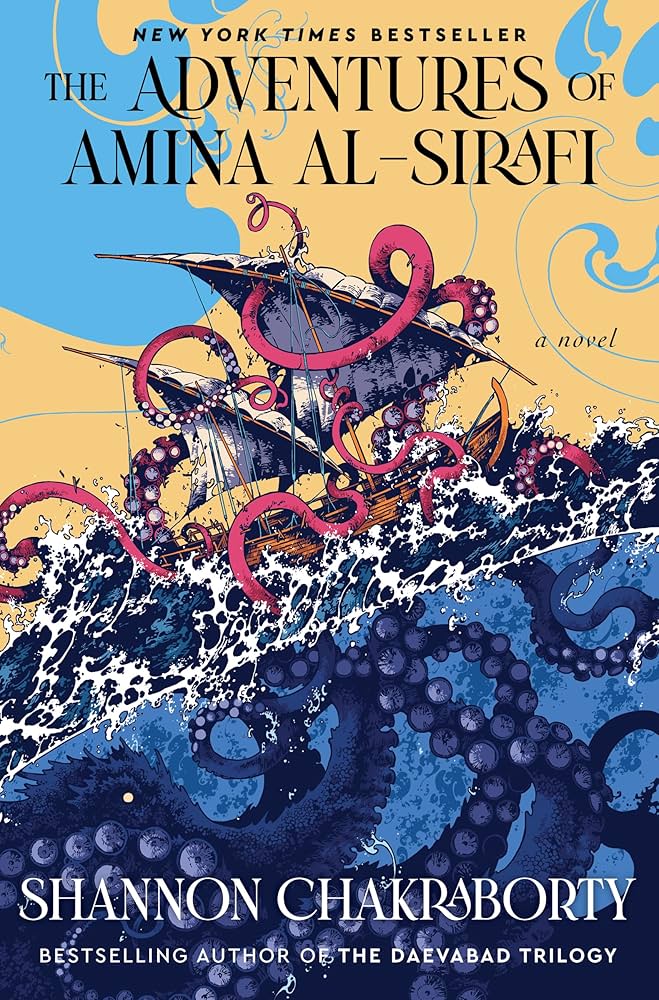
4. The Adventures of Amina al-Sirafi, by Shannon Chakraborty. I haven’t used the word delightful in this post yet because I feel like I overuse it lately, but I feel like there’s probably no way of getting through writing about this book, about a female ex-pirate captain who has retired and settled down to raise her daughter in a magical world full of djinn and treasures and adventures and her pain in the ass mom and awesome, but this was probably the most fun I had reading anything this year, and if you can look at that cover and not immediately want to read this than you and I probably can’t be friends. I’ve read several of Shannon Chakraborty’s books, and this is better than anything she’s written before– and those were all books I enjoyed! I want twelve thousand more books about Amina al-Sirafi and I want them right now. Have you ever noticed that when I get excited about things my sentences tend to get longer? Look at the first sentence of this entry. I read this book months ago. It still makes me that happy to talk about it. Go read it.
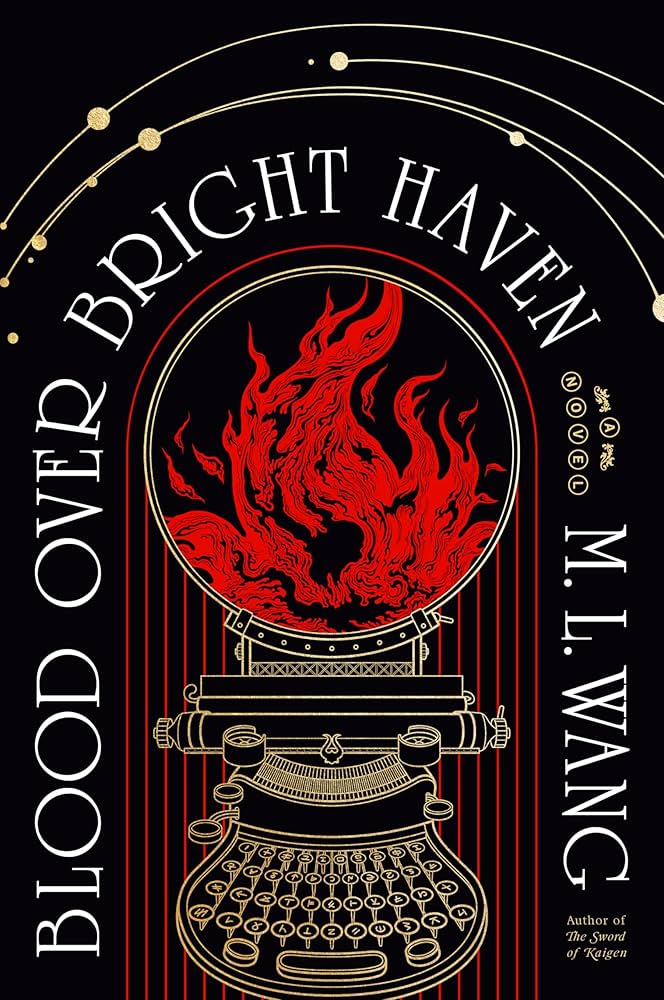
3. Blood over Bright Haven, by M.L. Wang. This is the fourth book in a row where you’re going to feel a particular emotion over and over again while reading it, and the second of the four where rage is going to be that emotion. Blood over Bright Haven has a bunch of very interesting tricks under its sleeve, and chief among them is the way it’s going to kind of blindside you partway through with what it is actually about and, even more amazingly, who its main character is. This is one of the angriest books I’ve ever read, and again, one of the books I just finished writing about is about a Palestinian refugee, so that’s a pretty high bar. I enjoyed Wang’s Sword of Kaigen but not nearly as much as I expected to, and this book sat on my shelf for a while before I got to it. It should be this book that people can’t stop talking about, not Kaigen, and the reason I’m not talking about the plot very much is that this is definitely one of those books where you need to go in knowing as little as possible. Just sit back and let it take you for a ride. And if you can, grab it soon while you can still get the cool red-stained edges. The first hardcover edition is sweet.
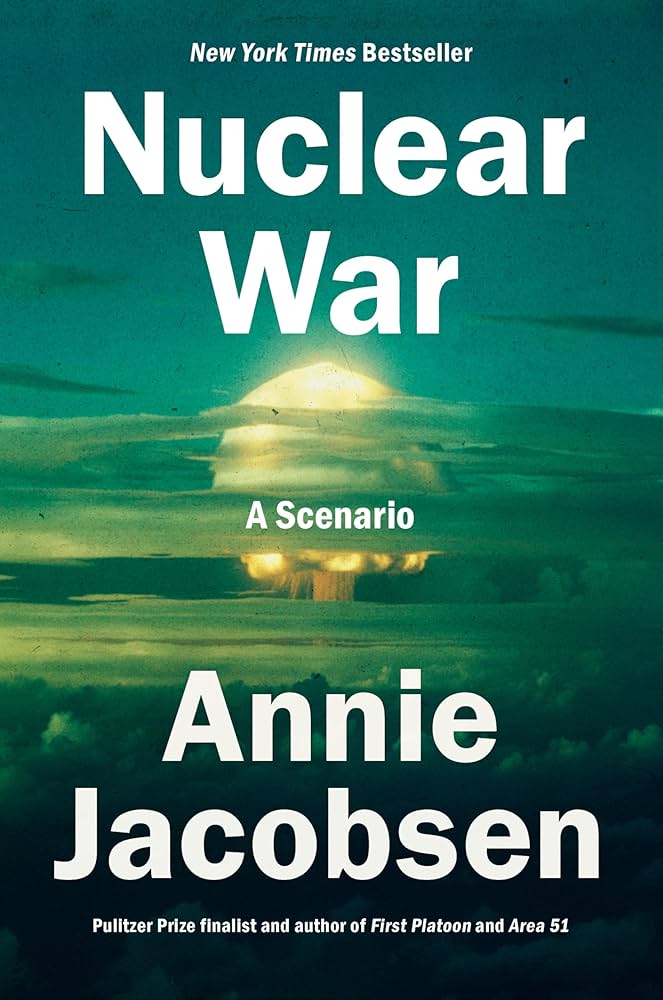
2. Nuclear War: A Scenario, by Annie Jacobsen. Remember a couple of books ago, where I called Incidents Around the House the scariest horror novel I’d ever read, and said that I’d explain in a minute? Yeah, that’s because Nuclear War: A Scenario isn’t a novel, and it is fucking terrifying on a deep, existential level that no fictional novel can really touch.
If you grew up in the eighties, you remember what living in fear every day of impending nuclear war felt like, and you might remember the occasional “hide under your desk and kiss your ass goodbye, because it’s not going to help” drill from school. Jacobsen’s book starts with North Korea detonating a one-megaton nuclear bomb over Washington DC, and ends seventy-one minutes later with more or less all of human life on Earth extinguished. It is probably best classified as near-future science fiction, as the events described have not, in fact, happened yet, but Jacobsen is repeatedly clear that the events of the book could happen tomorrow, and while there’s clearly some fictionalization happening here and there (she has to invent a US President and Vice-President, for example, and what happens with the president pro tempore of the Senate almost verges on comedy) I have shelved this with my nonfiction and history books, because all of the research that went into this puts it more firmly into the realm of those books than fiction.
I, uh, want to die in the first thirty seconds, preferably entirely unaware of what just killed me, if there’s a nuclear war. I’ve said this before about more fictional apocalypses– I also want to be patient zero if there’s ever a zombie outbreak– but it would be great if I was, say, in Chicago when the bombs hit, and if that first exchange involved more than the one bomb. I’d prefer not to die in a nuclear apocalypse, mind you, but if I’ve got to go that way, I really don’t want to see it coming.
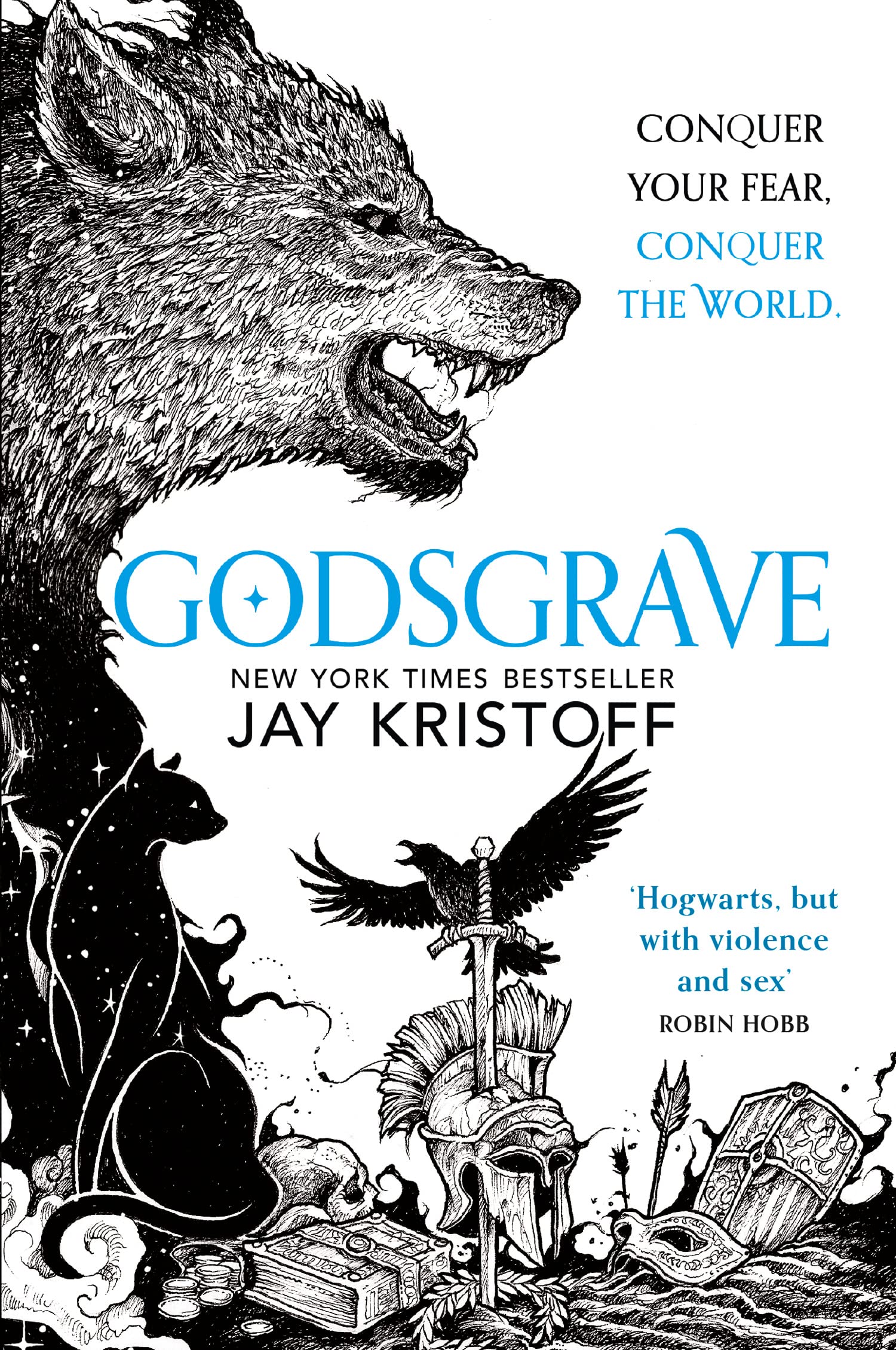
1. Godsgrave, by Jay Kristoff, is my favorite book of the year, and my annual irritation with WordPress that it will not allow me to begin a paragraph with a one and a period without indenting it automatically or Performing Shenanigans to keep it from happening. I am capable of indenting things myself if I want to, or you should at least pay attention if you automatically indent something and I delete it, dammit! But yes: this is the second single-book-as-a-stand-in-for-an-entire-series, and Kristoff’s Nevernight Chronicles is one of the most amazing series I’ve ever read. In broad strokes, the series feels like something you’ve read repeatedly– a young girl who trains to be an assassin so she can seek revenge is not on the top 10 of most original scenarios– but once you get past that original setup and the series gets moving, you’re going to be surprised over and over and over and over by the story decisions Kristoff makes, and the reason I picked Godsgrave, the second book in the series (the first and last are Nevernight and Darkdawn, respectively) is that it ends on a cliffhanger so potent that I literally screamed when I finished the book, and if I had had to wait for Book Three to come out and hadn’t had it sitting on the shelf waiting for me (I read all three books in a single gulp) I might have had to move into his Goddamned house until he finished it.
I love so many things about this series. I love what an unapologetic asshole Mia Corvere is. I love that they make her an assassin and then don’t back away from all the killing that implies. I love that Kristoff sets up what feels like a bog-standard YA love triangle and then blows it to hell. I love how much of the worldbuilding is stuck into what feels like inappropriately snarky footnotes, and I love how the footnotes suddenly make sense at the end of the book. I love how meta the series gets, and I love how no one is safe, ever, and how Darkdawn keeps you on your toes for its entire length and keeps getting more and more batshit, at one point indicating a story development with margin changes, and God Damn I want to sit down and reread this whole series before starting the Stormlight reread in a few days.
The Nevernight Chronicles is the best series I read this year, and Godsgrave is the best book of The Nevernight Chronicles. Go forth.
Honorable Mention, in No Particular Order: A Mystery of Mysteries: The Death and Life of Edgar Allan Poe, by Mark Dawidziak; The Honey Witch, by Sydney J. Shields; House of Hunger, by Alexis Henderson; The God and the Gumiho, by Sophie Kim; This is Why They Hate Us, by Aaron Acevedo; The Bone Ship Trilogy by R. J. Barker; Somewhere Beyond the Sea, by T.J. Klune; Blood at the Root, by LaDarrion Williams; The Vagrant Gods series, by David Dalglish; Morning Star, by Pierce Brown; Bookshops & Bonedust, by Travis Baldree, Moon of the Turning Leaves, by Waubgeshig Rice, and The Fury of the Gods, by John Gwynne.


 Welcome to infinitefreetime dot com